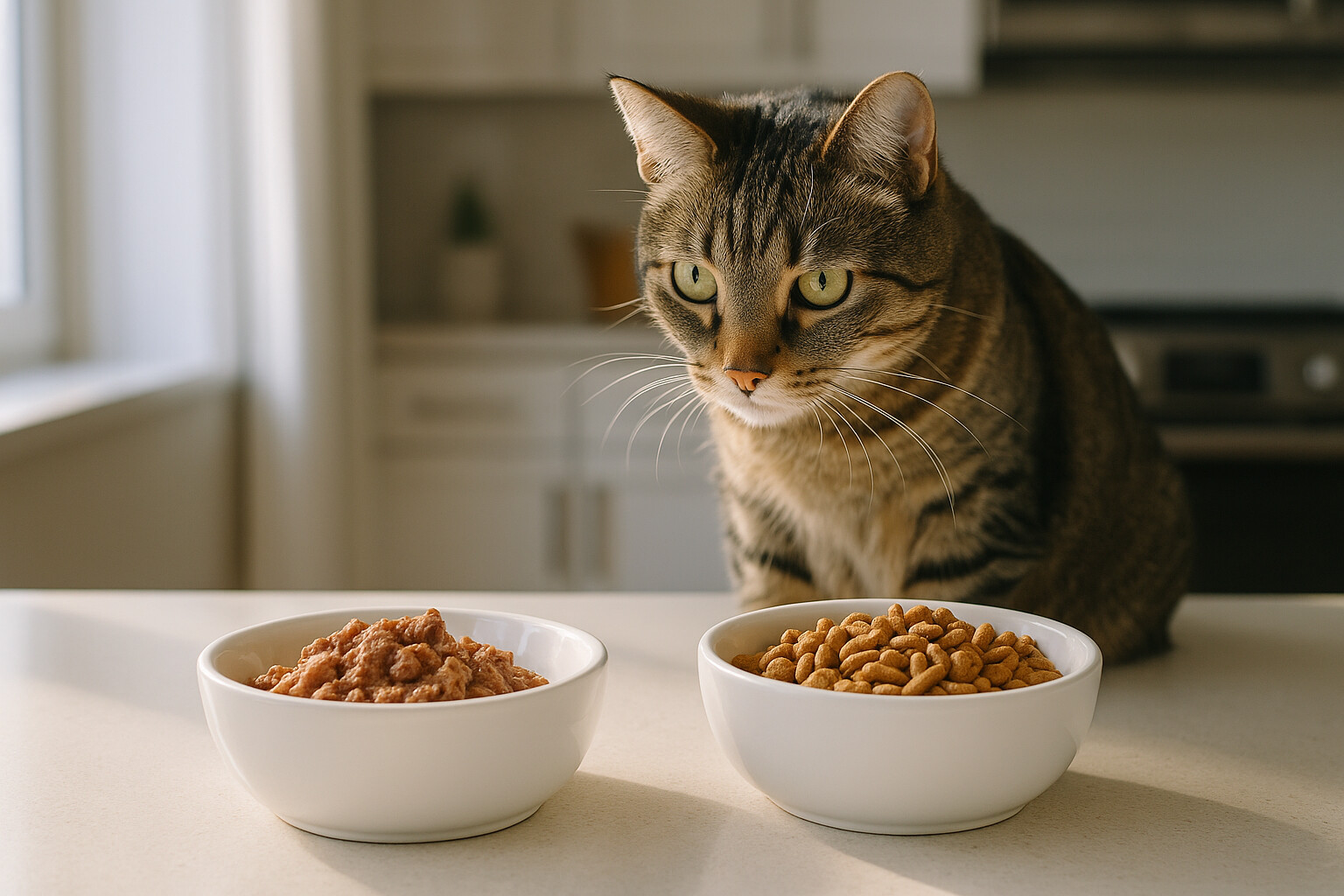
Dry food is convenient and cheap. Wet food costs more and smells worse. But the decision is not really about your convenience - it is about your cat’s biology. And when you look at what cats actually need, the comparison gets more interesting than the price tag suggests.
Why Hydration Is the Starting Point
Cats evolved in arid environments. Their wild ancestors get almost all their water intake from prey, which is roughly 70% moisture. As a result, cats have a lower thirst drive than most mammals - they are not wired to seek out a water bowl and drink enough to compensate for dry food.
Dry kibble typically contains 6-10% moisture. Wet food contains 70-80%. That gap is enormous. Chronic low-level dehydration is a significant contributor to feline lower urinary tract disease (FLUTD), urinary crystals, and chronic kidney disease (CKD). The American Association of Feline Practitioners (AAFP) has noted that increased moisture intake is associated with reduced urinary tract disease risk.
Protein and Carbohydrates
Cats are obligate carnivores. Their metabolism is calibrated for a high-protein, low-carbohydrate diet. Wet food is generally higher in protein relative to calories, lower in carbohydrates. Dry food requires carbohydrates as binders to maintain kibble structure - most dry foods are significantly higher in carbohydrates than wet food, even when the protein percentage on the label looks similar.
Note: cat food labels list nutrients on an as-fed basis, which means the water content skews all the numbers. A wet food that looks lower in protein than a dry food may actually deliver more protein per calorie once you account for moisture. To compare properly, you need dry matter basis figures.
The Dental Health Claim: Worth Examining
Dry food is often marketed as better for dental health - the idea being that crunching kibble scrubs tartar. This is partially true and significantly overstated. Most cats do not chew kibble thoroughly enough to get meaningful abrasive benefit. Dental disease affects an estimated 70-90% of cats over age three (AVMA). The carbohydrate content in dry food can contribute to the bacterial environment that promotes plaque.
The most evidence-backed dental interventions are tooth brushing with enzymatic toothpaste and VOHC-approved dental products - not kibble.
Calories and Weight Management
Dry food is calorie-dense and easy to overfeed. A cup of dry kibble can contain 300-400 calories; an average adult cat needs roughly 200-250 calories daily. Wet food delivers fewer calories per gram because of its moisture content, making portion control more intuitive and satiety easier to achieve.
Dry Food’s Genuine Advantages
- Cost: wet food is significantly more expensive
- Shelf life and convenience: dry food does not spoil, does not need refrigeration
- Some cats simply prefer it and will not eat wet food
- Specific prescription dental dry diets (VOHC-approved) do have genuine evidence behind them
What Should You Choose?
Wet food is nutritionally a closer match to what cats evolved to eat, particularly for hydration and protein-to-carb ratios. A predominantly wet diet is a solid choice - especially for cats with urinary tract issues, kidney disease, or weight problems. A mixed approach works well for many households. A good quality dry food fed in appropriate portions, with active encouragement to drink water (fountain feeders make a genuine difference), can support a healthy cat. The AAFP recommends canned food as the preferred format for cats prone to lower urinary tract disease or early kidney disease.
When to See a Vet
- Your cat has been diagnosed with kidney disease - wet food is often recommended but specific protein and phosphorus levels need vet input
- Your cat has a urinary crystal history - a prescription urinary diet may be recommended
- Your cat is significantly overweight - a vet can help you set calorie targets
- Your cat has stopped eating for more than 48 hours - always a vet call
- Your cat is losing weight despite eating normally - needs investigation
Practical Takeaway
Aim for predominantly wet food if your budget allows. If feeding primarily dry food, measure portions by weight (not cup), do not free-feed, and invest in a water fountain. Check the calorie content per 100g and calculate what your individual cat needs based on their actual weight and activity level.