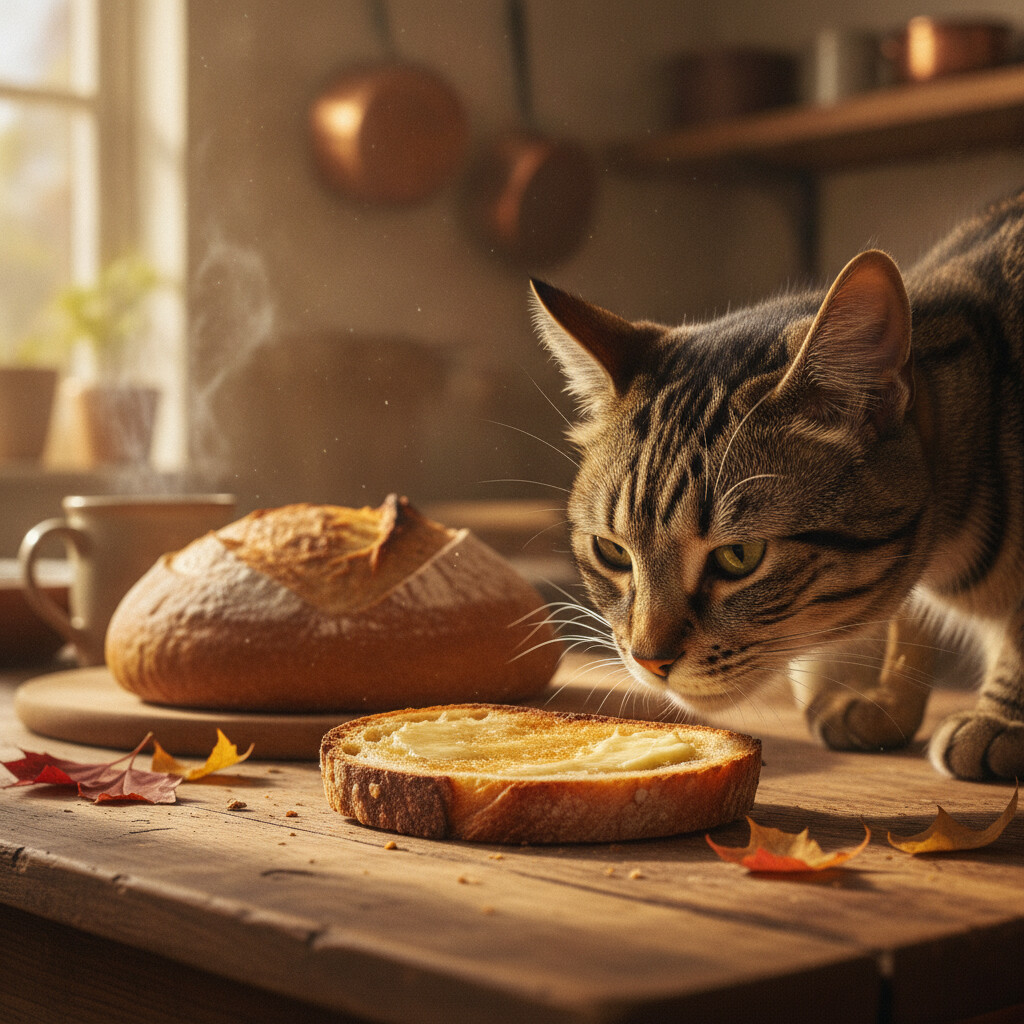
Plain baked bread isn’t toxic to cats. A thumbnail-sized piece of toast won’t hurt a healthy cat, but it adds nothing they need. Raw yeast dough is the real danger, and it’s an emergency.
So the short answer: cats can eat a small bite of plain, cooked bread now and then. Skip anything with garlic, onion, raisins or chocolate in it, and never let them near dough that’s still rising. With Thanksgiving coming up, that last one matters more than it sounds.
Is bread bad for cats?
Not in the poisonous sense. Plain white or wholemeal bread is mostly starch, a bit of protein and a little fat. None of that harms a cat in small amounts. The problem is that it’s filler.
Cats are obligate carnivores. They’re built to run on animal protein and fat, and they have no dietary need for carbohydrate at all (we covered why in Do Cats Need Carbs?). Bread gives them calories without the nutrients that make those calories useful.
And the calories add up faster than you’d think. A slice of white bread is roughly 70 to 80 calories. A typical 10-pound indoor cat needs somewhere around 200 to 250 calories a day, depending on age and activity. One slice could be a third of their daily intake.
The usual guidance from vets, including the WSAVA’s nutrition toolkit, is that treats and extras should stay under about 10% of a cat’s daily calories. For most cats that’s 20 to 25 calories, which works out to a piece of bread about the size of a postage stamp.
Why does my cat love bread?
It’s not the sweetness. Cats can’t taste sweet at all: a 2005 study in PLoS Genetics (Li and colleagues) found the gene for the sweet taste receptor is broken in cats.
More likely they’re after one of these:
- Butter or fat. Cats are very interested in fat, and toast is often a butter delivery system.
- Yeast. Brewer’s yeast is used as a flavour enhancer in some cat foods and treats, and many cats seem to like that savoury, slightly cheesy smell.
- Your attention. If you’re eating it, it must be good. Cats that beg at the table are often after the interaction as much as the food.
None of this means bread is good for them. It means they like the smell of it.
Raw yeast dough: why it’s an emergency
This is the part worth remembering. If your cat eats raw bread or pizza dough that contains yeast, call your vet or a pet poison line straight away. The ASPCA Animal Poison Control Center lists unbaked yeast dough as a hazard for two reasons.
It expands. A cat’s stomach is warm and moist, which is exactly what dough needs to rise. The dough can swell inside the stomach, stretching it painfully. In severe cases it can block the stomach or press on surrounding organs.
It makes alcohol. As yeast ferments sugar it produces ethanol, which is absorbed into the bloodstream. Cats are small and process alcohol poorly, so even a modest lump of dough can cause alcohol poisoning.
Signs can start within an hour or two and include:
- vomiting, or retching without bringing anything up
- a swollen, tight or painful belly
- wobbliness, stumbling or seeming “drunk”
- lethargy, weakness or collapse
- low body temperature
- seizures, in severe cases
Don’t try to make your cat vomit at home. Salt, hydrogen peroxide and other home remedies can do real harm to cats. Get professional advice first.
Bread machines, proving bowls on the bench and pizza nights are the usual culprits. If you’re baking this holiday season, let dough rise somewhere your cat can’t reach: inside a turned-off oven or a closed microwave works well.
Which breads are actually dangerous?
The bread itself is rarely the issue. What’s in it or on it can be.
Garlic bread, onion bread and stuffing. Garlic, onion, leeks and chives (the allium family) damage cats’ red blood cells and can cause a type of anaemia. Cats are more sensitive to this than dogs, and the effect is cumulative, so a big helping of stuffing or several pieces of garlic bread is a genuine concern. Signs can be delayed by a few days and include tiredness, pale gums and fast breathing. Powdered garlic and onion are more concentrated than fresh.
Raisin, fruit and fruitcake breads. Grapes and raisins are well documented as toxic to dogs’ kidneys. The evidence in cats is thinner, but the ASPCA advises keeping them away from cats too. Not worth the gamble.
Chocolate breads, brioche and pastries. Chocolate contains theobromine and caffeine, both toxic to cats. Darker chocolate is worse.
Sugar-free or “keto” breads. Some contain xylitol. It’s extremely dangerous to dogs, and while the evidence in cats is limited, there’s no reason to risk it.
Mouldy bread. Some moulds produce toxins that can cause tremors and seizures in pets. Mouldy food goes in a sealed bin, not the compost the cat can get into.
Seeded breads and heavily buttered toast. Not toxic, but rich, fatty foods can upset a cat’s stomach, and sudden high-fat meals are one of the suspected triggers for pancreatitis.
Can cats be allergic to wheat or gluten?
Rarely. True food allergies are uncommon in cats overall, and when they do happen, wheat isn’t usually the cause. A 2016 review of food allergy studies in BMC Veterinary Research (Mueller, Olivry and Prélaud) found beef, fish and chicken were the most commonly reported triggers in cats. Wheat came up far less often.
So if your cat has ongoing itching, over-grooming or vomiting, don’t assume bread or grain is to blame. That’s a conversation for your vet, who may suggest a proper elimination diet. Our guide to whether grain-free cat food is actually better goes into the grain question in more detail.
Thanksgiving and holiday table safety
Big meals mean lots of tempting food on low tables, distracted hosts and guests who think a little treat won’t hurt. A few simple rules cover most of the risk:
- Keep stuffing, gravy and garlic bread off the cat’s menu entirely.
- Let dough rise behind a closed door.
- Ask guests not to feed the cat, and give the cat a quiet room if they’re overwhelmed.
- If you’d like to share, a small piece of plain, boneless, skinless turkey is a much better choice than bread. We covered that in Can Cats Eat Turkey?
For a wider look at what’s risky at this time of year, see Holiday Hazards for Cats and our guide to human foods that are safe for cats.
When to call the vet
Call your vet, an emergency clinic, or a poison line immediately if your cat has eaten:
- any amount of raw yeast dough
- garlic bread, onion bread or stuffing (more than a lick)
- anything containing chocolate, raisins or xylitol
- mouldy bread
In the US, the ASPCA Animal Poison Control Center is on (888) 426-4435 and the Pet Poison Helpline on (855) 764-7661. Both charge a consultation fee. Have the packaging handy, and an estimate of how much your cat ate and when.
Book a regular vet visit if your cat keeps vomiting after eating bread, has repeated diarrhoea, or begs so hard for human food that they’re gaining weight.
A cat who stole a corner of plain toast and seems completely normal doesn’t need a vet. Just move the toast.
Does your cat go after bread, or are they more of a butter thief?