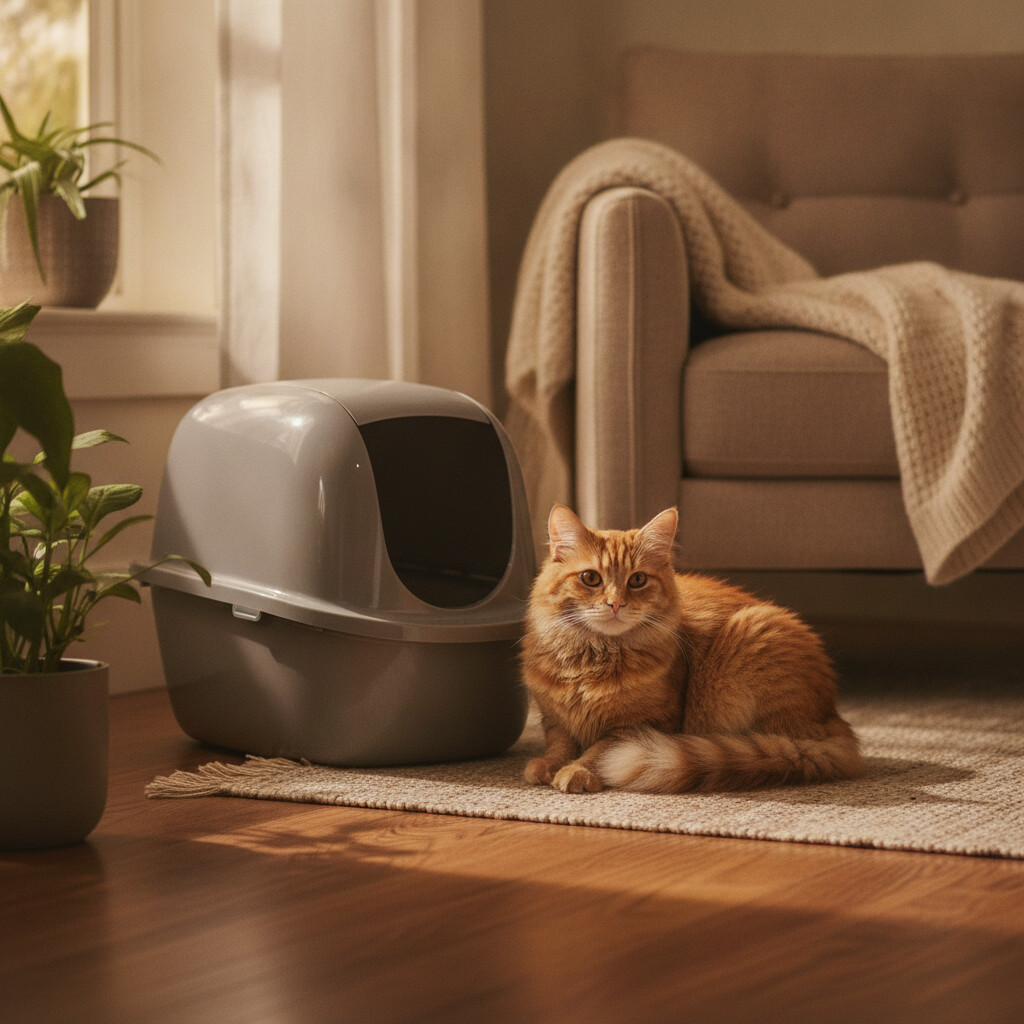
Our cat Mabel had used the same litter box without incident for four years. Then, over the course of about two weeks, she stopped — not gradually, but almost overnight, choosing the bath mat, a pile of laundry, once memorably the inside of a shoe. We assumed she was being difficult. We were wrong, and figuring out why took longer than it should have because we started by assuming the wrong cause entirely.
The First (Wrong) Assumption
Our first move was the obvious one: clean the box more often, try a new litter brand, move the box to a quieter corner. None of it worked. If anything, the accidents got more frequent. A friend suggested she was “acting out” over a recent house guest who’d stayed with us for a week, and for a while we believed it — cats are famously sensitive to disruption, and the timeline lined up well enough to seem plausible.
We spent close to three weeks treating it as a behavioral problem. In hindsight, that was the mistake — we were pattern-matching to the story that made emotional sense, not the one the evidence actually supported.
The Detail We Almost Missed
What finally changed our minds wasn’t the litter box at all. It was watching Mabel in the box itself, on one of the rare occasions she did use it. She went in, postured to urinate, and came out within seconds — barely enough time to do anything. We’d assumed she was avoiding the box. What we hadn’t considered was that she might be avoiding it because using it hurt.
That reframing changed everything. We started watching more closely and noticed she was going more often, in smaller amounts, and occasionally straining with nothing coming out. None of that had registered as unusual before, because we’d been so focused on where she was going instead of how.
What the Vet Found
The vet visit took twenty minutes and answered a question we’d been circling for a month. Mabel had a urinary tract issue — in her case, cystitis with no bladder stones, which according to our vet is one of the more common causes of sudden litter box avoidance in cats and is frequently misread as a behavioral problem because the symptoms look almost identical to “being picky” from the outside. She explained that any time house-soiling starts suddenly in a cat who’s been reliable for years, medical causes should be ruled out before anything else — not because behavior problems don’t exist, but because painful urination will make a cat associate the box itself with pain, which then becomes a secondary behavioral problem layered on top of the medical one. For background on how that connection works and what the range of causes looks like, our guide to feline lower urinary tract disease covers it in more detail than we could piece together on our own at 11pm with a search engine.
Treatment was straightforward — a course of medication, a diet change to encourage more water intake, and, at the vet’s suggestion, an additional litter box in a different part of the house so Mabel had more than one option while she associated boxes with safety again rather than pain.
What Actually Fixed It
Two things mattered more than anything else we tried in those first misguided weeks:
Getting the medical check first, not last. We lost nearly a month treating this as a behavior issue. If we’d started with a vet visit instead of ending there, Mabel would have been comfortable — and we’d have been far less stressed — three weeks sooner.
Adding a second litter box instead of just cleaning the one we had. Once the medical issue was treated, Mabel still hesitated around her original box for a while, which our vet said is common — cats can form a negative association with a specific box even after the physical cause is resolved. A second box in a different location gave her a fresh start rather than asking her to trust the site of her discomfort again immediately.
When to See a Vet
Any sudden change in litter box habits in a previously reliable cat is worth a same-week vet visit, not a wait-and-see approach — especially if you notice straining, frequent small urinations, vocalizing while in the box, or blood in the urine. In male cats particularly, straining with little or no output can indicate a urinary blockage, which is a genuine emergency and can become life-threatening within a day or two if untreated. When in doubt, treat it as medical until a vet says otherwise.
The Takeaway
It’s tempting to read a sudden litter box change as a behavioral complaint — a cat “telling you something” about the household. Sometimes that’s exactly what it is, and our guide on introducing cats to change is a good place to start if a genuine household disruption lines up with the timing. But rule out pain first. It’s a twenty-minute vet visit against weeks of assuming the wrong thing, like we did — and if Mabel could have told us sooner, I think she would have.