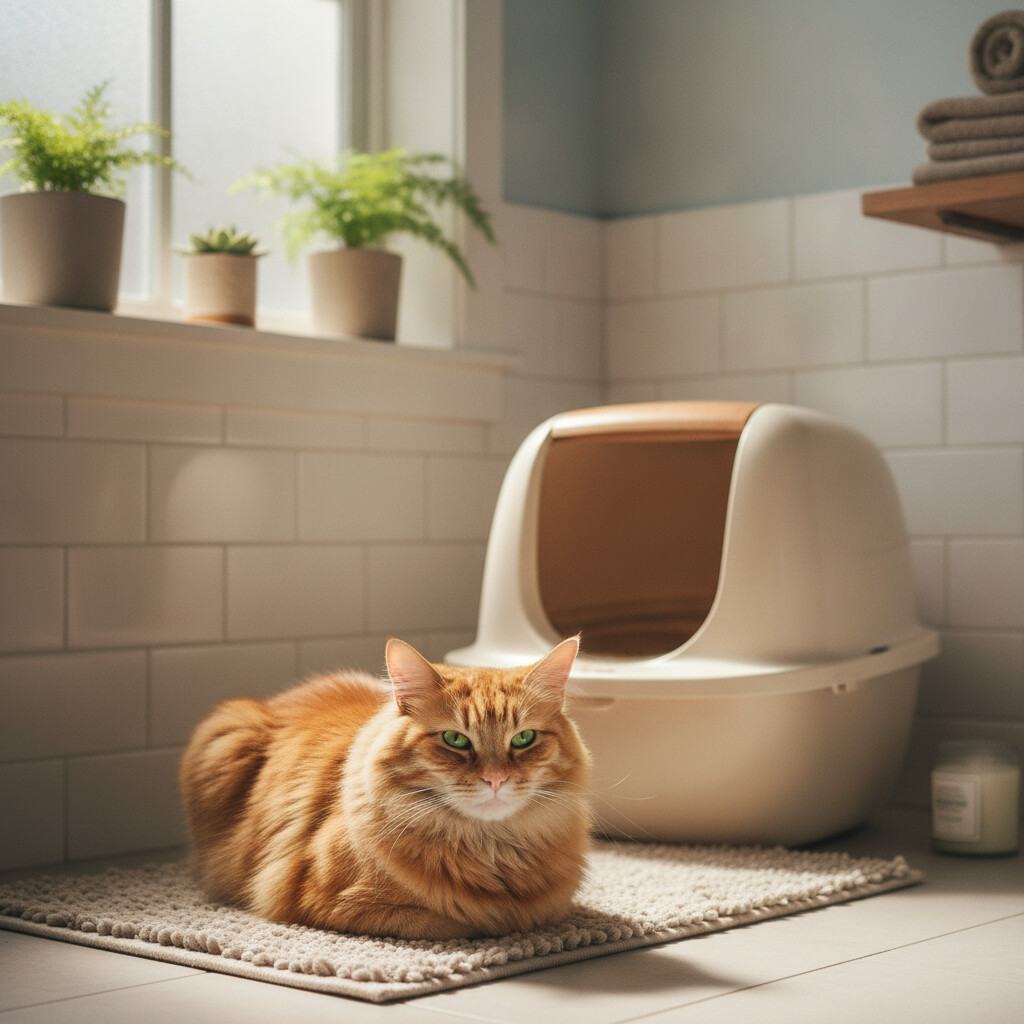
Feline Lower Urinary Tract Disease (FLUTD) isn’t one disease — it’s an umbrella term for a group of conditions that all show up the same way: straining to pee, peeing in odd places, blood in the urine, or a cat that won’t stop licking at their belly. In male cats especially, it can become a true emergency within hours. Here’s how to recognize it and what actually happens at the vet.
What FLUTD Actually Covers
FLUTD isn’t a diagnosis on its own — it’s a category, similar to how “chest pain” isn’t a diagnosis until a doctor figures out if it’s a pulled muscle or a heart attack. Underneath the FLUTD umbrella sit several distinct problems:
- Feline idiopathic cystitis (FIC) — by far the most common cause, accounting for roughly 55-65% of FLUTD cases according to research published in the Journal of Feline Medicine and Surgery. “Idiopathic” means no clear cause is found even after testing — it’s believed to be linked to stress and an abnormal bladder-lining response, not infection.
- Urinary crystals and stones — minerals (usually struvite or calcium oxalate) that form in the bladder and irritate the lining, or that grow large enough to cause a blockage.
- Urethral obstruction — a life-threatening blockage, almost exclusively in male cats, where crystals, mucus plugs, or spasm close off the urethra entirely. This is a true emergency, not a “wait and see.”
- Bacterial urinary tract infection — actually uncommon as a primary cause in cats under 10, present in less than 5% of FLUTD cases in that age group, though more common in older cats or those with other health conditions. We cover UTIs specifically in our guide to urinary tract infections in cats.
The short answer: if your cat is straining in the litter box, get them checked. You can’t tell the difference between idiopathic cystitis and a blockage by looking — and a blockage can kill a cat within 24-48 hours if untreated.
The Signs That Should Get You Moving
Watch for:
- Straining or crying while urinating
- Frequent trips to the litter box with little or no urine produced
- Urinating outside the litter box, especially on cool, smooth surfaces like tile or a bathtub
- Blood-tinged urine
- Excessive licking of the genital area
- Lethargy, hiding, or loss of appetite
If your cat is a male cat straining and producing no urine at all, that is an emergency — not an “call in the morning” situation. A fully blocked male cat can go into kidney failure and cardiac arrhythmia from potassium buildup within a day. Female cats have a wider urethra and almost never fully block, but they can still have a very painful, miserable case of cystitis that needs treatment.
Why Stress Is the Biggest Risk Factor Nobody Talks About
Because idiopathic cystitis makes up the majority of FLUTD cases, and because researchers can’t find bacteria or obvious structural problems in most of these cats, stress has become the leading suspect. Studies out of Ohio State University’s Indoor Cat Initiative have linked flare-ups to environmental stressors: a new pet in the house, moving, changes in routine, conflict with another cat, or even a change in litter brand.
The working theory is that stressed cats have a dysregulated stress-hormone response that thins the protective lining of the bladder, making it more reactive to normal urine. This is why vets increasingly treat FIC as much through environmental management as through medication — multiple litter boxes, reducing conflict between cats, consistent routines, and enrichment all show up in the research as reducing recurrence.
Diet matters too. Cats who primarily eat dry food are generally more concentrated in their urine, and increasing water intake — through wet food, fountains, or flavored water — is one of the most consistently recommended interventions. We go into more detail on why most cats don’t drink enough in our guide to cat hydration.
What Happens at the Vet
Diagnosis typically involves:
- Urinalysis — checking for crystals, blood, bacteria, and pH
- Physical exam — a vet can often feel a distended, painful bladder in a blocked cat
- Bloodwork — critical if a blockage is suspected, since kidney values and potassium levels determine how urgent treatment is
- Imaging (X-ray or ultrasound) — used when stones are suspected, since not all crystal types show up the same way
Treatment depends entirely on the cause. Idiopathic cystitis is usually managed with pain relief, stress reduction, and increased water intake — antibiotics don’t help because there’s no infection to treat. Stones may require a prescription dissolution diet or, in some cases, surgery. A blockage requires immediate sedation and catheterization to relieve the obstruction, sometimes followed by a few days of hospitalization to stabilize kidney function.
The Cost Reality
FLUTD cases range widely in cost. A straightforward idiopathic cystitis flare-up with pain medication might run $150-300. A urethral blockage requiring catheterization and hospitalization commonly runs $1,500-3,500, and complicated or recurring blockages can run higher. This is one of the clearer arguments for having a plan — whether that’s pet insurance or a dedicated emergency fund — before you need it.
When to See a Vet
Call your vet the same day if your cat is straining, urinating outside the box, or showing blood in their urine. Treat a male cat who is straining with no urine coming out as an emergency — go to an emergency vet immediately, even at 2 a.m. Don’t wait to “see if it clears up.” The window between “uncomfortable” and “in kidney failure” can be less than 24 hours for a fully obstructed cat.
The Takeaway
FLUTD is common, often recurs, and is rarely caused by what most owners assume (infection). The single most useful thing you can do is get any straining or litter box changes checked promptly, and — for cats prone to flare-ups — focus on reducing stress and increasing water intake rather than waiting for the next episode. If your cat has had one episode, ask your vet about a follow-up plan; recurrence within the first year is common enough that prevention is worth the conversation.