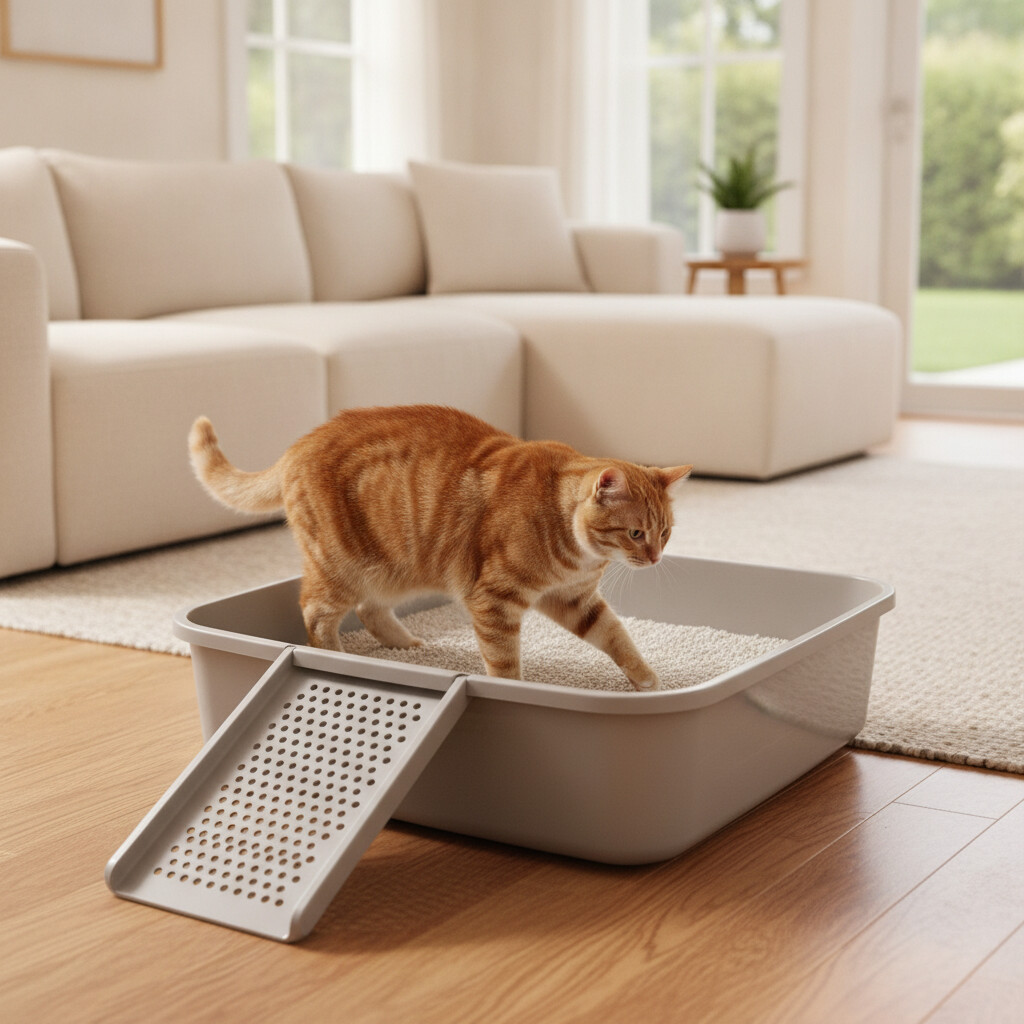
Most cats do fine with either style, but if you have to pick one, an open (uncovered) box is the safer default. Covered boxes mostly benefit you, not your cat, and a few cats will quietly reject them.
That’s the short version. Here’s the longer one, including how to test it with your own cat before you spend money.
Do Cats Prefer Covered or Uncovered Litter Boxes?
The honest answer: the research is thinner than the marketing suggests. The AAFP/ISFM Feline Environmental Needs Guidelines (Ellis et al., Journal of Feline Medicine and Surgery, 2013) recommend large litter trays and note that many cats do better without a hood, because covers can trap odor, limit escape routes and make it harder to see what’s happening around them.
Surveys and studies of litter preferences have generally found that individual cats vary a lot. Some cats seem perfectly happy in a hooded box. Others avoid them. Since cats can’t tell us which they prefer, behavior is the only data you get.
Why Some Cats Dislike Covers
Think about it from the cat’s side. Using the box is a vulnerable moment. A cat in a covered box has one exit, and that exit can be blocked by another pet, a child or a vacuum cleaner.
- Odor concentrates. A hood traps smell inside, and a cat’s nose is far more sensitive than yours. The box that smells fine to you from the hallway may be intense inside.
- Less room. Many hooded boxes are smaller than the open pans cats prefer. The guidelines suggest a box about 1.5 times the length of your cat, nose to base of tail. Few covered boxes meet that.
- Ambush risk. In multi-cat homes, one cat can guard the single opening. See our guide on how many litter boxes you actually need for the multi-cat math.
- Dust and noise. Flaps and hoods can rattle, and some cats dislike pushing through a flap.
What Covered Boxes Do Well
Covered boxes aren’t a scam. They help with:
- Litter scatter, especially for cats who dig enthusiastically
- Visual privacy for you, in a studio apartment or a shared living room
- Dogs raiding the box (a depressingly common problem)
- Cats who seem to like enclosed spaces, as many do for sleeping
The catch is that “helps the human” isn’t the same as “the cat likes it.” If you want the benefits, a tall-sided open box is a good middle ground: it contains the mess without trapping odor.
Signs Your Cat Is Unhappy With the Box
Cats rarely complain directly. Watch for:
- Perching on the rim instead of stepping in
- Digging briefly, then leaving without covering
- Going just outside the box, or choosing a rug or the bathtub
- Straining or crying while in the box (see the vet section below)
If your cat has started going elsewhere, a hood is only one possible cause. Our reader story Why Our Cat Stopped Using the Litter Box shows how many things can be behind it.
How to Test Your Cat’s Preference
This is the most reliable method, and it’s cheap.
- Set up two boxes side by side, same litter, same depth. Leave one uncovered and put a cover on the other. Many hooded boxes let you remove the lid.
- Wait a week or two. Cats can be slow to change habits.
- Check which gets used. Scoop each box separately and note which one fills up.
- Keep the winner. Don’t be hurt if it’s the open one.
If you’re switching an established cat, don’t remove the old box overnight. Add the new one first, and take the old one away only once the new one is clearly in use.
Practical Tips Whatever You Choose
- Clean it daily. Scooping at least once a day matters more than box design for many cats.
- Pick a quiet, accessible spot, away from the washing machine and food bowls.
- Don’t change litter brands at the same time as you change the box. One variable at a time.
- Older cats often need lower entry points, whichever style you pick. See best litter boxes for senior cats with mobility issues.
When to See a Vet
A change in litter box behavior is not always about the box. Call your vet promptly if your cat:
- Strains, cries or makes repeated trips with little or no urine
- Has blood in the urine
- Suddenly starts urinating or defecating outside the box
- Shows signs of constipation or diarrhea that last more than a day or two
A male cat who can’t urinate is an emergency. Don’t wait to see if it passes.
The Bottom Line
If you’re buying a first box, or your cat has never complained, either style can work. If you’re troubleshooting or choosing for a nervous cat, start with a large, open, easy-to-enter box and clean it every day. Only add a cover if your cat shows, through actual behavior, that they don’t mind it.