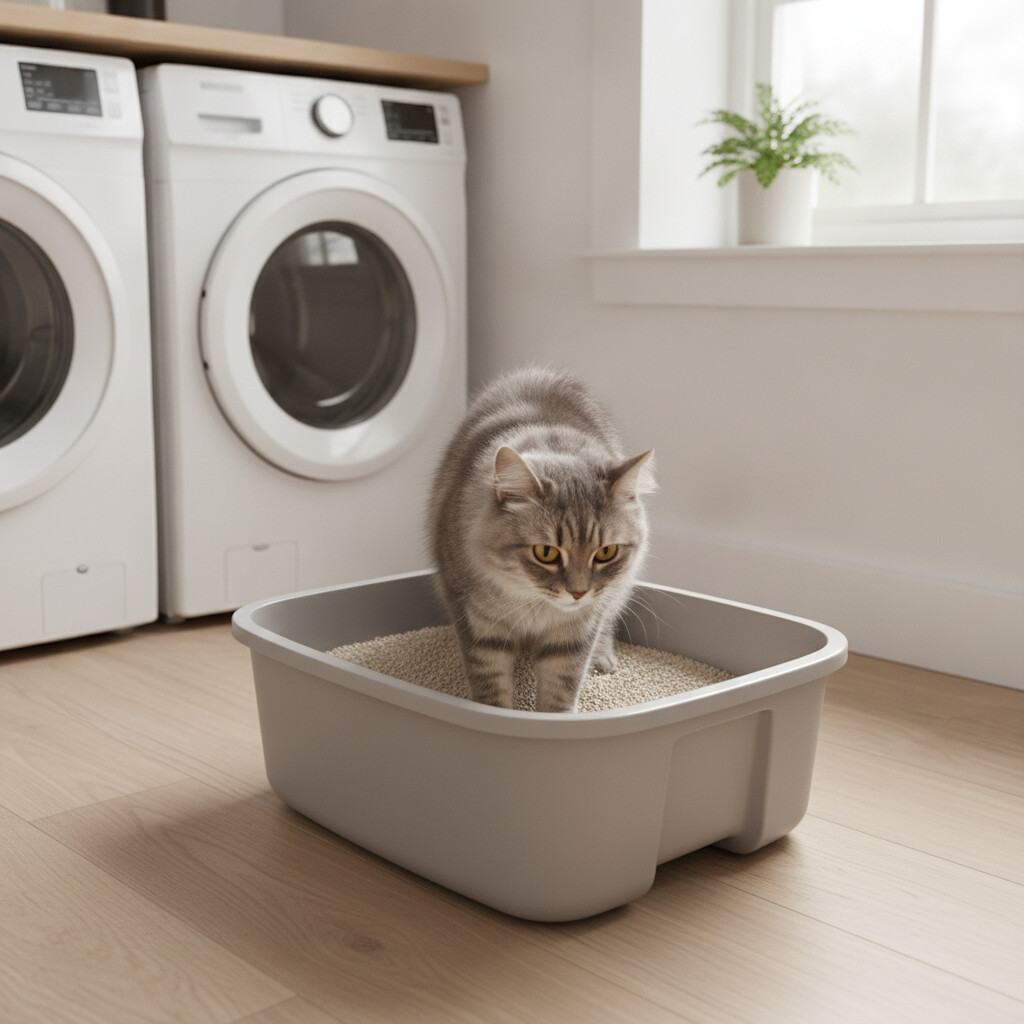
Most cats prefer unscented litter. Veterinary guidelines on litter box problems recommend unscented clumping litter as the default, and added perfume is one of the more common reasons a cat starts going somewhere other than the box. Scented litter is designed for human noses. Your cat’s nose is far more sensitive, and it’s the one that has to be right down in it.
If your cat is using a scented litter happily, you don’t need to panic and switch tonight. But if you’re choosing a litter, or your cat has started avoiding the box, here’s what the evidence says.
Do cats hate scented litter?
“Hate” is too strong for every cat, but plenty of cats dislike it, and very few cats seem to prefer it.
The clearest guidance comes from the AAFP and ISFM guidelines on house-soiling in cats (Carney and colleagues, Journal of Feline Medicine and Surgery, 2014). They recommend unscented, clumping litter for most cats and list scented litter and litter-box deodorizers among the things that can put cats off using the box. The AAFP/ISFM Feline Environmental Needs Guidelines (Ellis and colleagues, 2013) make the same general point: the litter box is one of a cat’s core resources, and it should suit the cat’s preferences, not ours.
Earlier preference work points the same way. Veterinary behaviorists including Jacqueline Neilson (Journal of Feline Medicine and Surgery, 2004) have written that most cats favor fine-grained, unscented, clumping litter, and that strong odors, including perfumed litter, are a common reason cats reject a box.
Honest caveat: there aren’t many large, modern trials comparing scented and unscented litter head-to-head. Some cats use scented litter for years without any trouble. The recommendation is a sensible default based on what tends to go wrong, not proof that every cat objects.
Why scent matters so much to cats
Cats live in a world of smell. Their sense of smell is far more sensitive than ours, and they also have a working vomeronasal organ, a second scent organ in the roof of the mouth that picks up chemical signals. Smell is how they identify their territory, each other and you.
That has two consequences in the litter box:
- A fragrance strong enough to cover up the smell for you can be overpowering for a cat, who is standing in it with their face a few inches above the surface.
- Cats use smell to recognize the box as a toilet. A faint scent of their own urine can actually help them identify the right spot. Masking it completely with perfume can make the box feel less like theirs.
Can scented litter cause health problems?
There’s no strong evidence that scented litter harms healthy cats. The concern is mostly about cats with breathing problems.
Fragrances and fine dust can irritate airways. Vets commonly advise low-dust, fragrance-free litter for cats with asthma or chronic respiratory disease, along with avoiding air fresheners, plug-ins and smoke in the home. If your cat has a cough, wheezes, or has been diagnosed with asthma, unscented and low-dust is the safer choice. Our feline asthma story shows how easily those early signs get mistaken for hairballs.
The same goes for people in the house with asthma or fragrance sensitivity. Unscented doesn’t mean smelly if the box is kept clean.
Signs your cat doesn’t like their litter
Cats rarely make a dramatic statement about litter. The signs are usually subtle at first:
- Perching on the edge of the box instead of standing in it
- Barely digging, or not covering at all
- Shaking their paws a lot after leaving the box
- Getting in and out quickly, or sniffing and walking away
- Peeing or pooping right next to the box
- Choosing soft surfaces instead, such as bath mats, rugs, laundry or beds
If any of these started around the time you changed litter, the litter is a good suspect. If they started without any change, rule out a medical cause first (more on that below).
How to control litter box odor without perfume
Most litter box smell comes from waste sitting there, not from the type of litter. These do far more than fragrance:
- Scoop at least once a day, twice if you can. This is the single biggest factor.
- Use a clumping litter so urine can be removed fully instead of soaking in.
- Keep enough litter in the box. About 2 to 3 inches deep lets clumps form properly and gives cats room to dig.
- Replace the litter and wash the box regularly. Every 2 to 4 weeks for clumping litter is a common rule of thumb. Use hot water and mild unscented soap. Skip bleach-heavy or strongly scented cleaners.
- Have enough boxes. The usual guideline is one per cat plus one. Our guide on how many litter boxes you actually need explains why.
- Think about box placement and type. A quiet, well-ventilated spot works best. Covered boxes trap smell inside, right where the cat’s nose is. See our guide to covered vs. open litter boxes.
What about baking soda or charcoal?
Odor absorbers like activated charcoal and baking soda work differently from perfume. They try to neutralize smell rather than cover it with a stronger one. Many unscented litters already include them. There’s less concern about these than about perfumed litters, but the evidence on cat preferences is thin. If you add baking soda yourself, a light sprinkle under the litter is plenty, and watch whether your cat’s habits change.
How to switch from scented to unscented litter
Cats can be particular about change, so go gradually, even if you’re moving to something they’ll probably prefer.
- Mix it in. Start with about one quarter unscented litter and three quarters of the old litter.
- Increase over 1 to 2 weeks. Move to half and half, then three quarters, then fully unscented.
- Or offer a choice. If you have space, set up a second box with the new litter next to the old one and let your cat pick. This is also a good way to test a few litters at once.
- Keep everything else the same during the switch: same box, same spot, same cleaning routine.
For a broader comparison of clumping clay, silica crystal, and plant-based litters, see our cat litter comparison guide.
When to see a vet
A cat that stops using the litter box isn’t always making a point about the litter. Changes in toilet habits are often an early sign of a medical problem, such as cystitis, urinary crystals, kidney disease, diabetes, constipation or arthritis that makes climbing into the box painful.
Call your vet the same day if your cat:
- Is straining to pee, going back to the box over and over, or producing little or no urine. In male cats especially, this can be a urinary blockage, which is an emergency.
- Has blood in the urine
- Is crying while using the box
Book a regular appointment if your cat:
- Has started going outside the box and a litter change doesn’t fix it within a week or two
- Is peeing much more than usual (bigger or more frequent clumps)
- Has diarrhea or constipation lasting more than a day or two
Our story about the cat who stopped using the litter box is a good reminder that the cause isn’t always what you’d expect.
The bottom line
Start with unscented, clumping, fine-grained litter. Scoop daily, keep enough boxes, and wash them with mild unscented soap. If your cat is already happy with a scented litter and has no breathing problems, there’s no urgent need to change. But if they’re avoiding the box, perching on the edge, or have asthma, switching to unscented is one of the simplest fixes you can try.
Which litter has your cat finally agreed to use, and how many did you try before you got there?