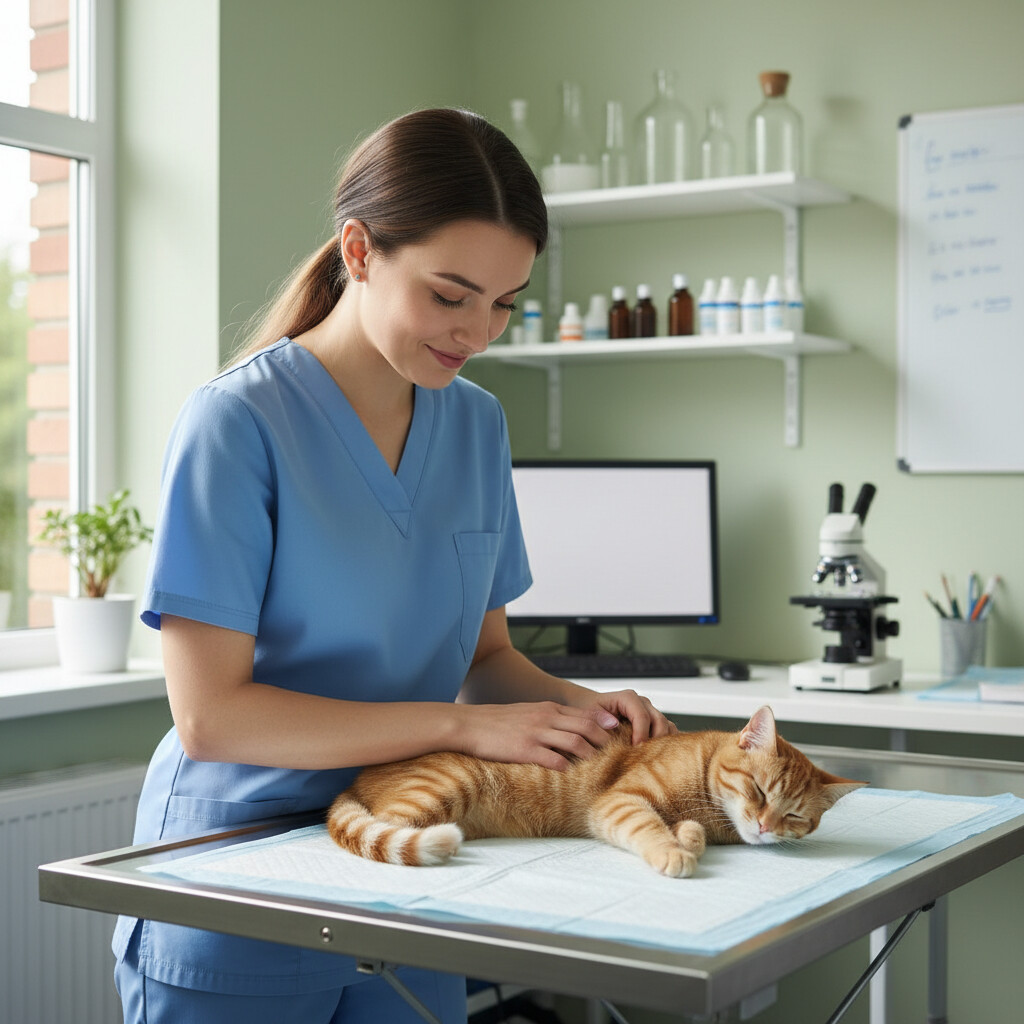
The evidence on spaying and neutering cats is about as settled as veterinary science gets. For the vast majority of owned cats, the procedure significantly reduces the risk of several serious diseases, eliminates the risk of others entirely, and changes several problem behaviours for the better. The debate isn’t really whether — it’s when.
The Health Benefits Are Substantial
For female cats (spaying):
Unspayed females are at significant risk of pyometra — a life-threatening uterine infection that can develop after any heat cycle. The American Veterinary Medical Association (AVMA) notes that pyometra affects roughly 1 in 4 intact female cats by age 10, and emergency treatment often means surgery anyway, but under much worse conditions. Spaying eliminates this risk entirely.
Mammary cancer is the other major concern. Research published in the Journal of Veterinary Internal Medicine found that spaying before the first heat cycle reduces mammary tumour risk by roughly 91%. Waiting until after the first heat drops that to around 86%, and after two heats, to around 11%. The timing matters. Mammary cancer in cats is aggressive — roughly 85-90% of tumours are malignant, compared to about 50% in dogs.
For male cats (neutering):
Neutering eliminates testicular cancer (obviously) and significantly reduces the risk of benign prostatic hyperplasia. The bigger benefits, though, tend to be behavioural — covered below.
Both procedures also remove the drive to roam, which reduces the risk of injury, disease transmission (FIV and FeLV spread primarily through bite wounds during fights), and getting lost.
The Behavioural Changes
Spraying is the big one. Intact male cats spray urine to mark territory — and the smell is considerably stronger than neutered cat urine. Neutering eliminates spraying behaviour in around 90% of males if done before the behaviour is established. For cats that are neutered after spraying starts, around 80% still stop. This isn’t a guarantee, but the odds are strongly in your favour.
Intact males are also significantly more likely to be aggressive toward other cats and to roam. An unneutered tom in an area with other intact cats is almost certain to develop fight injuries — and cat bite abscesses are both painful and expensive to treat.
For females, the immediate behavioural issue is heat cycles: yowling, restlessness, rolling, and the constant drive to escape. A female in heat can cycle every two to three weeks from spring through autumn. Spaying ends this entirely.
When Should You Do It?
The traditional advice is around 5–6 months, before the first heat cycle for females and before hormonal behaviours develop in males. The AVMA supports this timing.
Early spay/neuter (8–16 weeks) is standard practice in shelters and rescue organisations — animals need to be fixed before adoption, and this has been shown to be safe in healthy kittens when done by an experienced vet.
There is a newer body of research — primarily from large-breed dogs — suggesting that for some animals, waiting until after sexual maturity may benefit musculoskeletal development and reduce certain orthopaedic conditions. The evidence for this in cats is far thinner than in dogs, and most feline veterinary specialists still recommend earlier timing. The AAFP (American Association of Feline Practitioners) supports paediatric spay/neuter in cats and notes the procedure is safe from 8 weeks of age onward.
If you’ve got questions about timing specific to your cat’s breed, age, or health status, talk to your vet — there isn’t a single right answer for every situation.
Common Concerns, Addressed
“Won’t it make my cat fat?”
Spaying and neutering reduce metabolic rate somewhat, and can increase appetite. But cats get fat because they’re overfed, not because of the surgery itself. Portion-controlled feeding after the procedure prevents weight gain. See our guide on how much to feed your cat for practical guidance.
“Shouldn’t she have one litter first?”
There’s no health benefit to letting a cat have a litter before spaying — this is a persistent myth. The cancer risk reduction is actually highest when spaying happens before the first heat. There is also no shortage of kittens in shelters.
“My cat is indoor-only, so the risks don’t apply.”
Indoor cats still develop pyometra and mammary tumours. The disease risk is not about outdoor access — it’s about intact reproductive organs and the hormonal cycles they generate.
What the Procedure Actually Involves
Both procedures are performed under general anaesthesia and are the most common surgeries in small animal veterinary practice. Spaying (ovariohysterectomy) removes the ovaries and uterus; neutering (castration) removes the testicles. Recovery for males is typically 24–48 hours of reduced activity. For females, 10–14 days of restricted activity while the incision heals is standard.
Complications are uncommon in healthy animals when performed by an experienced vet. Your vet will advise on pre-anaesthetic bloodwork based on age and health status.
When to See a Vet
- Before the procedure: Schedule a pre-op consultation. Your vet will assess your cat’s health and advise on timing.
- After the procedure: Watch the incision site for signs of infection — redness, swelling, discharge, or your cat licking obsessively at the area. A small amount of bruising or swelling is normal; spreading redness is not.
- If your cat is intact and unwell: Any intact female cat showing lethargy, vomiting, increased thirst/urination, or vaginal discharge needs an urgent vet assessment — these can be signs of pyometra, which is a surgical emergency.
Spaying and neutering aren’t the right choice for every cat in every circumstance — responsible breeders being the obvious exception — but for the typical owned cat, the evidence is clear and the benefits are significant. This is one area where the mainstream veterinary consensus is well-earned.
For more on preventive care, see our guide to cat vaccines and what they protect against and what your vet is actually watching for in a well-cat check.