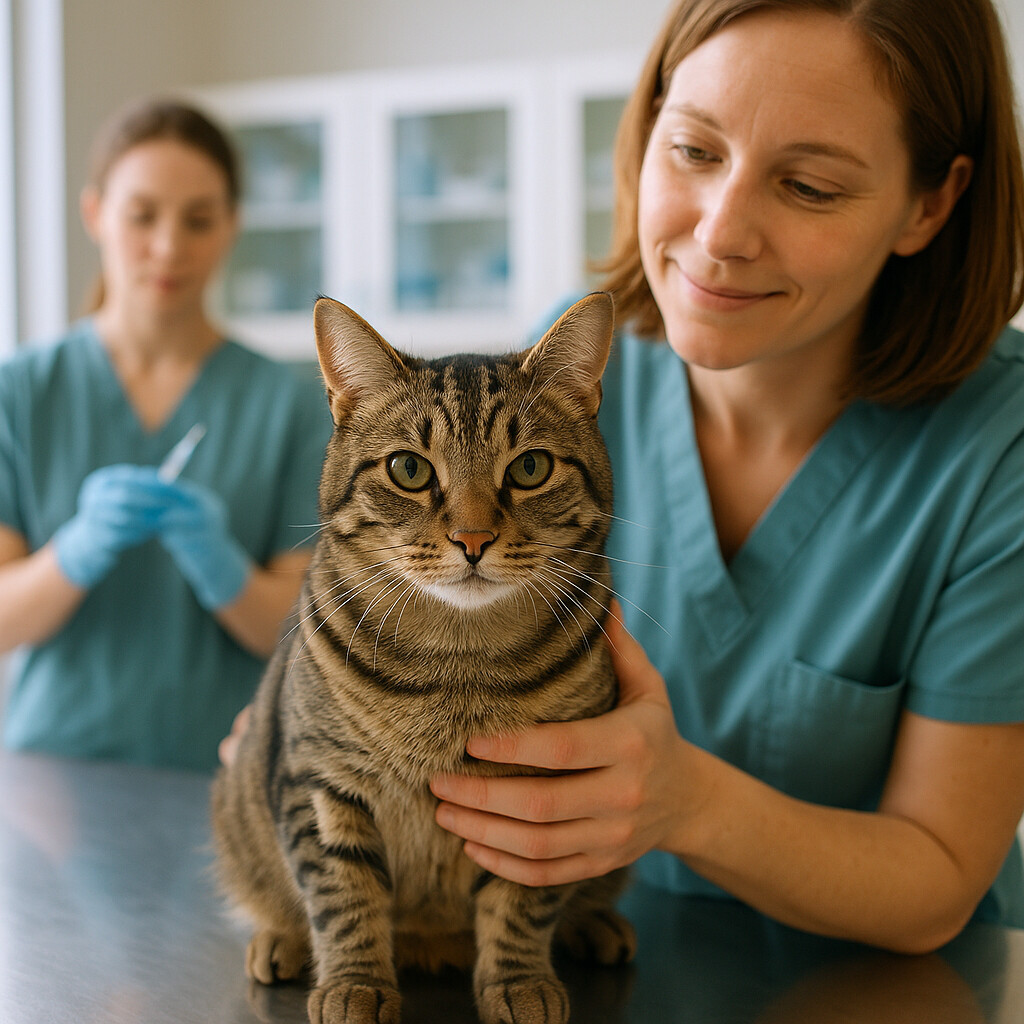
Every year, millions of American cats miss vaccines they actually need — and millions of others get vaccinations they genuinely don’t. If your vet has ever said “your cat is due for their shots” without explaining which ones or why, this guide is for you.
Here’s everything you need to know about cat vaccines in the US: which are non-negotiable, which depend on your cat’s lifestyle, what the actual schedule looks like, and what questions to ask your vet.
Core vs. Lifestyle: Understanding the Two Categories
The American Association of Feline Practitioners (AAFP) divides cat vaccines into two groups:
Core vaccines — every cat needs these, regardless of lifestyle:
- FVRCP (Feline Viral Rhinotracheitis, Calicivirus, Panleukopenia) — the cat equivalent of the MMR shot. Protects against three serious diseases spread by casual contact.
- Rabies — legally required in most US states. Even indoor cats should be current; a bat can get through a window screen.
Non-core (lifestyle) vaccines — recommended based on risk:
- FeLV (Feline Leukemia Virus) — strongly recommended for outdoor cats or cats in multi-cat households. FeLV is spread by saliva and close contact; once a cat tests positive, the virus is permanent.
- Bordetella — occasionally recommended for cats in boarding or shelter environments.
- Chlamydia felis — rarely used; usually only for catteries with documented outbreaks.
The honest truth: Most indoor-only adult cats with no exposure to other cats really do only need FVRCP and rabies. Don’t let anyone upsell you on vaccines your cat doesn’t actually need.
The Kitten Vaccine Schedule (Weeks 6–16)
Kittens receive a series of vaccines, not just one, because their maternal antibodies can interfere with immunity. Here’s the standard US schedule:
| Age | Vaccine |
|---|---|
| 6–8 weeks | FVRCP #1 (first dose) |
| 10–12 weeks | FVRCP #2 + FeLV #1 (if recommended) |
| 14–16 weeks | FVRCP #3 + FeLV #2 + Rabies #1 |
Why so many rounds? Maternal antibodies from mom’s milk start blocking vaccine response around 6 weeks, then fade unpredictably. The series ensures at least one dose hits at the right immunological window. This is why skipping or spacing out kitten vaccines is risky — you can’t know which dose will “take.”
The FeLV vaccine series requires two doses 3–4 weeks apart for initial immunity, followed by yearly boosters if exposure risk continues.
Adult Cat Boosters: What Actually Happens After the Kitten Series
Once your cat completes their kitten series, here’s the US adult schedule:
FVRCP:
- 1-year booster after the kitten series
- Then every 3 years for most adult cats (the AAFP moved away from annual boosters in 2020 based on immunity duration studies)
Rabies:
- Initial 1-year booster, then every 1 or 3 years depending on the vaccine brand used
- Ask your vet which brand they use — this determines the legal duration in your state
FeLV:
- Annual booster for outdoor cats and multi-cat households
- Indoor-only cats with no exposure can stop after the initial series (discuss with your vet)
One important note: Some vets still do annual FVRCP boosters. The AAFP guidance says every 3 years for low-risk cats, but individual vets have discretion. If yours recommends annual FVRCP, ask why — it may be appropriate for your cat’s situation, or it may simply be old protocol.
The Indoor Cat Question
Indoor cats do get sick. If you have an indoor-only cat, you still need:
- Rabies — legally required in most states, and bats are the most common source of rabies in humans; they get inside houses more than people realize
- FVRCP — because herpesvirus (one of the components) can be carried in by humans on shoes/clothes, and panleukopenia is heartbreakingly easy to transmit
What indoor cats genuinely don’t need unless circumstances change: FeLV (unless they escaped, you fostered another cat, or you’re adopting a new cat).
Vaccine Reactions: What’s Normal and What’s Not
Most vaccine reactions in cats are mild and temporary:
Normal (lasts 1–3 days):
- Lethargy, sleeping more than usual
- Mild soreness at the injection site
- Low-grade fever
- Reduced appetite on day of vaccination
Call your vet same day:
- Facial swelling or hives
- Vomiting or diarrhea
- Difficulty breathing
- Collapse or extreme weakness
A small, firm lump at the injection site is common and usually resolves in 2–3 weeks. However, if a lump persists past 4 weeks, grows larger, or changes shape — call your vet. This is the profile of a rare but serious condition called feline injection-site sarcoma (FISS). It’s uncommon, but it’s worth monitoring every time.
Vaccine Titers: Do They Work for Cats?
Titer testing measures your cat’s existing antibody levels to see if a booster is actually needed. This is well-established in dogs, and it’s increasingly used for cats — particularly for FVRCP.
The practical reality:
- Titer tests cost $50–$150, often similar to or more expensive than just vaccinating
- They’re most useful for cats with prior vaccine reactions or immune conditions
- Most pet insurance doesn’t cover titer testing
- Rabies titer tests are not legally accepted as a substitute for the rabies vaccine in the US (with narrow exceptions for documented vaccine reactions — requires a vet exemption letter)
If your cat has had reactions to vaccines before, talk to your vet about titers plus pretreatment (antihistamines before vaccination) as an alternative to skipping boosters entirely.
What to Bring to Your Vet
To make vaccine decisions efficiently:
- Previous vaccine records (even handwritten from a shelter or breeder)
- Note your cat’s lifestyle: strictly indoor, indoor/outdoor, exposure to other cats, boarding frequency
- Ask specifically: “Which vaccines are core for my cat, which are lifestyle-based, and what’s the current AAFP-recommended interval?”
A vet who’s current on guidelines will walk you through the reasoning. One who just says “time for your annual shots” without context is worth a follow-up question.
Vaccines are one of the most cost-effective things you can do for a cat’s long-term health. The full kitten series plus staying current on adult boosters typically costs $150–$300 total over a cat’s first year — far less than treating any of the diseases they prevent.
— CatLady6