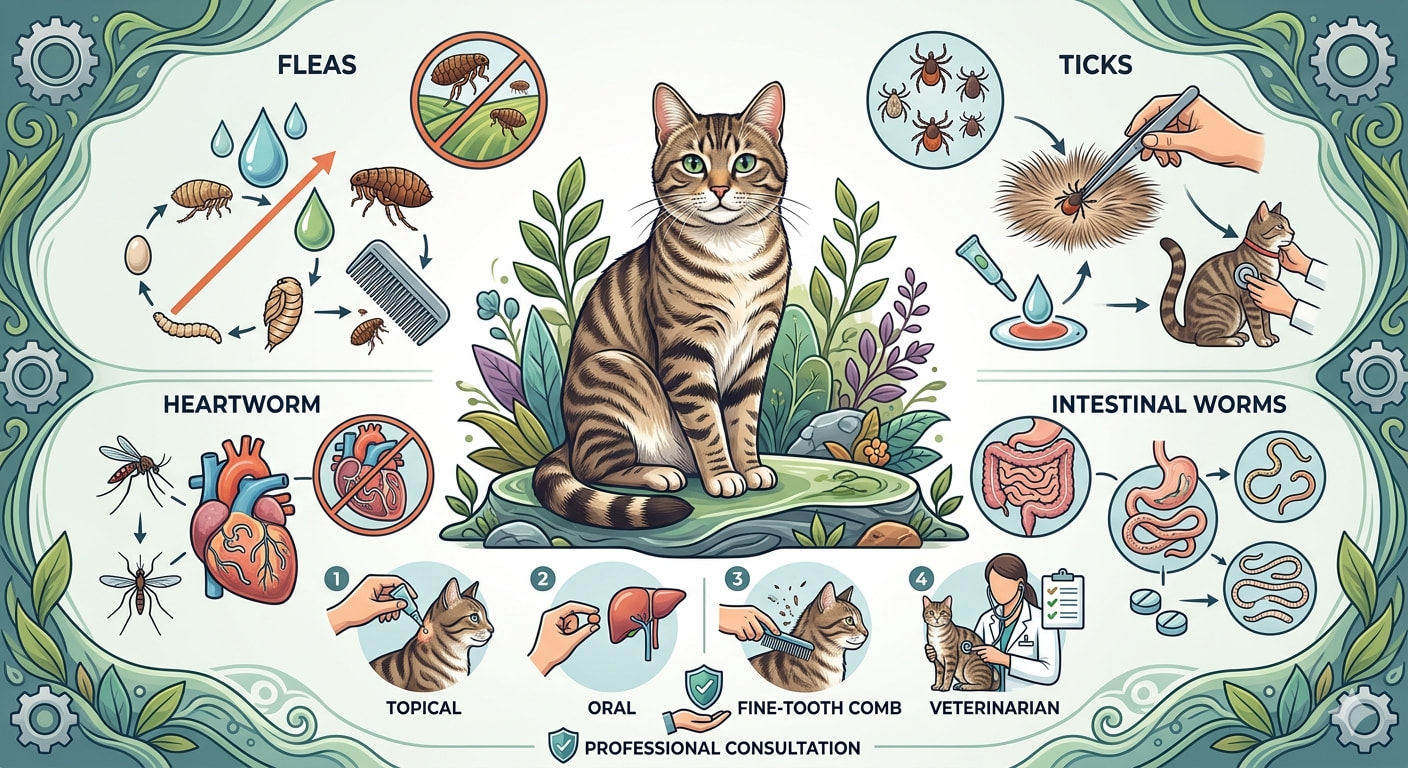
Your cat doesn’t need to go outside to bring home parasites. Fleas hitchhike on your clothes, worm eggs arrive on shoes via contaminated soil, and even indoor-only cats get tapeworms from swallowing a single flea during grooming. Prevention costs far less — in time, money, and stress — than treating an established infestation.
Why Indoor Cats Aren’t Off the Hook
The assumption that indoor cats don’t need parasite prevention is one of the most common reasons owners end up dealing with problems they didn’t see coming.
According to the Companion Animal Parasite Council (CAPC), a significant percentage of U.S. cats test positive for intestinal parasites each year — including cats that never step outside. Fleas enter homes on clothing, on dogs, or through window screens. Worm eggs can be tracked in on footwear. Mosquitoes carry heartworm larvae indoors.
The other factor working against cats: they’re compulsive groomers. This actually spreads certain parasites — tapeworms, for example, almost always arrive via a flea that the cat swallowed during a grooming session.
Fleas: The Most Common, and the Most Underestimated
Fleas are the most prevalent external parasite in cats by a significant margin. One female flea can lay up to 50 eggs per day, and most of the flea population at any given time — around 95% — is not on your cat. It’s in the carpet, bedding, baseboards, and furniture, waiting to hatch.
Signs your cat has fleas:
- Scratching, particularly around the head, neck, and base of the tail
- Small black specks in the coat or bedding (flea dirt — essentially flea feces)
- Tiny red bumps or scabs on the skin
- Excessive grooming or hair loss from over-grooming
- Pale gums in kittens or elderly cats (severe infestations can cause anemia)
One thing worth knowing: some cats react dramatically to even one or two flea bites — a condition called flea allergy dermatitis — while others remain comfortable despite a substantial infestation. Don’t use your cat’s apparent comfort as evidence that they’re flea-free.
On treatment: Prescription-grade flea preventives — both topical and oral — are substantially more effective than over-the-counter products. Products like selamectin, fluralaner, and sarolaner are commonly recommended for cats. Your vet will advise based on your cat’s weight and health status.
One critical warning: never use permethrin-based products on cats. Many dog flea treatments contain permethrin, which is lethal to cats. Even contact with a recently treated dog can be dangerous. Always check the label and confirm with your vet.
Ticks: Lower Risk for Cats, But Not Zero
Cats are better at removing ticks through grooming than dogs, but they can still carry them — particularly outdoor or semi-outdoor cats in tick-prone regions. Tick risks vary significantly by geography: the northeastern U.S. has high Lyme disease prevalence, the south and mountain states see higher rates of Rocky Mountain spotted fever and other tick-borne diseases.
How to check: Run your fingers slowly through your cat’s coat after any time outside, focusing on the ears, between the toes, around the neck, and on the underbelly. An embedded tick feels like a small, firm bump.
Removing a tick: Use fine-tipped tweezers, grasp the tick as close to the skin surface as possible, and pull upward with steady pressure — no twisting. Drop it in rubbing alcohol. Don’t crush it between your fingers.
The AAFP notes that there are fewer approved tick preventives for cats than for dogs, so if your cat has genuine tick exposure risk, talk to your vet about what’s currently approved and safe for feline use.
Internal Parasites: What’s Likely Living in Your Cat’s Gut
Internal parasites are easy to overlook because cats can carry them for months without obvious symptoms.
Roundworms are the most common intestinal parasite in cats globally. Kittens can be born with them or acquire them through their mother’s milk. Adult cats pick them up through contaminated soil, prey animals, or contact with infected feces. Light infections often show no symptoms; heavier infestations cause vomiting, diarrhea, and a visibly swollen belly in kittens.
Tapeworms are directly linked to fleas. When a cat swallows an infected flea during grooming, the tapeworm larva develops in the intestine. The most visible sign: small white segments — often described as looking like grains of rice — around the base of the tail or in the feces.
Hookworms are less common but can cause meaningful blood loss, particularly in kittens. They enter through skin contact with contaminated soil as well as through ingestion.
Heartworm is transmitted by mosquitoes and, while far more commonly discussed in dogs, is genuinely serious in cats. Unlike dogs, there is no approved treatment for feline heartworm disease — only prevention. Monthly preventives (such as selamectin) are recommended in high-risk regions, particularly the southeastern U.S. and anywhere mosquitoes are prevalent year-round.
What Vets Actually Recommend
The AAFP’s current guidelines align around a few consistent recommendations:
- Year-round flea prevention for most cats, including indoor-only cats in areas where fleas are common
- Heartworm prevention in high-risk regions — the southeast, warm southern states, coastal areas with active mosquito seasons
- Annual fecal exams for adult cats; more frequent testing for cats that hunt, go outdoors, or live with other animals
- Kitten deworming starting at 2–3 weeks of age, repeated every 2 weeks until 8 weeks, then monthly to 6 months
Combination preventive products exist that cover fleas, heartworm, and some intestinal parasites in a single monthly dose. Whether this is appropriate for your cat depends on lifestyle, location, and health status — your vet is the right person to make that call.
When to See a Vet
Don’t wait on these:
- Worm segments (rice-like specks or visible worms) in stool, around the tail, or in vomit
- A kitten or senior cat that seems lethargic, is losing weight unexpectedly, or has pale gums
- Intense scratching with significant hair loss or skin lesions
- An embedded tick you can’t safely remove, or a bite site that looks infected or isn’t healing
- Any time you’re starting or switching prevention products — OTC options vary widely in safety and efficacy, and some are unsafe for cats
A fecal test at your annual vet visit catches most intestinal parasites before they become a visible problem. It’s low cost, quick, and removes the guesswork.
For more on keeping your cat in good health year-round, see our guides on cat vaccinations and what’s normal vs. concerning with cat eye discharge.