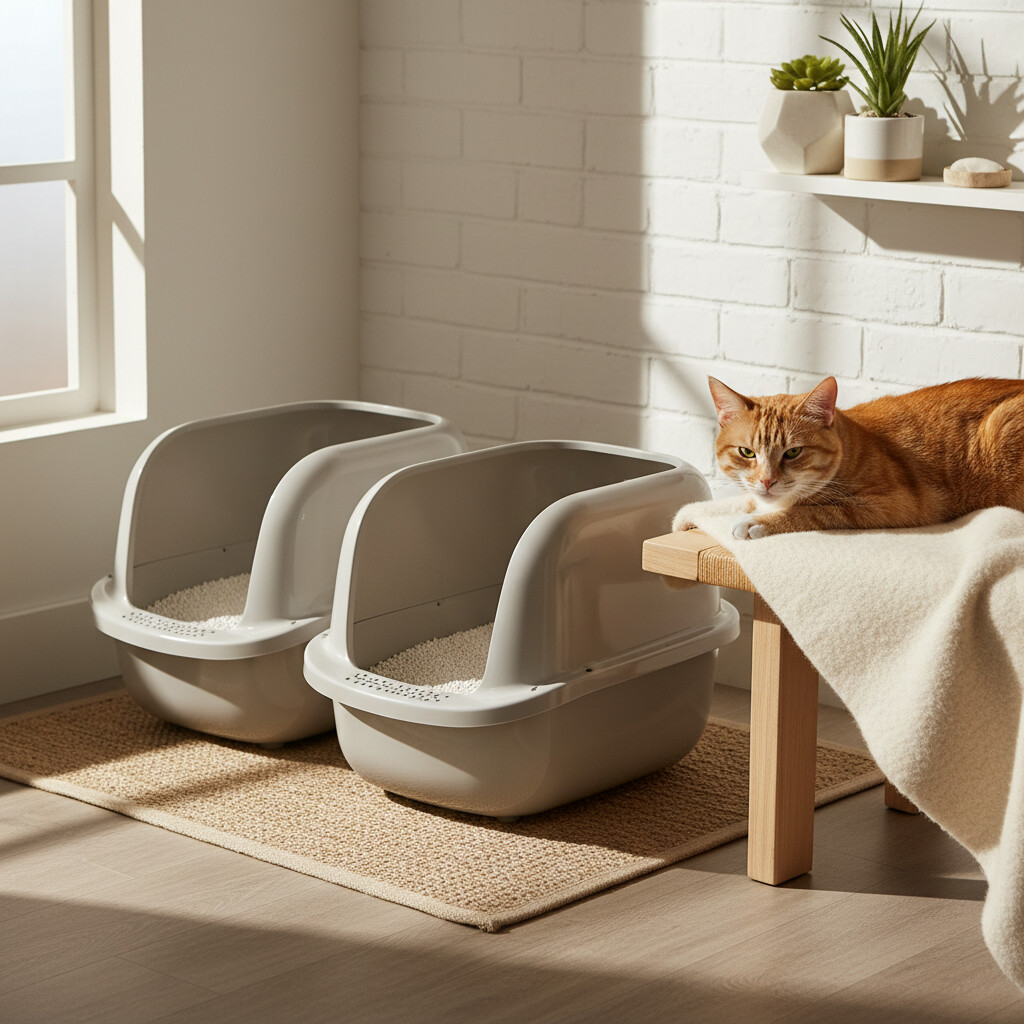
The standard rule is one litter box per cat, plus one extra. So two cats means three boxes. That’s not arbitrary — it comes from what we know about why cats stop using litter boxes, and the single most common reason is that the setup doesn’t give them enough options.
Here’s why that rule exists and how to actually apply it at home.
The N+1 Rule: What It Means and Why It Works
The “one per cat plus one” guideline comes from the American Association of Feline Practitioners (AAFP), which has published extensive guidelines on feline environmental needs. The logic is straightforward:
Cats are fastidious about bathroom hygiene — more so than most owners realise. Many cats won’t use a box that already contains waste. Others refuse to urinate and defecate in the same box. Some avoid a box simply because another cat has recently used it, even if it appears clean. When you have one box per cat, there’s no margin for any of these preferences. Add one more and you remove the friction.
In practice: one cat should have at least two boxes. Two cats should have three. Three cats should have four. It sounds like a lot, but litter box problems are one of the most common reasons cats are surrendered to shelters — and a significant proportion of those problems are box-count problems in disguise.
Placement Matters as Much as the Number
Having three boxes doesn’t help if they’re all in the same laundry room. Location is half the equation.
The core rules for placement:
- Spread them out. Boxes clustered together function as one box in a cat’s mind. If a cat is ambushed at one box, all three in the same room are contaminated territory. Distribute them across different areas of the home.
- One per floor. In a multi-story home, put at least one box on each level. Cats — especially older cats or kittens — may not make it upstairs in time if that’s the only option.
- Away from food and water. Cats are instinctively averse to eliminating near their food. Putting the box next to the bowl is a reliable way to create avoidance.
- In quiet, accessible spots. Busy hallways and high-traffic areas stress cats out. A box that requires running a gauntlet of activity is a box that gets avoided.
- Not in dead ends. Cats like an escape route. A box pushed into the corner of a closed closet means a cat can be cornered while using it — particularly relevant in multi-cat homes where ambushing is common.
Multi-Cat Households: When to Add More
The N+1 rule is a minimum, not a ceiling. Multi-cat households often need to exceed it.
Social tension between cats — even low-level tension that’s easy to miss — frequently plays out at the litter box. A dominant cat blocking access to the box is a classic source of inappropriate elimination. If you notice one cat consistently waiting while another is using the box, or if one cat is eliminating outside the box but only in certain areas, resource guarding is a likely culprit.
Signs you may need more boxes:
- One cat consistently uses boxes that another cat doesn’t
- You’re finding elimination outside boxes in particular rooms or corners
- Cats are avoiding boxes that another cat uses heavily
- You have three or more cats
If your cats have ongoing tension or territorial conflict, litter box setup is one of the first environmental fixes worth trying alongside any behaviour work.
Box Size and Type: Often Overlooked
Box count gets most of the attention, but size matters significantly. A box that’s too small for your cat creates the same avoidance problem as too few boxes — just from a different direction.
The AAFP guideline is that a litter box should be at least 1.5 times the length of the cat from nose to tail base. Most commercially available boxes are undersized for adult cats, particularly large breeds. Covered boxes compound this by reducing interior space further.
On covered vs. uncovered: most cats have no strong preference. But cats who dislike their box and also have a covered box are worth testing with an uncovered option — covered boxes can trap odours, which bothers some cats even when the box appears clean to human senses.
For litter type, it matters more than most owners expect. Cats generally prefer fine-grained, unscented, clumping litter — research from the Journal of Feline Medicine and Surgery consistently finds this preference across studies. Scented litters are designed for human noses, not cat preferences. If you’re making changes, switch litter gradually: mix the new type in over a week or two rather than switching cold.
For a deeper look at litter options, the Cat Litter Comparison covers clumping, crystal, biodegradable, and self-cleaning options in detail.
Maintenance: The Part Most Owners Underestimate
Box count solves the resource problem. Maintenance solves the hygiene problem. Both matter.
Minimum maintenance:
- Scoop at least once a day (twice is better)
- Full litter change every 1–4 weeks depending on litter type and number of cats
- Wash the box with mild unscented soap each time you do a full change
- Replace plastic boxes every 1–2 years — scratches harbour bacteria and odour that cleaning can’t fully address
Self-cleaning litter boxes can reduce scooping frequency, but they still require regular maintenance and aren’t a substitute for the right number of boxes in the right locations. A self-cleaning box in one corner of a two-story house is still one box in one location.
Practical Setup for Small Apartments
“One per cat plus one” can feel impossible in a studio apartment. In practice, you have a few options:
Hidden furniture. Litter box furniture (boxes concealed inside benches or side tables) are genuinely functional and mean the box can be in a living area without being visible.
Top-entry boxes. These have a smaller footprint than traditional open boxes and work well for most healthy adult cats (though not kittens, elderly cats, or cats with mobility issues).
Corner placement. Corners use otherwise dead space and give cats a degree of enclosure without blocking an exit.
Even in a small apartment, two boxes are achievable. One near the main living area, one in the bathroom — different zones, different choices for your cat.
When to See a Vet
If your cat is eliminating outside the litter box, rule out a medical cause before assuming it’s a behavioural or setup problem. Urinary tract infections, bladder inflammation (FLUTD), constipation, and arthritis (which makes getting in and out of boxes painful) can all cause a cat to avoid the box suddenly.
A cat who previously used the box reliably and suddenly stops — especially if they’re straining, visiting the box frequently and producing little, or vocalising while trying to eliminate — needs veterinary attention promptly. Urinary obstruction in male cats in particular is a medical emergency.
If your cat has had a clean bill of health, then the litter box setup is the right place to start troubleshooting.