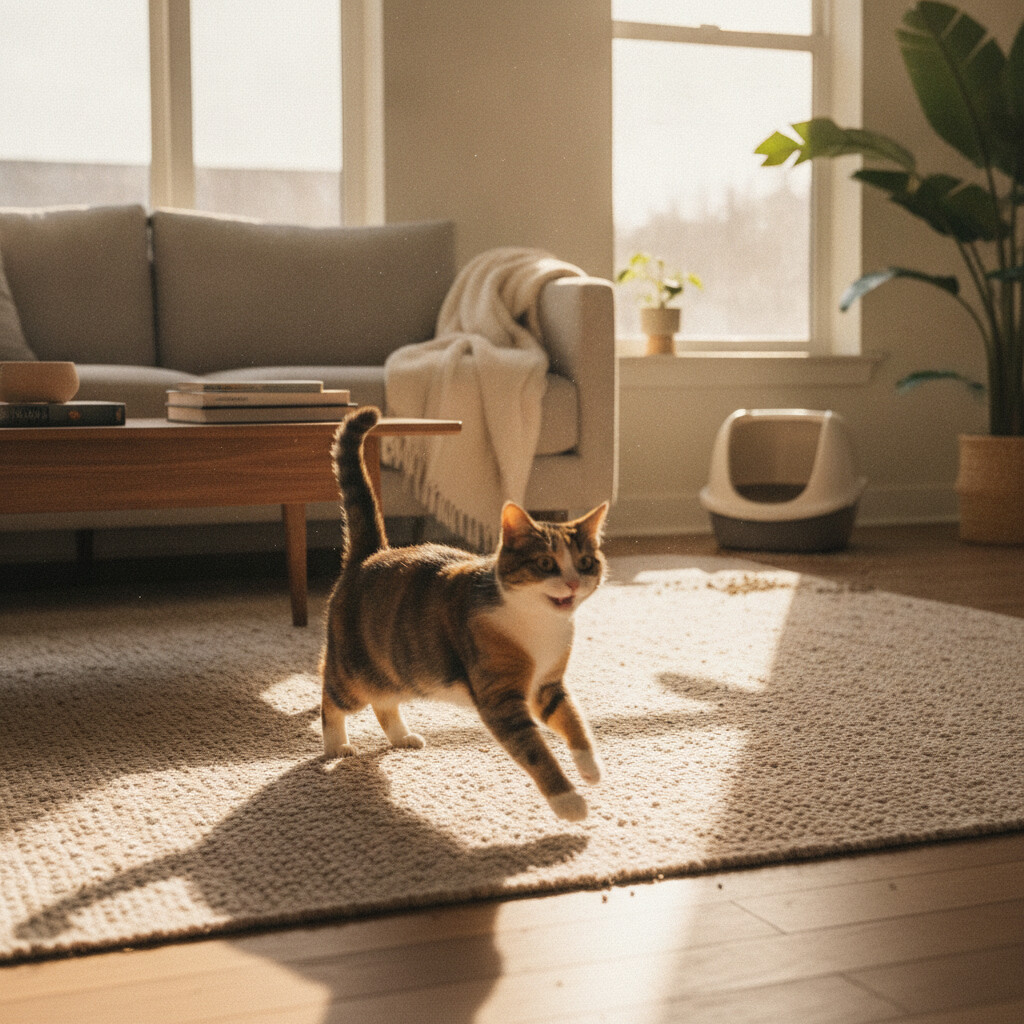
Your cat finishes their business, and thirty seconds later they’re tearing through the house like something’s chasing them. It’s not a malfunction — it’s a well-documented mix of relief, instinct, and a nervous system doing exactly what it evolved to do. Here’s what’s actually going on.
The Short Answer
Post-poop zoomies (vets sometimes call this “poo-phoria,” and yes, that’s a real term used informally in veterinary behavior circles) come from a combination of physical relief, a burst of nervous-system activation tied to defecation, and an evolutionary hangover: in the wild, a cat is briefly vulnerable while eliminating, so bolting afterward is a built-in safety response. It’s almost always normal. It only becomes a concern when it’s paired with straining, vocalizing in pain, or blood in the litter box.
Why the Litter Box Triggers a Sprint
There isn’t one single accepted mechanism — behaviorists point to a few overlapping explanations that likely combine:
Vagal nerve stimulation. The vagus nerve runs close to the colon, and defecation can stimulate it. In humans, vagal stimulation is linked to a brief drop in blood pressure and a lightheaded, sometimes euphoric sensation — which is where the “poo-phoria” idea comes from in casual veterinary discussion. Cats likely experience a version of this same physiological jolt.
Relief from discomfort. If a bowel movement is slightly effortful, even in a healthy cat, the moment it’s over can trigger a genuine release response — the same reason some cats sprint after a satisfying stretch or a big meal.
Predator-prey instinct. This is the explanation with the most support from feline behaviorists like those at the ASPCA and International Cat Care: in the wild, a cat digging and squatting to eliminate is temporarily distracted and exposed to predators. Once finished, a fast getaway from the site is an old survival habit, even for a cat who has never faced a real predator in their life. Domestic cats retain plenty of behaviors that no longer serve a practical purpose but haven’t been bred out.
Litter texture and cleanup. Some cats bolt because litter clings to sensitive paw pads, or because the box itself is mildly aversive (too small, too dirty, wrong substrate) and they’re eager to be anywhere else the second they’re done. This is worth ruling out if the zoomies seem more like a dash away from the box than the joyful, tail-up racing seen in the classic version.
Is It the Same Thing as Night Zoomies?
Related, but not identical. General nighttime zoomies are usually pent-up energy from a cat’s naturally crepuscular hunting schedule finally finding an outlet. Litter-box zoomies are event-triggered — they happen specifically around elimination, any time of day, and tend to be shorter and more frantic. A cat who only zooms after the litter box is displaying a distinct, specific behavior, not general restlessness.
When It’s Something to Watch Instead of Laugh At
Most of the time this is harmless and even a little funny. But a few signs mean it’s worth paying closer attention:
- Straining before or during elimination, especially in male cats — this can signal a urinary blockage, which is a genuine emergency, not a quirky habit.
- Crying or yowling while in the box or immediately after.
- Blood in urine or stool, or noticeably hard, dry stool suggesting constipation.
- A sudden change from box-avoidant to zoomie behavior, or vice versa — a cat who used to bolt but now lingers, strains, or avoids the box entirely.
- Frequent trips to the box with little produced each time.
When to See a Vet
If the zoomies are accompanied by straining, vocalizing in apparent pain, visible blood, or a change in litter box frequency or habits, contact your vet — particularly for male cats, where urinary blockages can become life-threatening within 24–48 hours. If your cat is otherwise eating, drinking, and using the box normally and the zoomies are just an energetic, tail-up dash, there’s no medical concern here. It’s a quirk, not a symptom.
Getting the litter box setup right — the right number of boxes, a size your cat can actually turn around in, and litter they don’t hate — also reduces box-related stress that can make elimination less comfortable in the first place. If you’re still deciding between litter types, this comparison of clumping, crystal, and self-cleaning options is a good place to start.
The Takeaway
The post-litter-box sprint is one of the more universal cat behaviors out there, and in the vast majority of cases it’s a completely normal mix of physical sensation and old instinct — not a sign anything is wrong. Watch for straining, pain, or blood rather than the zoomies themselves, and you’ll know the difference between a cat being weird in the way cats are supposed to be weird, and a cat who needs a vet visit.