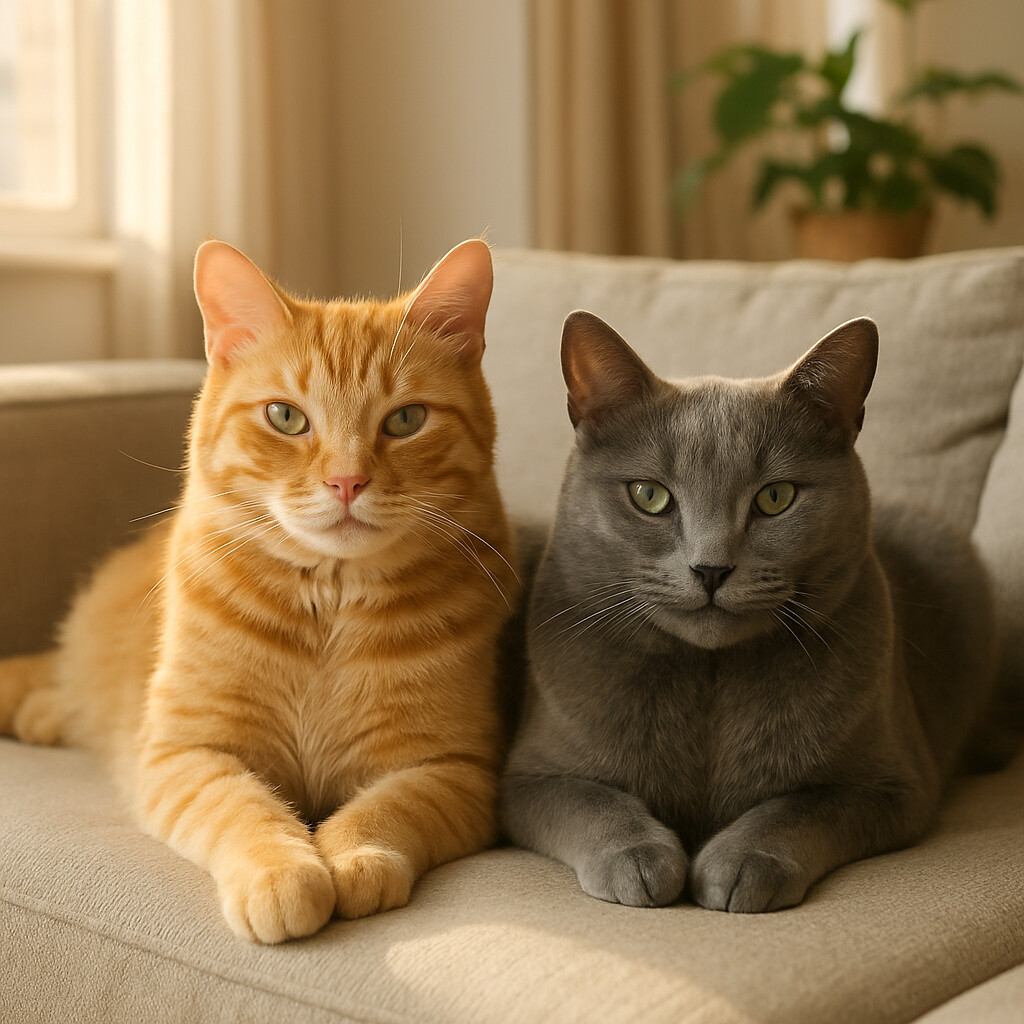
Living with multiple cats sounds idyllic — until the fur starts flying. Cat-on-cat conflict is one of the most common reasons pet owners seek help from vets and behaviorists, and it’s also one of the most misunderstood. The good news: most multi-cat household tensions are fixable if you understand what’s actually driving them.
Play Fighting vs. Real Fighting: How to Tell the Difference
Before you intervene, you need to know what you’re dealing with. Many owners panic over completely normal play behavior — and miss the signs of genuine aggression.
Play fighting looks like:
- Chasing that goes both ways (each cat takes turns being the “chaser”)
- Biting that’s gentle, with no vocalization
- No puffed tails, flattened ears, or hissing
- Both cats return to normal behavior quickly after
Real fighting looks like:
- Stalking, pouncing with force, biting that draws blood
- Hissing, growling, or screaming
- Flat ears, puffed tail, piloerection (raised fur along the spine)
- One cat clearly trying to escape while the other pursues
- Prolonged freezes where one cat pins the other down
If you see sustained screaming and one cat desperately trying to get away, that’s real aggression. Intervene carefully — never use your bare hands. A loud noise, a cushion placed between them, or a spray of water can break the moment safely.
The 5 Most Common Causes of Cat Fighting
1. Insufficient Resources
This is the #1 cause that most owners overlook. Cats are solitary hunters by instinct, and they don’t naturally share well. The ASPCA recommends the n+1 rule: always have one more of each resource than the number of cats in the home.
That means: if you have 3 cats, you need 4 litter boxes, 4 feeding stations, and at least 3-4 distinct resting spots. Food bowl proximity is a particularly common flashpoint — cats instinctively guard their kill. Feeding them in the same area creates competition even if they seem to tolerate it.
2. Territorial Disputes Over Vertical Space
Cats establish hierarchy through elevation. Whoever controls the highest perch is, in cat terms, dominant. If your home has limited vertical space, cats will fight for it. Cat trees, wall shelves, and window perches aren’t luxuries — in a multi-cat home, they’re necessary to reduce conflict.
Aim for multiple high perches in different rooms. A cat who can “own” their personal high spot is a calmer cat.
3. Redirected Aggression
One of the most misunderstood causes. A cat sees something threatening outside — a stray cat, a bird, a loud noise — gets highly aroused, and then attacks the nearest cat (or person) instead. The victim has no idea what they did wrong, and the aggressor is genuinely over-reactive due to sympathetic nervous system arousal.
If two cats were previously fine and suddenly seem to hate each other after one incident, redirected aggression is often the culprit. The solution is full separation and a slow reintroduction (more on that below).
4. New Cat Introductions Gone Wrong
Tossing a new cat into the house and hoping they work it out is a recipe for long-term conflict. Cats need time to process each other’s scent before they interact face-to-face. A rushed introduction creates negative first impressions that can persist for years.
5. Medical Pain
A cat in pain may become aggressive when touched or approached, even by cats they usually tolerate. If a previously peaceful cat suddenly becomes reactive, rule out a health issue first. Arthritis, dental disease, and urinary issues are common culprits in cats over 7 years old.
The Reintroduction Protocol: How to Reset a Broken Relationship
If two cats are actively fighting or one is being bullied, separation and a structured reintroduction is the most effective approach. This process takes 2-4 weeks, but it works.
Phase 1: Complete Separation (3-7 days)
Separate the cats entirely — different rooms with a solid door between them. Both cats need their own full setup (litter, food, water, bedding). This lets stress hormones drop to baseline.
Phase 2: Scent Swapping (3-5 days)
Swap bedding between rooms daily. Feed both cats near the closed door so they associate each other’s scent with something positive (food). Don’t force this — if a cat won’t eat near the door, move the bowl back and go slower.
Phase 3: Visual Contact (3-7 days)
Open the door slightly or use a baby gate so they can see each other without physical access. Continue feeding near the barrier. Look for relaxed body language — if you see sustained hissing or growling at the barrier, back up a phase.
Phase 4: Supervised Time Together
Start with short (15-30 minute) supervised sessions in a neutral space, both cats occupied with play or treats. Gradually extend the time. Only move to unsupervised access once you’ve had multiple peaceful sessions.
Daily Management That Actually Prevents Fights
Feed separately, always. Even cats who “get along” benefit from individual feeding stations. Use puzzle feeders to slow eating and reduce anxiety around food.
Play them out before problem windows. Most cat fights happen in the evening, when predatory energy peaks. Two 10-15 minute interactive play sessions per day (wand toys work best) significantly reduces tension.
Use pheromone diffusers strategically. Feliway MultiCat has good evidence behind it. Plug a diffuser in the room where conflict most often occurs. It won’t fix a resource shortage, but it takes the edge off.
Identify the instigator. In most multi-cat conflicts, one cat consistently initiates. That cat may benefit from additional environmental enrichment — they’re often the bored, frustrated one.
When to Get a Vet or Behaviorist Involved
Consult your vet if:
- Fighting is intense, frequent, or causes injury
- One cat is unable to access food, litter, or safe space due to the other
- A previously peaceful cat has suddenly become aggressive (rule out pain first)
- You’ve tried the reintroduction protocol and seen no improvement after 4 weeks
A board-certified veterinary behaviorist (find one at dacvb.org) can do a full behavioral assessment and, in some cases, recommend short-term anti-anxiety medication to make the reintroduction process smoother. This isn’t a cop-out — it can genuinely be what makes the difference.
If you’re thinking about giving one of your cats safe, independent outdoor time to reduce indoor tension, this guide to supporting social cat behavior with safe outdoor spaces is worth a read — access to fresh air and personal territory can meaningfully reduce stress in multi-cat households.
Posted by CatLady6