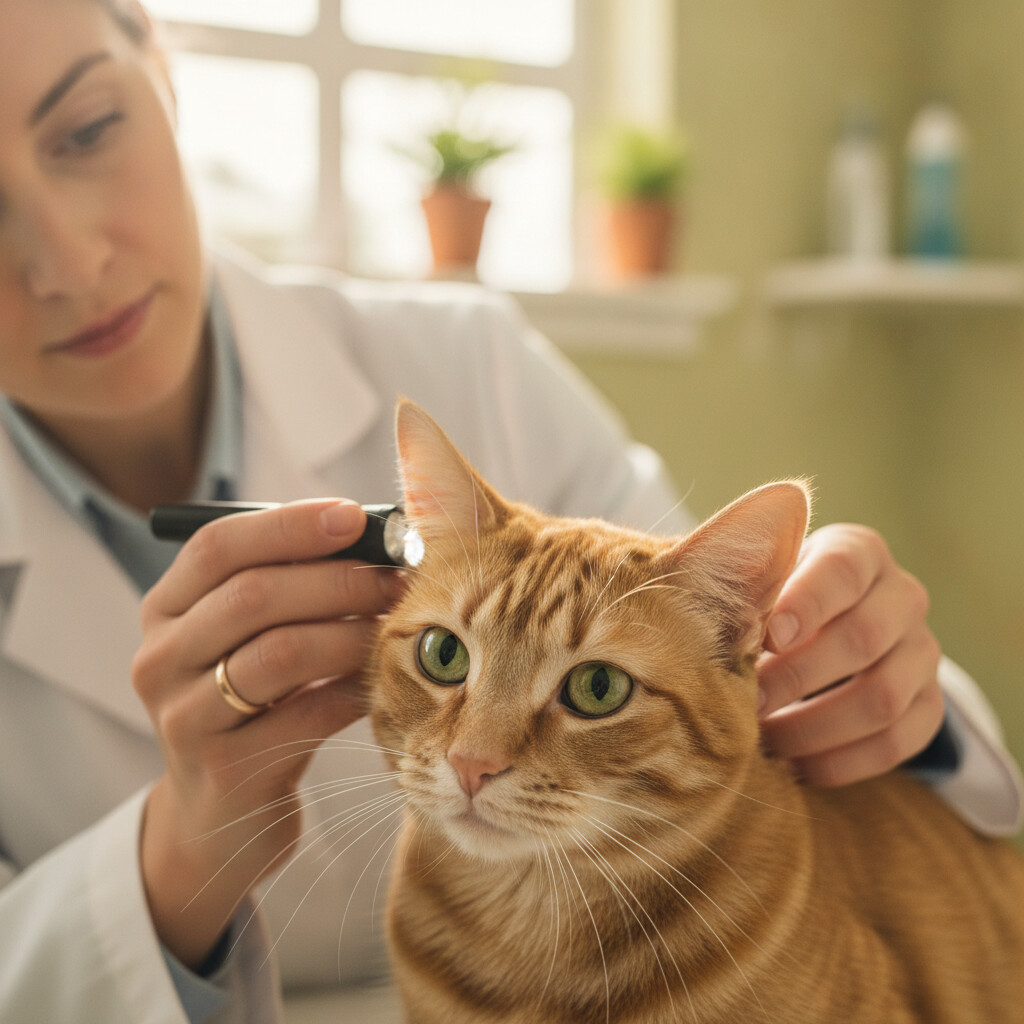
Ear mites are a highly contagious parasite that lives in a cat’s ear canal, causing intense itching, dark crumbly discharge, and — left untreated — secondary infections that can affect hearing. They’re diagnosed with an otoscope and a quick microscope look at ear debris, and treated with a prescription parasiticide, not the home remedies that circulate online. Here’s how to tell the difference between ear mites and other, less contagious ear problems, and what actually clears them up.
What Ear Mites Actually Are
Otodectes cynotis is a tiny, surface-dwelling mite that lives almost entirely inside the ear canal, feeding on skin debris and ear wax. It’s extremely contagious between animals through direct contact — which is why one infected cat in a multi-pet household usually means everyone needs to be checked, not just the cat that’s scratching. Kittens and cats who’ve spent time around other animals (shelters, multi-cat homes, outdoor exposure) are at higher risk, but ear mites aren’t limited to kittens or outdoor cats — any cat that contacts an infested animal, including through a shared cat tree or bedding, can pick them up.
Signs Your Cat Might Have Ear Mites
The hallmark sign is dark, crumbly discharge that looks like dry coffee grounds packed into the ear canal — this is a mix of dried blood, wax, and mite debris. Alongside that, watch for:
- Frequent head shaking or tilting
- Scratching at the ears hard enough to cause scabs or hair loss around the ear base
- A strong odor from the ears
- Redness or visible irritation inside the ear flap
- In severe or long-standing cases, hair loss around the ears and neck from persistent scratching — if you’re also seeing broader patchy hair loss elsewhere on the body, it’s worth reading through the fuller picture in Why Is My Cat Losing Hair?, since mites are only one of several possible causes.
The itching can be intense enough that some cats scratch themselves raw or develop aural hematomas — painful blood blisters on the ear flap caused by violent shaking and scratching, which sometimes require their own veterinary treatment.
Why You Shouldn’t Diagnose This Yourself
Ear mite symptoms overlap heavily with bacterial and yeast ear infections (otitis externa), which are common in cats and require different medication entirely. Using an ear-mite treatment on a yeast infection — or vice versa — won’t work and can delay real relief while the underlying problem gets worse.
Vets confirm ear mites by examining the discharge under a microscope, where the mites (or their eggs) are visible directly, or with an otoscope exam of the ear canal. This is a fast, low-stress appointment — not an invasive workup — and it’s the only reliable way to know what you’re actually treating.
Treatment That Actually Works
Effective treatment almost always means a prescription product from your vet. Options that veterinarians commonly reach for include topical isoxazoline-class parasiticides (the same drug class used in many modern flea and tick preventives) and selamectin or ivermectin-based ear or spot-on treatments — several of which clear an infestation in one or two doses rather than the multi-week regimens older ear-mite drops required.
A few practical points that matter for actually solving the problem:
- Treat every pet in the household, not just the symptomatic one. Mites spread easily between cats and dogs in close contact, and treating only the itchy cat often means reinfection within weeks.
- Clean the ears gently first if your vet recommends it, using a vet-approved cleanser — this helps the medication reach the mites rather than sitting on top of debris. Don’t use cotton swabs deep in the canal; they pack debris further in and risk injury.
- Skip the home remedies. Mineral oil, olive oil, and DIY mixtures sometimes suffocate a portion of visible mites but rarely clear an infestation fully, and they can delay effective treatment while irritation continues.
- Ear mites fall under the broader umbrella of external parasites, alongside fleas and ticks — our guide to Flea, Tick, and Worm Prevention for Cats covers products that offer broader coverage if your cat is at ongoing risk.
When to See a Vet
Any suspected ear mite infestation warrants a vet visit rather than a wait-and-see approach — the intense itching is genuinely uncomfortable, and untreated cases can progress to secondary bacterial infections or hematomas that need more involved treatment. Book an appointment sooner rather than later if you notice:
- Dark, crumbly discharge combined with frequent scratching or head shaking
- A swollen, fluid-filled area on the ear flap (possible hematoma)
- Discharge with a strong odor, which can indicate a secondary infection has already set in
- A cat who seems generally uncomfortable or is showing other pain signals — our guide on how to tell if your cat is in pain walks through the subtler cues cats give off before an owner might otherwise notice something’s wrong
The Takeaway
Ear mites are unpleasant but straightforward to resolve once correctly diagnosed — the mistake most owners make is assuming they know what’s causing the itching and reaching for an over-the-counter product that doesn’t match the actual problem. A quick vet visit confirms it, a short prescription course clears it, and treating every pet in the house at the same time is what actually keeps it from coming back.