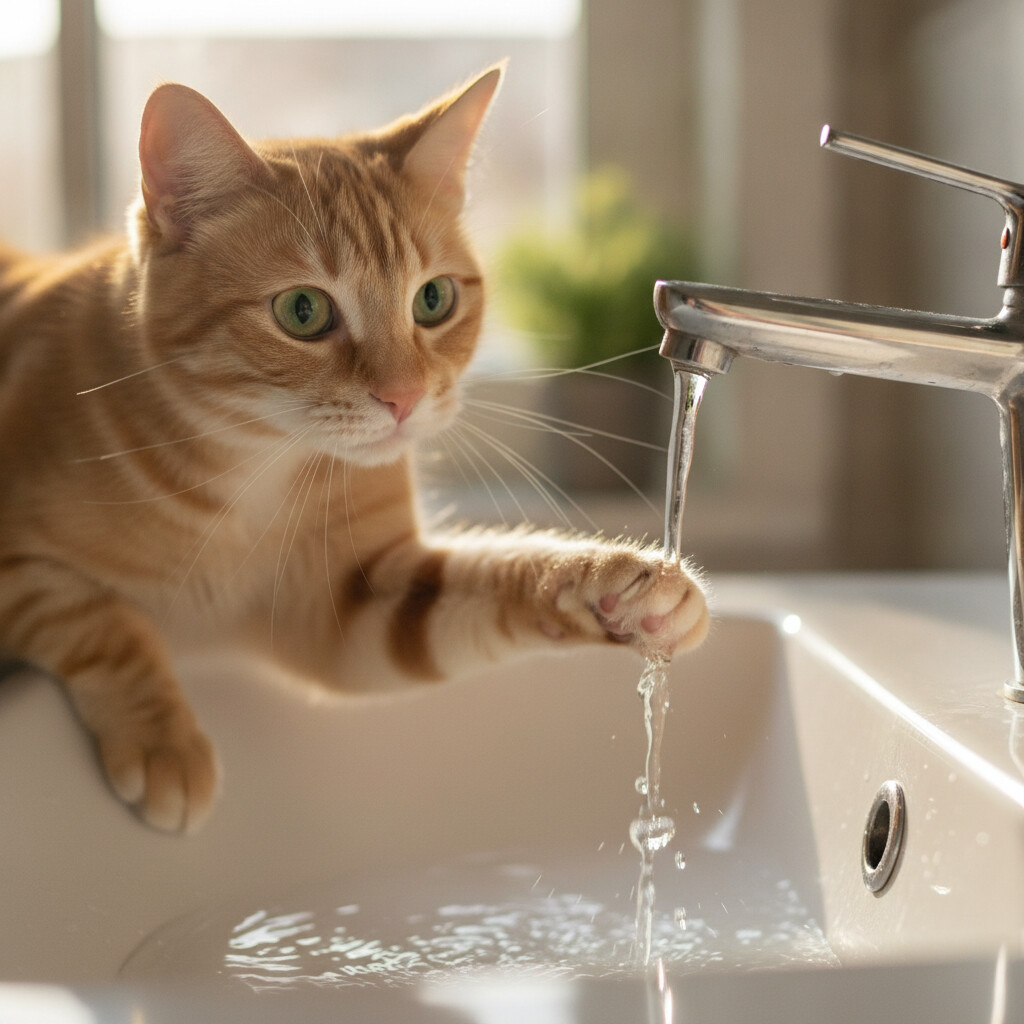
Some cats will dunk a paw in their water bowl just to watch it ripple. Others follow you into the bathroom to bat at the shower stream. It’s not a myth or a quirk unique to your cat — a meaningful minority of cats genuinely enjoy interacting with water, and you can turn that into a legitimate enrichment activity if you introduce it the right way.
Do Cats Actually Like Water?
The “cats hate water” line is an oversimplification. What most cats dislike is being soaked — full-body immersion feels unsafe to an animal whose coat isn’t built for it, and cold, sudden water is a stressor for almost any cat. But controlled, shallow interaction with moving or dripping water is a different story.
Some of this traces back to instinct. Fish-hunting behavior shows up in several wild felid relatives, and domestic cats retain a strong prey-drive response to movement — including the movement of water. A dripping faucet or a swirling bowl can trigger the same visual tracking and pouncing behavior a cat would use on a bug or a toy. Individual personality and early exposure matter too: a kitten that had positive, low-pressure experiences around water (a dripping tap, a shallow tray) is more likely to grow into a cat that tolerates or even seeks it out.
Signs Your Cat Might Enjoy Water Play
Before introducing anything new, watch for cues your cat already gives you:
- Repeatedly dipping a paw into the water bowl before drinking
- Watching or reaching toward a dripping faucet
- Following you into the bathroom and showing interest (not hiding) when water runs
- Playing with wet paws afterward — flicking, licking, or “washing” with visible curiosity rather than distress
- General high play drive and curiosity toward novel textures
If your cat runs, hides, or flattens their ears at the sound of running water, that’s your answer — don’t push it. Enrichment should reduce stress, not manufacture it.
How to Introduce Water Play Safely
Start small, and let your cat set the pace.
- Begin with a shallow tray or plate, not a full bowl or sink. A half-inch of room-temperature water is plenty for a cat to investigate with a paw.
- Add movement, not immersion. Float a ping-pong ball, a bottle cap, or a piece of cork in the tray. The goal is visual and tactile interest, not a bath.
- Try a pet drinking fountain. Many cats that show no interest in a still bowl will happily bat at the stream from a circulating fountain — this doubles as a hydration nudge, which is worth pursuing on its own, since many cats drink less water than they should.
- Never force contact. Don’t dip your cat’s paw in water for them, and don’t hold them near running water to “see what happens.” That’s a fast way to turn curiosity into fear.
- Keep sessions short — a few minutes at a time. Water play is a novelty activity, not a replacement for a cat’s core enrichment needs like climbing, scratching, and predatory play with toys.
- Dry paws afterward if your cat gets genuinely wet, particularly in colder months, to avoid chilling.
Full baths are a separate topic and generally unnecessary for healthy cats — routine grooming keeps most cats clean without one. If your vet has recommended bathing for a medical reason (a skin condition, flea treatment, or a senior cat that can no longer groom effectively), that’s a controlled, different scenario from water play and worth doing under their guidance.
What Water Play Isn’t Good For
It’s worth being honest about the limits here. Water play is a low-stakes novelty enrichment — pleasant for cats who enjoy it, but not a core need the way vertical space, scratching outlets, or predatory play are. Don’t feel obligated to introduce it if your cat shows no interest after a couple of relaxed, low-pressure attempts. Some cats simply don’t care, and that’s entirely normal.
It also isn’t a substitute for hydration monitoring. A cat batting at a fountain is engaging, not necessarily drinking more — if you’re worried about your cat’s water intake, that’s a conversation for your vet, not something to solve purely through play.
When to See a Vet
Water play itself carries essentially no health risk when done as described above, but a couple of related signs are worth a vet visit rather than a shrug:
- Sudden, intense fixation on water or excessive drinking (polydipsia) can be a sign of underlying conditions like kidney disease, diabetes, or hyperthyroidism, especially in older cats
- A cat that seems distressed, not curious, around water and shows other signs of anxiety
- Any skin irritation, hair loss, or lethargy that develops after a bath (as opposed to shallow water play)
The Takeaway
If your cat already dabbles at the water bowl or stalks the bathroom faucet, a shallow tray or a drinking fountain is a low-cost way to give that curiosity a safe outlet. If your cat shows no interest, don’t force it — this is a “nice to have,” not a “need to have,” in a cat’s enrichment routine.
For more ways to keep an indoor cat engaged, see our guides on scent enrichment as an alternative sensory activity and keeping a home-alone cat busy during the day. If your cat gets most of its stimulation from watching the world outside, our piece on cat TV and whether screen enrichment actually works is a natural next read.