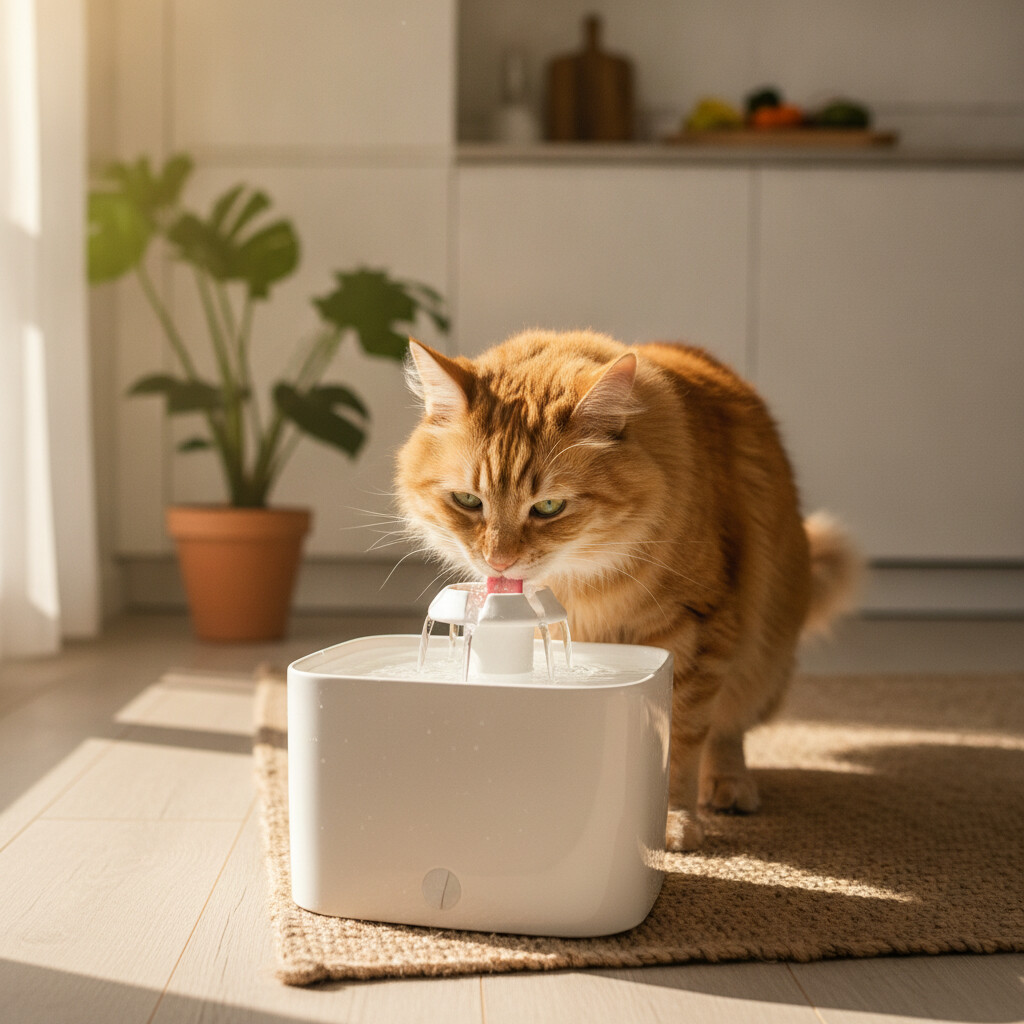
Most cats drink less water than they need, and most owners have no idea. The short answer: cats evolved from a desert ancestor with a naturally weak thirst drive, and a diet built around dry kibble makes that worse. The fix isn’t complicated — it’s mostly about getting more moisture into the diet and making water more appealing — but you do need to know what you’re working with first.
Why Cats Don’t Drink Like Dogs Do
The domestic cat’s ancestor, Felis lybica, was a small desert hunter that got nearly all its moisture from prey. A mouse is about 70% water. Evolution never gave cats a strong urge to drink from a bowl, because for millions of years they didn’t need to — their food did the hydrating for them.
Modern dry cat food breaks that system. Kibble is roughly 6-10% moisture, compared to 70-80% in wet food or whole prey. A cat eating an all-dry diet has to actively seek out water to make up the difference, and because their thirst mechanism is muted compared to a dog’s, many cats simply don’t drink enough to close the gap. Research comparing food types has found cats on wet diets take in significantly more total water than cats on dry diets, even after accounting for the water in the food itself — cats fed wet food don’t fully “make up” the difference by drinking less, so their overall water intake ends up higher (a pattern documented in a 2011 study published in the Journal of Feline Medicine and Surgery by Buckley et al.).
Signs Your Cat Isn’t Getting Enough Water
Mild, chronic under-hydration doesn’t look dramatic. It’s not your cat collapsed by an empty bowl — it’s subtler:
- Dry, concentrated urine and infrequent urination
- Straining in the litter box or making repeat visits with little output
- Constipation
- Lower energy than usual
- Skin that’s slow to spring back when gently tented between the shoulder blades (a rough at-home hydration check, not a diagnostic one)
None of these confirm dehydration on their own, but together they’re worth paying attention to — especially if your cat eats mostly dry food and you rarely see them at the water bowl.
How Much Water Does a Cat Actually Need?
As a general guide, cats need roughly 3.5–4.5 ounces of water per 5 pounds of body weight per day, from all sources combined — food and drinking water together. If you want the fuller breakdown by weight and activity level, we cover the numbers in more detail here.
The practical takeaway: if your cat eats only dry food, they need to be drinking noticeably more from a bowl or fountain to hit that target than a cat who eats wet food. Most cats on all-dry diets fall short.
What Actually Gets Cats to Drink More
Add wet food, even a little. You don’t have to switch entirely. Replacing even one dry meal a day with wet food meaningfully increases total water intake. This is one of the few places in cat nutrition where the fix is genuinely simple and well-supported.
Running water beats standing water for a lot of cats. Cats are hardwired to be wary of stagnant water in the wild — it’s more likely to be contaminated. A pet fountain isn’t a gimmick for every cat, but for the ones who ignore a still bowl and drink from the faucet instead, it solves a real problem.
Bowl placement and number matter more than people expect. Cats generally don’t want their water near their food or litter box — in the wild, that’s not where you’d expect clean water to be. Try multiple water stations around the house, away from feeding areas.
Bowl material and shape can put cats off. Whiskers brushing the sides of a narrow bowl (whisker fatigue) is a real deterrent for some cats. Wide, shallow bowls tend to work better than deep, narrow ones.
Flavor it, sparingly. A splash of the water from a can of plain tuna (packed in water, not oil) or a small amount of low-sodium chicken broth can encourage a reluctant drinker. This isn’t a long-term hydration strategy on its own, but it can help transition a stubborn cat toward drinking more.
Ice cubes in the bowl work for some cats who enjoy batting at floating objects — a low-effort trick that also happens to slowly release fresh water.
When to See a Vet
Chronic under-hydration on its own usually isn’t an emergency — it’s a slow-burn risk factor. But hydration status matters a lot more once other problems are in play, and some of those problems present as “my cat seems thirsty” or “my cat seems dehydrated” when something more serious is going on.
Call your vet if you notice:
- Sudden increased thirst or urination (a possible sign of kidney disease, diabetes, or hyperthyroidism, not just an under-hydration issue)
- Repeated straining in the litter box with little or no urine — this can indicate a urinary blockage, which is a genuine emergency, especially in male cats
- Vomiting alongside reduced water intake
- Visible lethargy, sunken eyes, or skin that stays tented when gently pinched
- Any of the FLUTD symptoms we’ve covered separately, since urinary tract issues and hydration are closely linked
A vet can run bloodwork and a urinalysis to tell the difference between “needs more water in the diet” and “something underlying needs treatment.” Don’t try to diagnose it yourself from symptoms alone.
The Bottom Line
Cats are built to get most of their water from food, not from a bowl — which means a dry-food-only diet puts the entire burden on a thirst drive that was never designed to carry it. You don’t need to overhaul everything: adding wet food, moving water away from food and litter, and experimenting with a fountain or bowl shape covers most of what actually moves the needle. If you’re seeing signs beyond simple under-hydration — straining, sudden thirst changes, lethargy — that’s a vet visit, not a home fix.