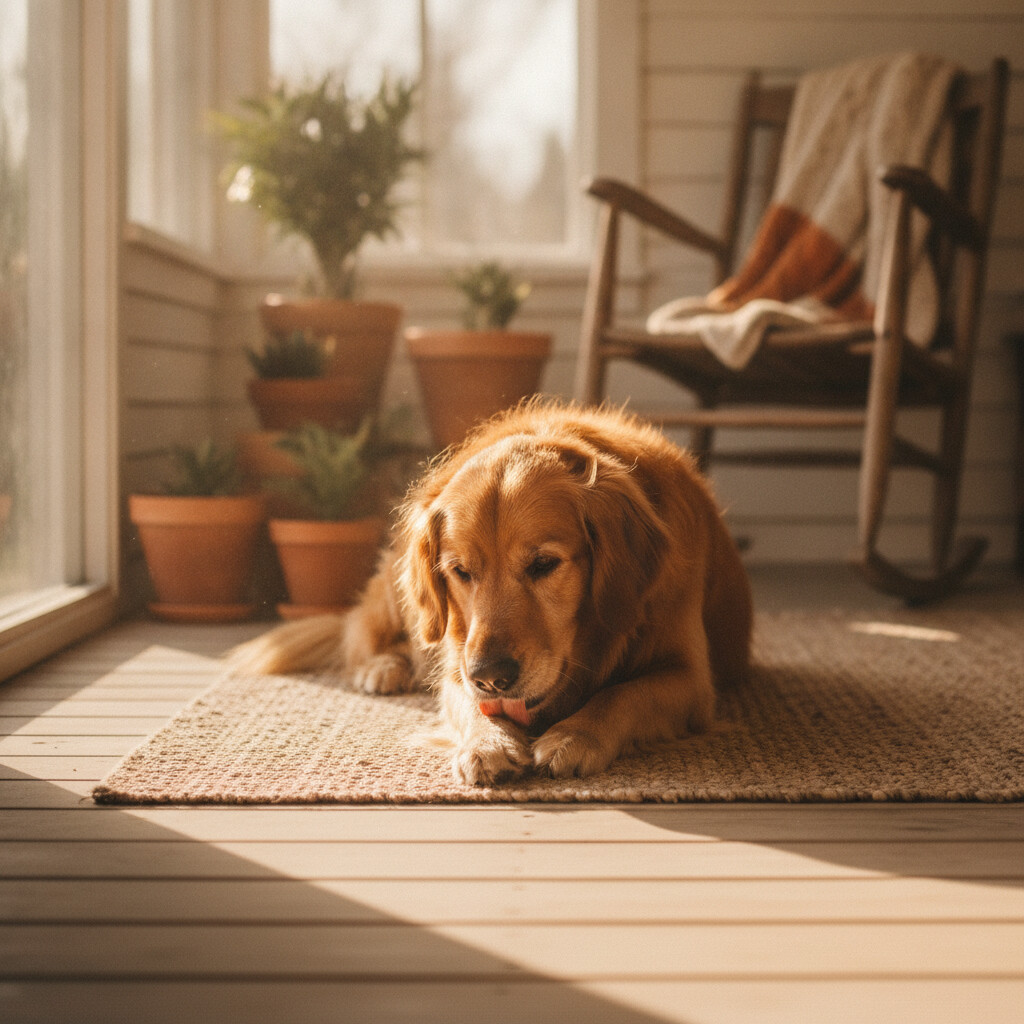
Some paw licking is normal grooming. The kind worth paying attention to is focused, repetitive, and doesn’t stop — usually aimed at one paw, between the toes, and often leaving the fur stained rust-brown from saliva. That pattern points to something bothering the paw, not routine hygiene, and the two most common causes are allergies and pain.
Normal grooming vs. a problem
Dogs groom their paws the way cats groom their coats — a few passes after a walk, after lying down, or during a general self-cleaning session. It’s brief and doesn’t leave marks.
Problem licking looks different: it’s targeted at one spot, happens often enough that you notice a pattern, and tends to leave visible signs — reddish-brown saliva staining (from a compound called porphyrin, which is harmless in itself but a reliable sign of chronic licking), hair loss, or skin that looks raw, thickened, or moist. If you’re seeing any of that, the licking has become a symptom rather than housekeeping.
Allergies are the most common cause
Veterinary dermatologists consistently point to allergic skin disease — atopic dermatitis, food allergy, or flea allergy dermatitis — as the leading cause of chronic paw licking in dogs. Paws are a common target because they’re in constant contact with allergens: grass, pollen, dust mites, and lawn treatments all get picked up there first.
- Environmental allergies (atopy) often show a seasonal pattern — worse in spring and summer, easing in winter — though dogs with dust mite sensitivities can have symptoms year-round.
- Food allergies tend to be less seasonal and often come with other signs like ear infections, itchy skin elsewhere, or GI upset.
- Flea allergy dermatitis can cause intense, localized itching from even a single bite in a sensitized dog, so a paw-focused reaction doesn’t rule out fleas even if you haven’t spotted any.
None of these are things you can reliably tell apart just by watching your dog lick — they typically need a vet exam, and sometimes elimination diets or allergy testing, to pin down.
It could also be pain, not itch
A dog licking one specific paw, especially with any limping, favoring, or reluctance to put weight on it, is more likely dealing with pain than allergy. Common causes include:
- A splinter, thorn, or small foreign object lodged between the toes
- A torn nail or nail bed injury
- A cut or abrasion on the pad
- Interdigital cysts — painful, inflamed lumps between the toes, common in short-haired and heavier breeds
- Early arthritis, particularly in older dogs, where licking can be a self-soothing response to joint discomfort
Check between the toes and pads for anything visible. If you find an object, redness, or swelling, or your dog reacts painfully to a gentle touch, that’s a same-week vet visit, not a wait-and-see.
Boredom, stress, and compulsive licking
When there’s no visible skin issue and no consistent seasonal or dietary pattern, behavior is worth considering. Dogs sometimes lick their paws as a self-soothing behavior tied to boredom, separation-related stress, or anxiety — similar in function to how some dogs chew furniture when under-stimulated. This is a diagnosis of exclusion: it’s worth reaching for only after allergies, pain, and infection have been ruled out by a vet, since treating an underlying medical cause is always the first move, not a distant last resort.
If boredom licking is confirmed, more physical exercise, mental enrichment (puzzle feeders, scent games, structured training sessions), and — for separation-related cases — a gradual desensitization plan usually help more than trying to stop the licking directly.
What you can do at home
- Check the paw thoroughly — between every toe, the pads, and around the nails — for foreign objects, cuts, or swelling.
- Track the pattern. One paw or all four? Constant or seasonal? Worse after walks on treated lawns or specific surfaces? This information is genuinely useful for your vet.
- Rinse paws after walks if you suspect environmental allergens (grass, pollen, de-icing salt) are the trigger — plain water is enough, no need for special products.
- Don’t reach for human topical creams or ointments without checking with your vet first — many, including some pain relievers, are toxic if licked off, which a paw is guaranteed to be.
- Resist the urge to bandage it yourself unless a vet has advised you how — an improperly wrapped paw can cut off circulation.
When to see a vet
Book a visit if you notice any of the following:
- Licking that’s constant, worsening, or interfering with sleep or normal activity
- Visible redness, swelling, discharge, or an odor from the paw
- Limping or reluctance to bear weight
- Hair loss or thickened, darkened skin at the site
- The behavior has lasted more than a few days with no improvement
Chronic licking that goes untreated can create a self-perpetuating cycle — the licking itself irritates the skin further, which triggers more licking, and secondary bacterial or yeast infections often follow. Catching it early is genuinely easier to treat than a paw that’s been licked raw for weeks.
The bottom line
Occasional paw licking is normal. Focused, repetitive licking on one or more paws — especially with staining, swelling, or limping — usually means allergy or pain, not habit. A vet visit that includes a skin and paw exam is the fastest way to actually figure out which, rather than guessing your way through creams and home remedies. For related reading, see our guides on why your dog might be so itchy in general and on dog ear infections, since allergy-driven ear and paw symptoms often show up together.