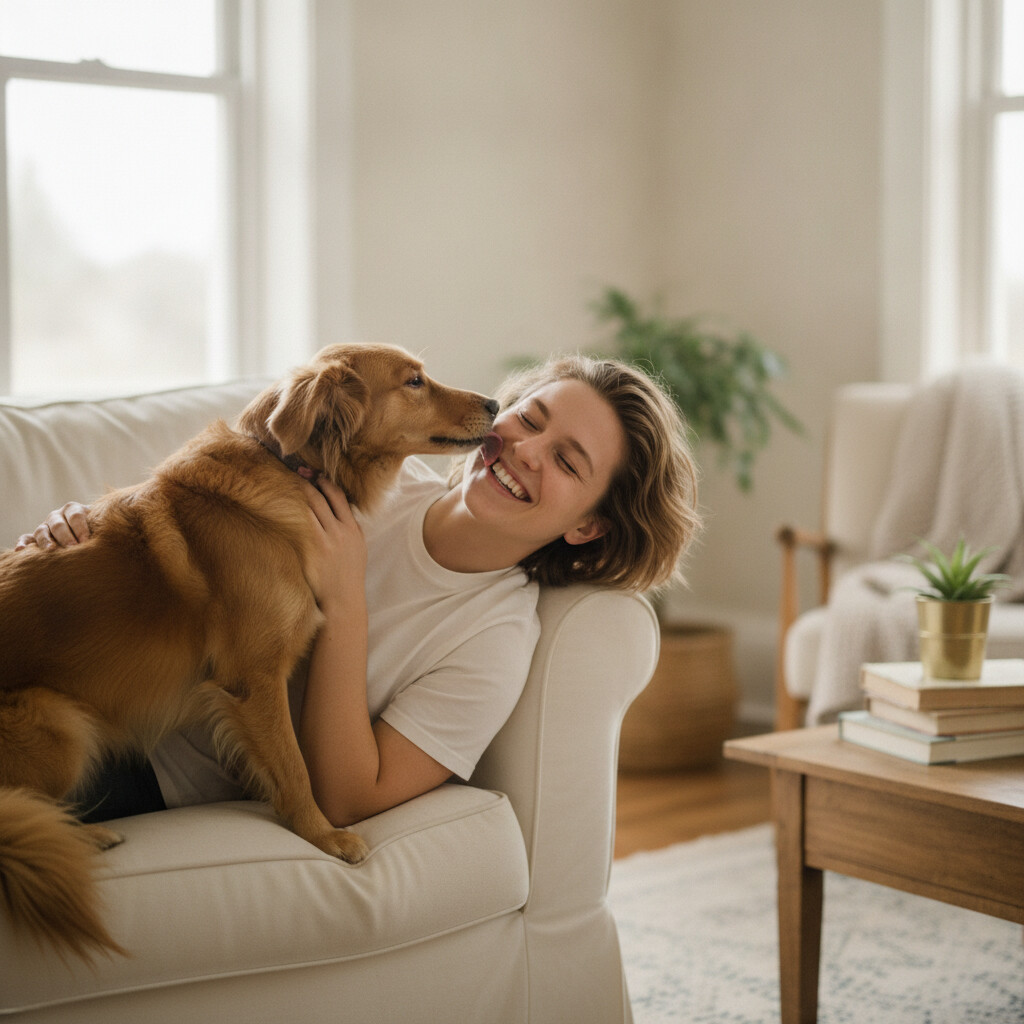
Dogs lick people mostly to communicate: to greet, to ask for attention or food, to calm a tense moment, or because you taste interesting. It’s normal and usually harmless. It’s worth a closer look when the licking becomes constant, compulsive, or aimed at floors and furniture instead of you.
The Short Answer
Licking is one of the first social behaviours a dog learns. Puppies lick their mother’s face and mouth, and she licks them to clean and stimulate them. That habit carries into adult life and gets redirected at the people they live with. Most of the time, a dog licking you is saying “hello,” “pay attention to me,” or “we’re good, right?”
Licking is also self-reinforcing. Every time it gets a laugh, a pat or a word, it becomes more likely to happen again.
Why Do Dogs Lick People?
It started in puppyhood. Wolf researchers, including L. David Mech, have long documented wolf pups licking the mouths of returning adults, which prompts the adults to regurgitate food. Domestic puppies show the same face-licking with their mother. Many behaviour experts see adult dogs’ face-licking as a leftover of this food-soliciting, care-seeking behaviour.
Greeting and attention. The frantic licking when you walk in the door is a greeting. Licking when you’re sitting on the couch is often a request: play with me, pet me, feed me.
Appeasement. Dogs use licking, including licking their own lips and the air, to defuse social tension. A dog who licks your face while also lowering their body, tucking their tail or turning away may be saying “I’m not a threat.” It’s part of the same signal set covered in our dog body language guide.
You taste good. Skin is salty, especially after exercise, and hands carry traces of food, lotion and everything else you’ve touched. Dogs explore the world heavily through smell and taste.
It’s been rewarded. If licking reliably earns a reaction, your dog has learned that it works. This is the most common reason for a dog who licks “too much.”
Stress or boredom. Some dogs lick more when they’re anxious, under-exercised, or left alone a lot. Licking can be calming for the dog doing it.
Is It Safe to Let a Dog Lick Your Face?
For most healthy adults, an occasional lick is low risk. But a dog’s mouth isn’t clean, and the old claim that dog saliva is “antiseptic” doesn’t hold up.
Dog mouths normally carry bacteria such as Capnocytophaga and Pasteurella. According to the CDC, most people who have contact with dogs never get sick from Capnocytophaga, but it can occasionally cause serious infection, mainly through bites but also through scratches or close contact. People at higher risk include anyone with a weakened immune system, no spleen, or heavy alcohol use.
Sensible rules:
- Don’t let dogs lick open wounds, cuts, or broken skin, on you or anyone else.
- Keep licks away from the face of babies, older adults, and anyone who is immunocompromised or undergoing treatment like chemotherapy.
- Wash your hands after a good licking, especially before eating.
- Keep your dog on routine parasite prevention and vet care, which reduces the chance of passing things on.
When Is Licking a Problem?
Most licking is fine. These patterns are worth paying attention to:
Licking floors, walls or furniture. Repeatedly licking surfaces is different from licking people. A 2012 study in the Journal of Veterinary Behavior by Bécuwe-Bonnet and colleagues examined dogs with excessive licking of surfaces and found that most of them had an underlying gastrointestinal disorder, such as inflammatory bowel disease or delayed stomach emptying. In many of those dogs, the licking eased once the gut problem was treated. In other words, this is often nausea or discomfort, not a quirk.
Licking themselves constantly. Paws, legs, or one spot over and over usually points to itch, allergies or pain. We cover that in why dogs lick their paws so much and why dogs get so itchy.
Licking that won’t stop or gets frantic. If your dog can’t be easily redirected, or the licking increases when you leave or when they’re stressed, anxiety may be involved. Our guide to separation anxiety in dogs explains what to look for.
A sudden change. A dog who never licked much and now does it constantly, or licks their lips and swallows a lot, may be nauseous or in pain.
How to Stop a Dog From Licking You So Much
If your dog is healthy and the licking is just more than you’d like, you’re dealing with a learned habit. The fix is to change what it earns.
- Remove the payoff. When the licking starts, calmly stand up or turn away. No talking, no pushing, no laughing. All of those count as attention.
- Return when it stops. Once your dog settles, give them calm attention. You’re teaching that a calm dog gets the good stuff.
- Teach something to do instead. A “sit” for greetings, or bringing a toy when you come home, gives your dog an alternative. Reward it every time at first. The same approach works for dogs who jump on people.
- Redirect with a lick-friendly outlet. Lick mats and food-stuffed toys let dogs who love licking do it somewhere appropriate, and many find it calming.
- Cover the basics. Enough exercise, play and mental work cuts down on boredom-driven attention seeking.
- Be consistent. If one person allows face-licking and another doesn’t, your dog will keep trying.
Don’t punish licking. Scolding a dog who is trying to appease or greet you tends to increase anxiety, which can make licking worse.
When to See a Vet
Book a vet visit if your dog:
- Licks floors, walls, carpets or furniture repeatedly
- Licks or chews one area of their own body until the fur thins, the skin reddens, or a sore forms
- Starts licking excessively out of nowhere, especially with lip-licking, gulping, drooling or grass-eating
- Licks alongside vomiting, diarrhea, appetite changes, weight loss or lethargy
- Licks compulsively and can’t be distracted
Go now if excessive licking or drooling comes with a swollen belly, retching without bringing anything up, sudden weakness, or possible poisoning.
The Takeaway
A dog licking you is almost always communication, rooted in puppyhood and kept alive by your reaction. Keep licks away from wounds and vulnerable faces, redirect the habit if it’s too much, and get a vet involved if the licking turns to surfaces, to their own body, or appears suddenly.
Is your dog a big licker, or more of a polite sniff-and-lean type?