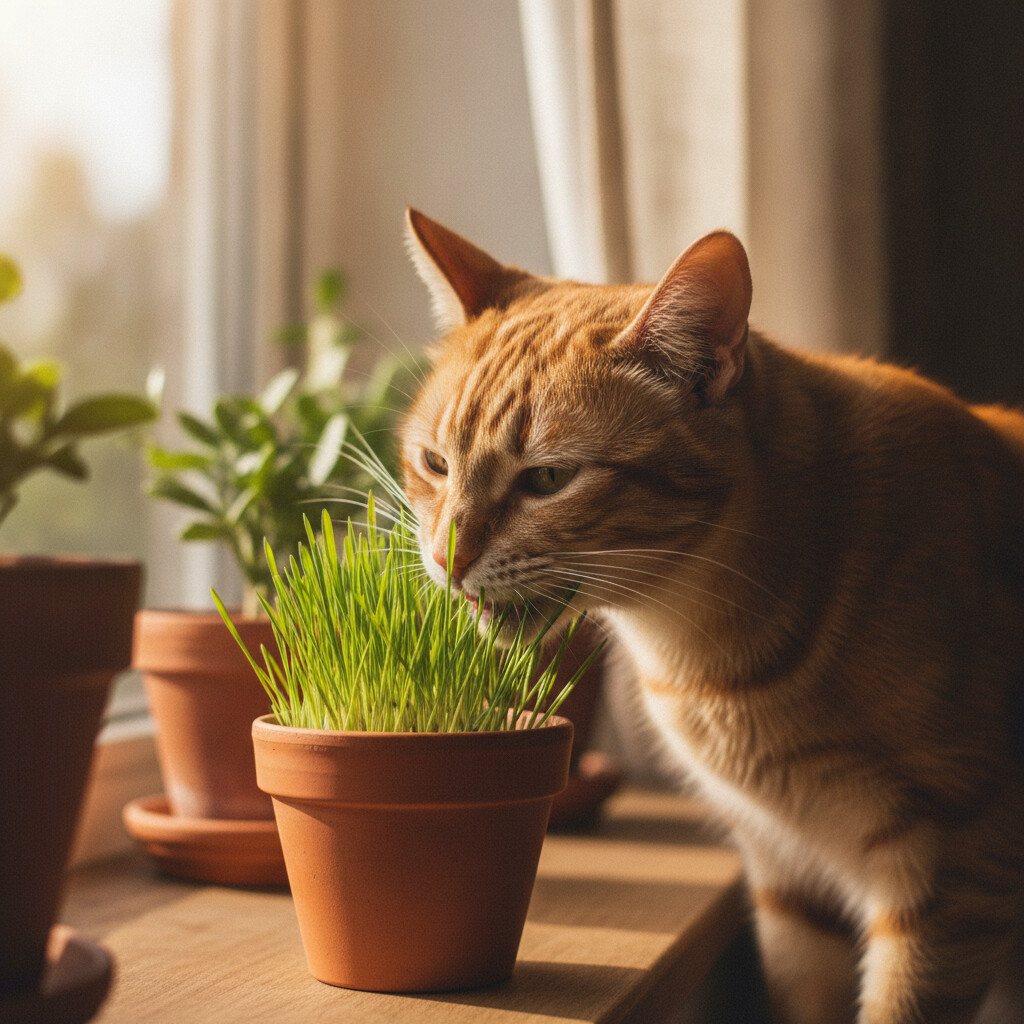
Most cats nibble grass at some point, and most of the time it’s not a problem — it’s normal feline behavior, not a sign of a nutritional gap or an upset stomach. The exception is when grass-eating turns into daily vomiting, disinterest in food, or your cat reaching for something that isn’t grass at all. Here’s how to tell the difference.
Why Cats Are Drawn to Grass in the First Place
Grass-eating shows up across the cat family, not just in house cats — big cats in the wild have been observed doing it too, which rules out “boredom” as the whole story. Veterinary sources like the Cornell Feline Health Center point to a few overlapping theories, and honestly, nobody has nailed down a single definitive answer:
- It may help move hair through the gut. Grass blades are hard for cats to digest, and the coarse texture can act like roughage, helping trigger a vomit reflex that clears hairballs or other things a cat shouldn’t have swallowed. This lines up with why grass-eating often seems to cluster around shedding season.
- It might supply a nutrient trace. Grass contains folic acid (vitamin B9), which cats need for growth and oxygen transport in the blood. Kittens especially may seek out small amounts even though their regular diet should already cover it.
- It could just be instinctual foraging behavior. Wild felids eat prey whole, including the semi-digested plant matter in a prey animal’s stomach. Grass-nibbling may be a leftover version of that instinct, unrelated to any deficiency at all.
The honest answer: it’s probably some combination of these, and researchers haven’t isolated one cause. What matters more for you as an owner is whether the behavior itself looks normal.
Is It Normal, or a Sign Something’s Wrong?
Occasional grass-eating followed by an occasional bout of vomiting up the grass (and nothing else) is common and not typically a red flag on its own. What separates “normal cat being a cat” from “worth a vet call” is frequency and what comes with it:
Usually fine:
- Nibbling grass once in a while, especially if you let your cat outside or grow cat grass indoors
- Vomiting up just grass, once, with no other symptoms
- No change in appetite, energy, or litter box habits
Worth paying attention to:
- Grass-eating that’s escalated into a daily habit
- Vomiting multiple times a week, or vomiting food along with grass
- Weight loss, lethargy, or a sudden increase in “grazing” behavior — this pattern can sometimes accompany gastrointestinal issues, so it’s worth ruling out rather than assuming it’s just a quirk
If your cat’s grass habit has changed recently — more frequent, more urgent, or paired with other symptoms — see our guide on when cat vomiting is worth worrying about for a fuller breakdown of what’s normal and what’s not.
Grass vs. Toxic Plants: The Real Risk
The bigger concern usually isn’t grass itself — it’s what a cat might eat instead of grass, or alongside it, especially indoor cats without access to a safe patch of lawn. Lilies are the most dangerous common offender; even small amounts of pollen or leaf material from true lilies (Lilium and Hemerocallis species) can cause acute kidney failure in cats, according to the ASPCA Animal Poison Control Center. Other houseplants — pothos, sago palm, philodendron — carry their own risks ranging from mouth irritation to organ damage.
If your cat has been chewing on houseplants rather than actual grass, it’s worth doing a full inventory of what’s in your home. We cover the most common offenders and safer alternatives in our guide to houseplants that are toxic to cats.
How to Give Your Cat Safe Access to Grass
If your cat is an indoor-only cat and grass-seeking behavior seems to be a genuine want (not just redirected boredom), the simplest fix is also the cheapest: grow it for them.
- Cat grass kits (usually wheatgrass, oat grass, rye, or barley) are widely available and take about a week to sprout from seed.
- Keep it in a spot they can reach year-round so grazing stays a low-stakes, boring non-event rather than a novelty they binge on.
- Rotate it out every few weeks — grass that’s browned or moldy isn’t worth the digestive upset.
- Skip anything treated with pesticide or fertilizer if you’re cutting grass from your own yard instead of growing a dedicated pot — that’s a real toxicity risk that has nothing to do with the grass itself.
This is also a low-effort way to add variety to an indoor cat’s day. If you want more ideas in that direction, we’ve got a broader list of cheap enrichment options worth trying.
The Bottom Line
Grass-eating is, for the vast majority of cats, a normal and largely harmless quirk — not a symptom to fix. Give an indoor cat their own pot of it, keep an eye on frequency and what follows it, and don’t lose sleep over the occasional grass-flavored hairball on the carpet.
When to See a Vet
Book a vet visit if grass-eating is paired with any of the following: vomiting more than once or twice a week, weight loss, decreased appetite, lethargy, diarrhea, or a noticeable increase in how much your cat is trying to eat (grass or otherwise). These can be signs of gastrointestinal disease, parasites, or other conditions that are worth ruling out rather than guessing about. If you ever see your cat chewing on a lily or another plant you can’t positively identify as safe, treat it as an emergency and call your vet or an animal poison control line immediately — lily toxicity in particular can progress fast.