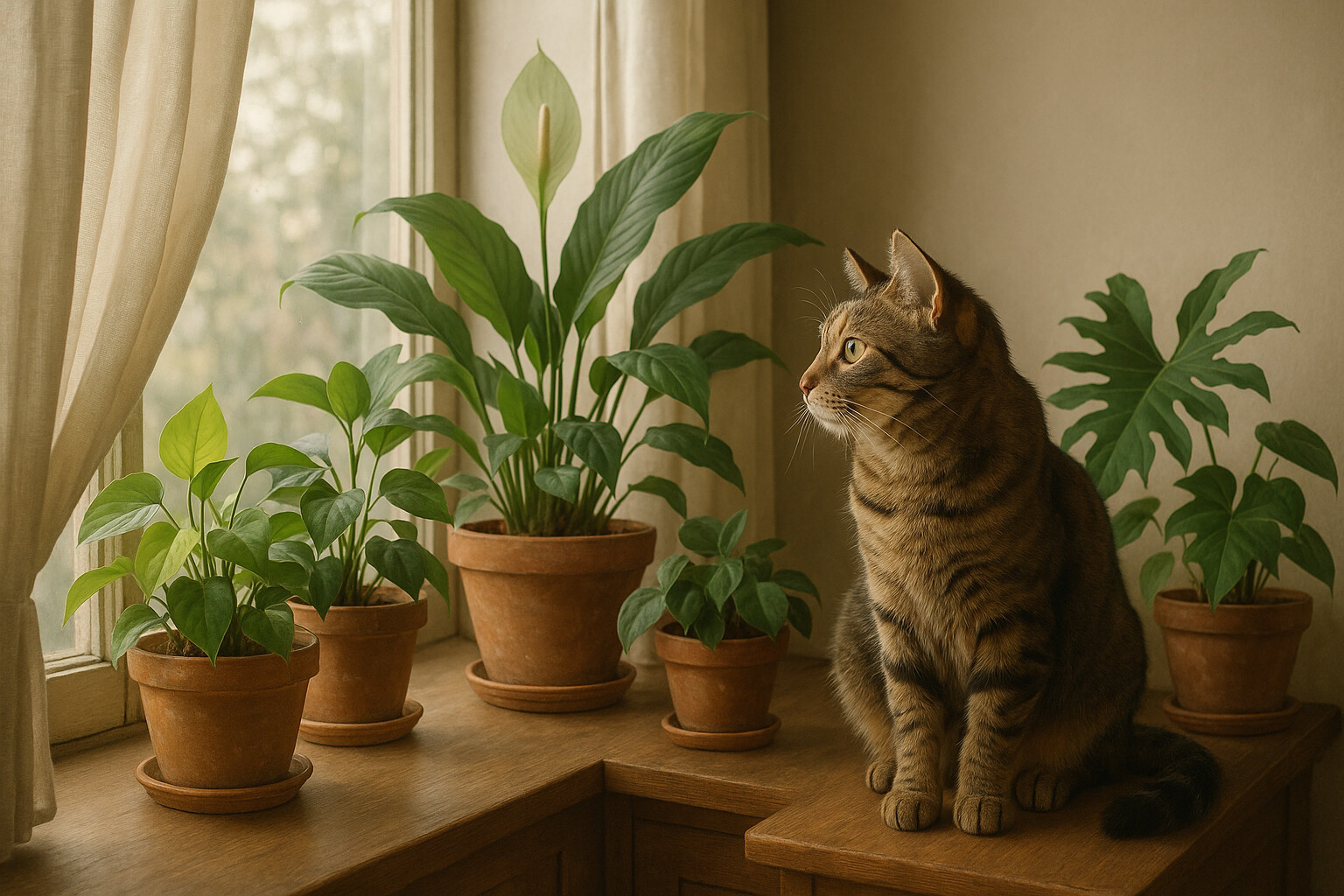
Lilies can kill a cat. Not “cause tummy trouble” - kill. A few nibbles of a true lily (Lilium or Hemerocallis species) can cause acute kidney failure in cats within 24-72 hours, and without emergency veterinary treatment, the outcome is often fatal. The fact that these plants sit in supermarket flower aisles makes them one of the most dangerous household hazards most cat owners are not aware of.
The Most Dangerous Plants: These Need to Leave
True Lilies (Lilium and Hemerocallis species)

All parts of true lilies are highly toxic to cats - petals, leaves, stems, pollen, and even the water in a vase they have been sitting in. Species to know:
- Easter lily (Lilium longiflorum)
- Tiger lily (Lilium tigrinum)
- Asiatic lily (Lilium asiaticum)
- Day lily (Hemerocallis spp.) - equally lethal to cats
The mechanism is nephrotoxic - compounds damage kidney tubule cells. Symptoms begin within hours: vomiting, lethargy, loss of appetite. Kidney failure progresses rapidly. The ASPCA consistently identifies lilies as one of the top causes of serious cat poisoning. There is no safe quantity of lily for a cat.
Sago Palm (Cycas revoluta)
Every part is toxic - seeds are the most dangerous. Contains cycasin, which causes severe liver damage. A small amount can be fatal. Symptoms include vomiting, diarrhoea, seizures, and liver failure.
Other High-Risk Plants
- Oleander (Nerium oleander): contains cardiac glycosides affecting heart rhythm
- Autumn Crocus (Colchicum autumnale): contains colchicine, causes multi-organ damage
- Dieffenbachia (Dumb Cane): calcium oxalate crystals, intense oral burning, swelling, possible respiratory distress
Plants That Cause Significant Distress

| Plant | What It Does |
|---|---|
| Pothos | Oral irritation, vomiting |
| Philodendron | Same as pothos |
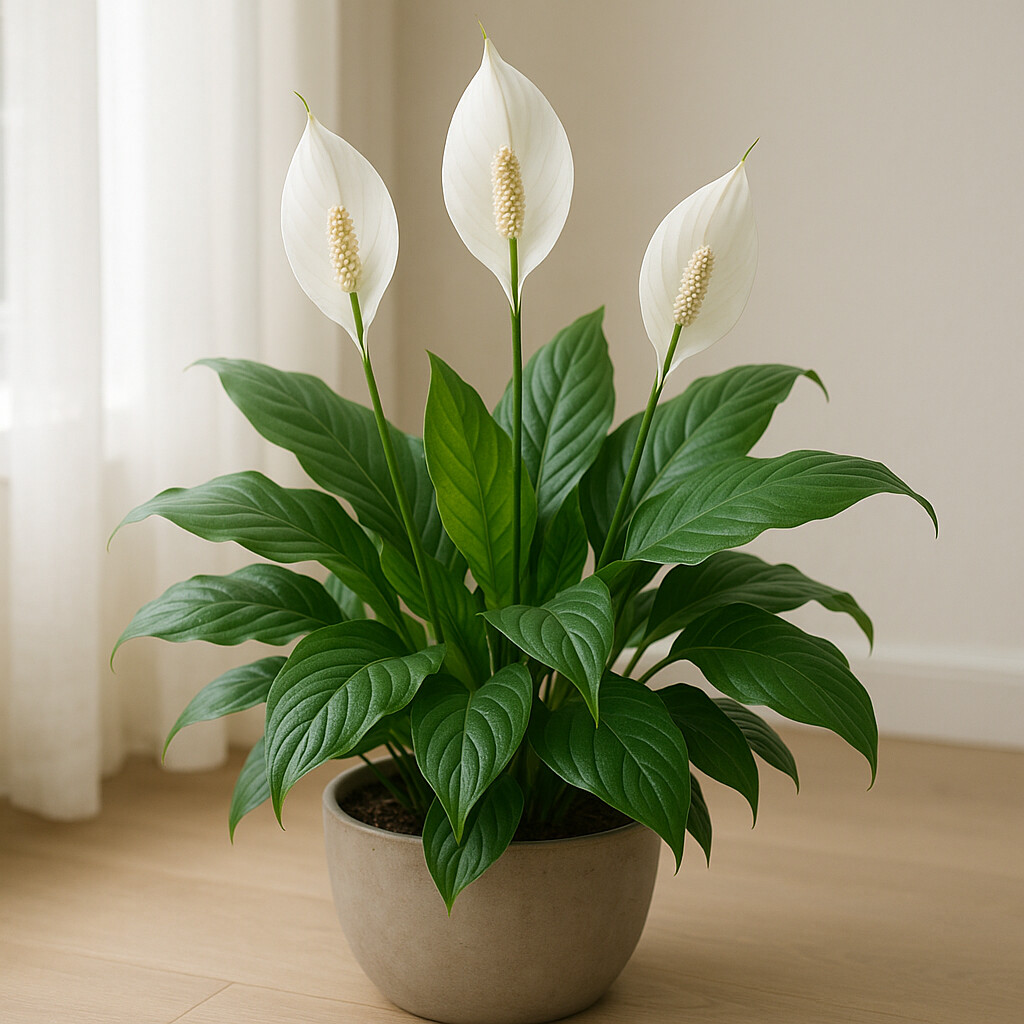
| Peace lily | Oral irritation, vomiting (not nephrotoxic despite the name) |
| Aloe vera | Vomiting, diarrhea, lethargy |
| English ivy | GI upset, drooling, vomiting |
| Jade plant | Vomiting, lethargy, incoordination |
| Snake plant | Mild GI upset |
| Chrysanthemum | Vomiting, diarrhea, skin irritation |
Safe Alternatives Worth Growing
| Safe Plant | Notes |
|---|---|
| Spider plant | Non-toxic; cats love them |
| Boston fern | Safe, great for bathrooms |
| Areca palm | Safe alternative to sago palm |
| Calathea / Prayer plant | Non-toxic, attractive |
| Peperomia | Large family, all non-toxic |
| Haworthia | Safe succulent alternative to aloe or jade |
| Orchids (Phalaenopsis) | Non-toxic |
| African violet | Non-toxic, flowers without the risk |
| Cat grass / Wheatgrass | Actively beneficial - aids hairball digestion |
What to Do If Your Cat Has Eaten a Plant
- Remove your cat from the plant and keep a sample or photo
- Call your vet immediately, or ASPCA Animal Poison Control: 1-888-426-4435 (US). Australia: Animal Poisons Helpline 1300 869 738
- Do not induce vomiting unless specifically instructed by a vet
- Do not wait for symptoms - especially with lilies. By the time kidney failure symptoms appear, the treatment window has often closed
When to See a Vet
- Any lily species: emergency, do not wait
- Sago palm: emergency
- Any unknown plant: call poison control or your vet immediately
- Known lower-risk plants: call your vet for guidance
- Vomiting, lethargy, neurological signs after plant contact: emergency vet, immediately
Practical Takeaway
Audit your home against the lists above. The ASPCA toxic plant database is your reference. The only plants within your cat’s reach should be verified non-toxic ones. When in doubt, replace with a safe alternative - the areca palm looks just as good as the sago palm, the haworthia sits just as nicely as the aloe. For cat owners who also want to give their cats safe access to the outdoors without the risk of encountering toxic plants in neighbouring gardens, a contained outdoor area puts you back in control of what your cat can reach.