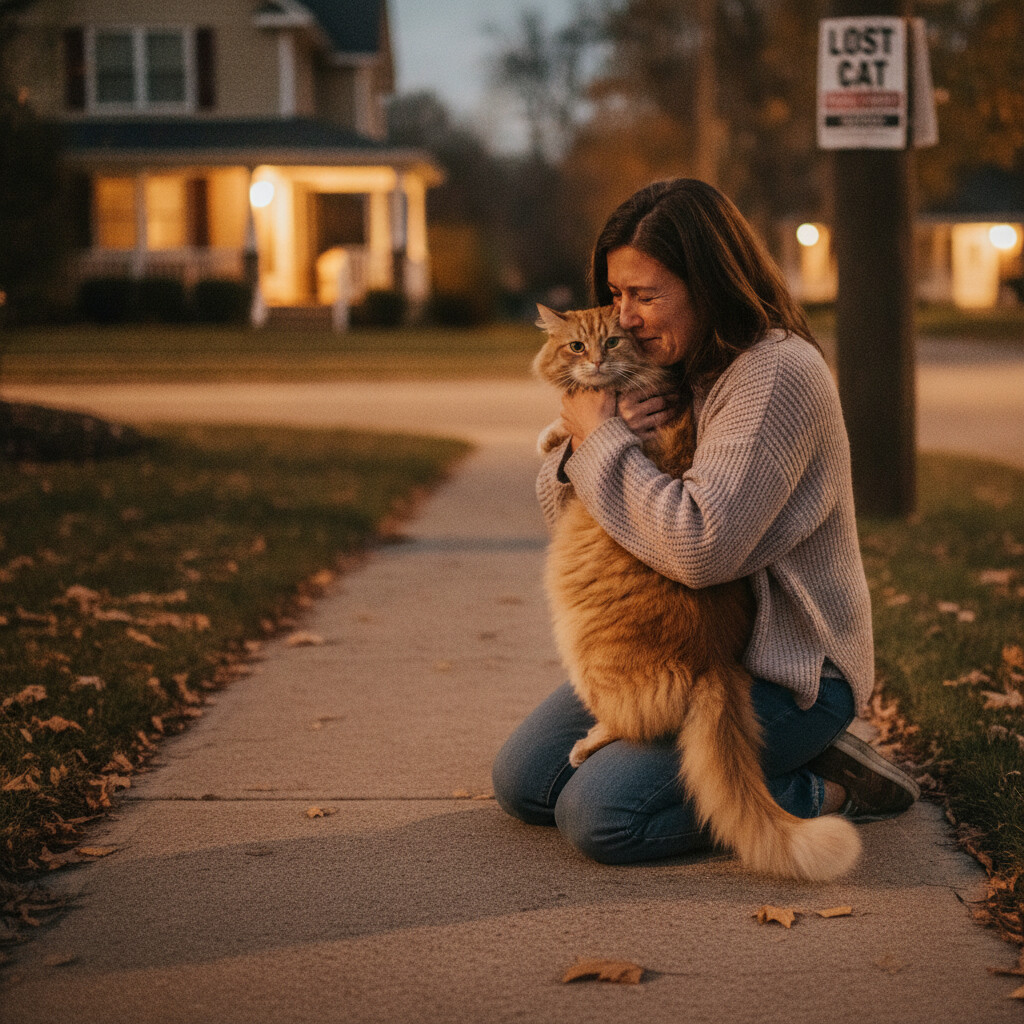
The first 24 hours after your cat goes missing are the most important. Most cats who make it home are found within a quarter-mile of where they escaped — but many owners waste those critical hours posting online instead of searching the immediate area systematically. Here’s what to actually do.
The First Hour: Start Close
Don’t wait until morning. Don’t assume your cat will come back on their own (some do; many don’t).
Start with a methodical search of your own property: under decks, behind the water heater, inside any open garage or shed, up in trees, inside bushes against the foundation. Cats who get out unexpectedly are often terrified and hiding within 20 feet of the door they escaped from.
Take their favourite blanket or a piece of worn clothing and leave it near the exit point. Your scent is a homing signal. Some owners also leave out the cat’s litter box outside (used, not clean) — the smell carries on a breeze and can guide a disoriented cat back.
Bring a flashlight even in daylight — shine it into dark spaces where eyes might reflect. At dusk and dawn, cats are most likely to move and be visible. If you’re going to search when it’s dark, a flashlight along fences and under cars often reveals eye shine.
The 24-Hour Search: Expand Your Radius
If your cat isn’t found immediately, move outward systematically. Most indoor cats stay within a 300–500 foot radius of home when they first get out — they’re not going on a journey, they’re hiding.
Walk the block in every direction. Check with immediate neighbours: look through their fences, check under their porches. Cats often slip into a neighbouring garden and then don’t know how to get back.
Physically post notices the same day. Don’t rely only on Facebook or Nextdoor — people who might see your cat don’t always check social media. A printed flyer with a clear photo, your address, and your phone number tacked to telephone poles and letterboxes in a two-block radius is still the most effective tool.
Contact local animal shelters and vets by phone. Some areas have microchip registries that shelters check — if your cat is microchipped, confirm the contact details on file are current. If they’re not chipped, this is a sharp reminder for after you find them.
The Week-Long Search: What Most Owners Skip
After three or four days without a sighting, many owners scale back. This is exactly when to expand, not stop.
Set a live trap. Borrow or rent a humane trap from a shelter or rescue, bait it with tuna or wet food, and set it near where your cat was last seen. A frightened cat may not approach even their own owner but will investigate food at 3am. Check the trap every few hours.
Search at night. Between 11pm and 4am, cats who have been hiding during the day are more likely to move. Walk quietly, call softly, bring treats that make noise in the bag. Listen for any response.
Go further than you think. Indoor cats can travel further than expected when panicked, especially if chased by a dog or startled by traffic. Expand your flyer radius to three blocks. Post in every local Facebook group, Nextdoor, and PawBoost-style service you can find.
Visit, don’t just call, the shelter. Go in person every two to three days and look at every cat yourself. Descriptions given over the phone are often inadequate. A shelter volunteer’s idea of “tabby, medium size” might be exactly your cat.
Your Cat Is Found: What Comes Next
Reuniting is not always instant. A cat who has been outside for several days may be dehydrated, injured, or extremely stressed. Have your vet’s number ready and inspect them carefully: weight loss, wounds, signs of a fight, breathing changes, limping.
A cat who has been outdoors even briefly should be checked for fleas and ticks. If they were outside for more than a couple of days, a vet visit is worthwhile even if they look fine.
Expect some behavioural weirdness for a week or two. Some cats come home clingy; some come home standoffish. Some mark territory because being outside without their usual signals is disorienting. This usually settles down. Watch for signs of ongoing stress that don’t improve after a few days.
Prevention: Do This Now
The time to think about this is before it happens.
Microchip if you haven’t. A microchip is the single most effective tool for reuniting lost cats with their owners. It doesn’t replace a collar and ID tag — it works when the collar comes off, which it will eventually.
Update the microchip registry. A significant number of microchipped cats that enter shelters can’t be returned because the contact details haven’t been updated since the chip was implanted. Check your registry right now.
Current photos. Keep at least two clear, recent photos of your cat on your phone: one showing their face and one showing any distinguishing markings. You want something you can immediately print or share.
Check doors and windows. Cats are opportunists. Screen doors with worn latches, gaps behind appliances, holes in baseboards — all of these are exit routes. If your cat is motivated to be outside (and many are), you’ve probably underestimated their ability to find gaps.
The hardest part of a missing cat is not knowing. The practical stuff — the searching, the flyers, the traps — at least gives you something useful to do. Most cats do come home.