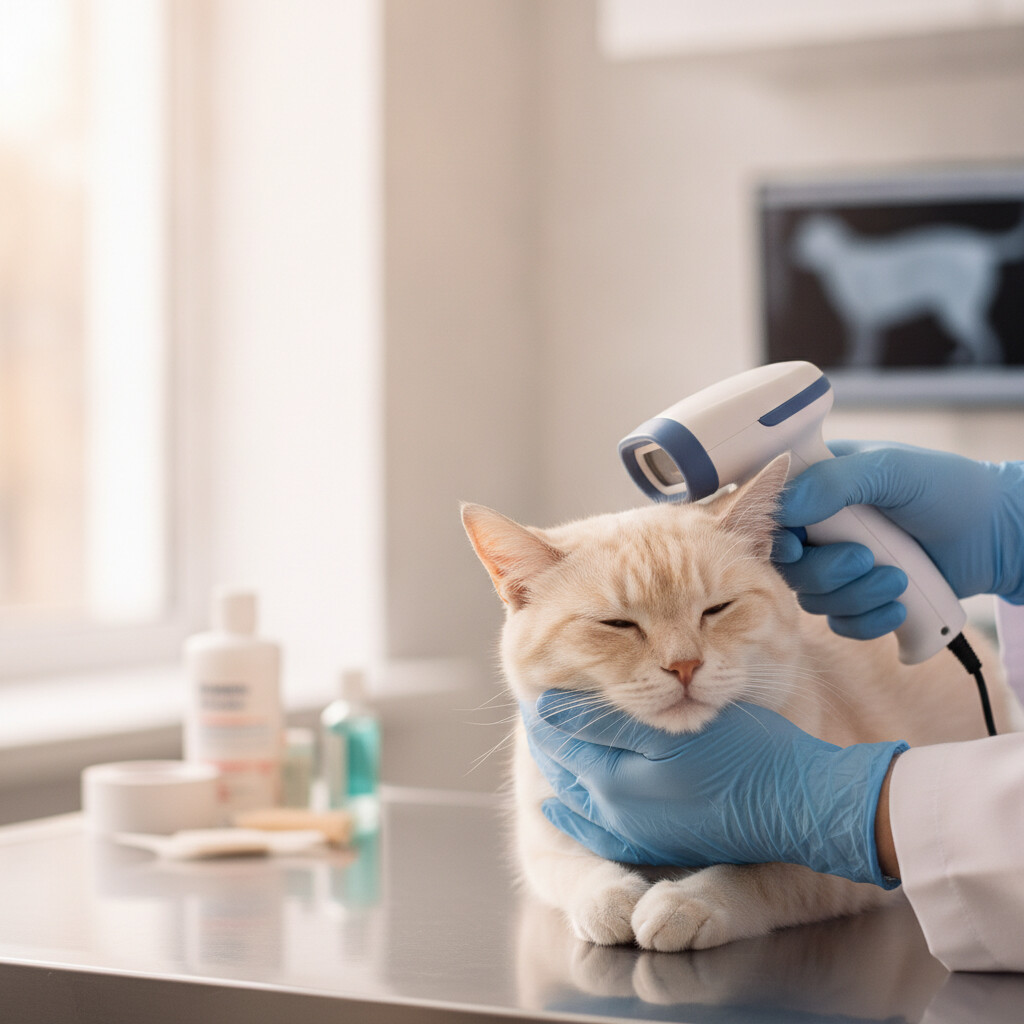
Microchipping your cat is one of the best things you can do for them — but only if you register the chip. That’s the step most people skip, and it’s the reason microchipping so often fails to reunite lost cats with their owners. Here’s how it actually works, and how to make sure yours does what it’s supposed to.
What a Microchip Is (and Isn’t)
A microchip is a passive RFID device about the size of a grain of rice. It contains no battery and no GPS. It cannot track your cat’s location. It does exactly one thing: when a scanner passes over it, it emits a unique identification number.
That number is meaningless on its own. It only becomes useful when it’s linked to your contact information in a pet microchip registry. When a lost cat is brought to a shelter or vet clinic, staff scan for a chip and then look up that number in a database. If the registration exists and has your current contact details, they call you. That’s the entire process.
The chip is implanted by a vet via injection, usually between the shoulder blades. The procedure takes about as long as a routine vaccination and causes roughly the same level of discomfort. Most cats don’t react strongly. It’s a once-in-a-lifetime intervention — chips don’t wear out or need replacing.
The Registration Problem
A 2012 study published in the Journal of the American Veterinary Medical Association found that microchipped cats were returned to their owners at a rate more than 20 times higher than unchipped cats. That’s a dramatic difference. But the same study found that a significant portion of microchipped animals couldn’t be returned because the registration was incomplete, incorrect, or didn’t exist at all.
The chip is not registered automatically when it’s implanted. Your vet implants the chip and gives you the chip number — but registering that number with an actual database is your job, and many people don’t know they need to do it.
This is the single most common microchip failure mode: the chip works perfectly, the shelter finds it, looks up the number, and hits a dead end because nobody registered it.
How to Register Your Cat’s Microchip
There are multiple pet microchip registries in the US, which creates some confusion. The most important thing is that your chip number appears in a database that any vet or shelter can find.
Start here:
- AAHA Universal Pet Microchip Lookup Tool (lookup.aaha.org) — not a registry itself, but it searches most major US databases simultaneously. Use this to check whether your chip is registered anywhere.
Major US registries to register with:
- Found Animals Registry (foundanimals.org) — free
- PetLink (petlink.net)
- 24PetWatch (24petwatch.com)
- HomeAgain (homeagain.com)
Registering with more than one database costs almost nothing and increases your chances of being found. At minimum, register with Found Animals (it’s free) and whichever registry your vet uses.
The Chip Number and ISO Standards
US cats are commonly chipped with either 10-digit or 15-digit chips. The international standard (ISO 11784/11785) is 15 digits. Most modern scanners read both, but if you’re ever traveling internationally with your cat, confirm your chip is ISO-standard — most countries require it for entry, and some airlines check.
When you get your cat’s chip information from your vet, write down the full number and keep it somewhere safe. You’ll need it to register and to check the registration later.
When to Update Your Registration
Your chip registration is only as good as the contact information in it. Update it any time you:
- Move to a new address
- Change your phone number
- Change your email address
- Transfer ownership of the cat (update the name too)
Checking and updating your registration takes about five minutes. Go to the AAHA lookup tool, enter your chip number, and verify that the information shown is current.
Getting a New Cat Microchipped
If you’ve just adopted a cat, one of your first steps should be checking whether they already have a chip. Many shelters microchip animals before adoption; rescue organisations almost always do.
Use the AAHA lookup tool with the chip number from your paperwork. If the chip is already registered in the shelter’s name, contact them to transfer registration to yours — this is a standard step they’re used to handling.
If your new cat doesn’t have a chip, ask your vet to implant one at the next appointment. The cost is typically $25–$75. It’s a permanent safety net that costs less than a single vet visit.
Our guide to The First 30 Days with a New Cat covers microchipping alongside the other setup steps to get right in the early weeks.
If Your Cat Goes Missing
If your cat escapes or goes missing, the microchip is one piece of a larger response. File a lost report with your chip registry immediately — many registries have alert systems that notify local vets and shelters. Contact local shelters in person (not just by phone), post on Nextdoor and local Facebook groups, and check our step-by-step guide on What to Do If Your Cat Gets Out for the full protocol.
The microchip doesn’t replace visible ID — a collar with a tag and your phone number still helps in the short term, especially if your cat is found by a neighbour who doesn’t have access to a scanner. Use both.
When to See a Vet
See a vet if:
- You’re unsure whether your cat is chipped (they can scan in seconds)
- You want to get your cat chipped for the first time
- Your cat had a chip implanted years ago and you’re not sure of the status — the vet can scan to confirm it’s readable and give you the number to check the registry
- You’re planning international travel and need to confirm the chip meets destination requirements (some countries require a specific window of time between chipping and rabies vaccination)
A microchip is not a substitute for outdoor safety measures or identification tags, but it’s the one form of ID that can’t be lost, removed, or fall off. Register it, keep it current, and it will do exactly what it’s supposed to.