Most new cats spend their first week hiding behind a washing machine. This is not a bad sign - it is a completely normal stress response. But what you do during those first 30 days shapes who your cat becomes in your home. Get it right, and you will have a confident, settled cat. Get it wrong, and you will spend the next year unpicking anxiety behaviours that were entirely avoidable.
Here is what actually happens in that first month, and how to give your new cat the best possible start.
Week One: Expect Nothing, Offer Everything
The term shelter workers and feline behaviourists use is decompression - and it is the most important concept to understand when bringing home a new cat.
Your cat has just lost every environmental anchor they had. The smells, the sounds, the predictable rhythms of wherever they came from - gone. Whether they came from a loving home, a foster carer, or a shelter, the transition is stressful. Cats communicate security through scent, and your home smells like nothing they know.
What you will see in week one:
- Hiding (often deeply - under beds, in wardrobes, behind appliances)
- Minimal eating or drinking
- No interest in play
- Possible hissing or growling if approached too directly
- Crouching, flattened ears, dilated pupils
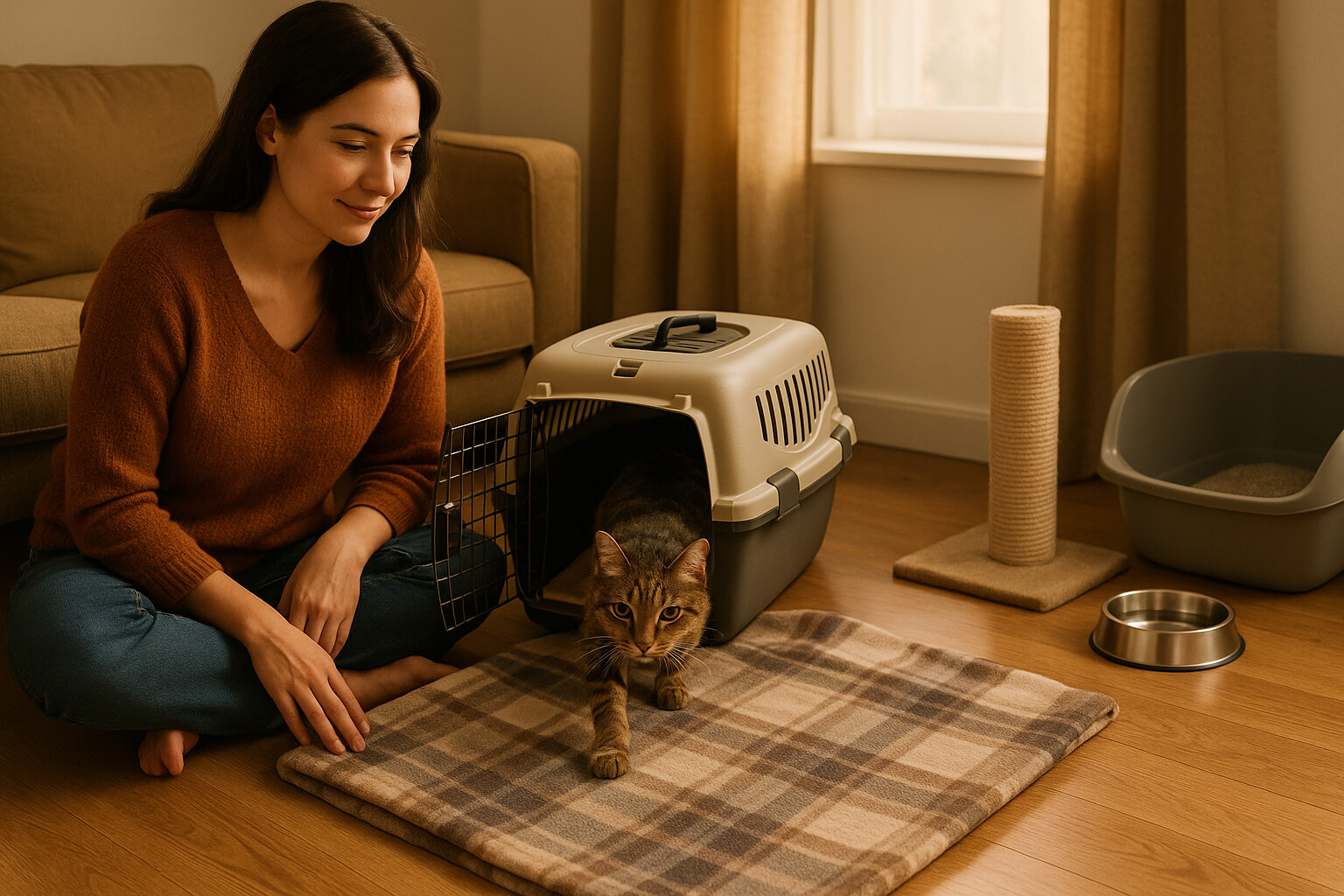
This is all normal. The ASPCA and most veterinary behaviourists recommend a “room, then home” approach: confine your new cat to a single quiet room for the first week rather than giving free run of the house. A smaller space is less overwhelming, easier to scent-mark, and easier to feel safe in.
Set up that room with:
- A litter box (away from the food bowl - cats will not eat near where they eliminate)
- Fresh water and food
- A hiding spot (a covered bed, an open carrier lined with something soft)
- Minimal foot traffic
Resist the urge to pull them out of hiding to “bond.” Let them come to you. Sit in the room, read a book, talk quietly. Offer a hand to sniff if they approach, but do not reach into their hiding spot. Forcing interaction when a cat is in flight mode does not build trust - it erodes it.
Week Two: The Emergence
Somewhere in the second week - sometimes earlier, sometimes later - most cats start to relax. You will notice the change: they venture out more, start investigating, may eat with less anxiety. Some cats are cautious for the entire first month. Others are sprawled on your lap by day three. Both are within normal range.
This is when you can begin expanding their territory, gradually. Open the room door and let them choose when to explore. Do not carry them out - that removes their agency, which matters a lot to cats.
Signs things are going well:
- Eating and drinking normally
- Using the litter box consistently
- Showing curiosity rather than pure fear
- Beginning to groom themselves (self-grooming stops under high stress)
- Making eye contact and voluntarily approaching you
Signs that merit more patience or a vet check:
- Still not eating after 48 hours (cats who do not eat can develop hepatic lipidosis, a serious liver condition - this is worth a call to your vet)
- Lethargy beyond hiding
- Sneezing, eye discharge, or diarrhoea - respiratory infections are extremely common in shelter and rescue cats, and most are easily treated if caught early
Setting Up the Environment: The Basics That Matter
Litter boxes
The general rule is one litter box per cat, plus one extra. If you have one cat, that means two boxes, in different locations. When in doubt, unscented clumping clay is the default most cats accept. Box size matters too: it should be at least 1.5 times the length of your cat. Many commercially sold litter boxes are too small.
Scratching posts
Scratching is not a behaviour problem - it is a biological necessity. Cats scratch to maintain their claws, stretch their muscles, and mark territory. Offer at least one vertical post (tall enough for full stretch) and one horizontal surface. Sisal rope and corrugated cardboard are the most commonly preferred textures.
Vertical space
Cats feel safer when they can get up high. A cat tree, a cleared shelf, or a window perch gives them somewhere to survey their environment from a safe vantage point. During the stressful early weeks, vertical options reduce anxiety significantly.
The First Vet Visit
Book a vet appointment within the first week if you do not have recent health paperwork. Shelter and rescue cats commonly arrive with respiratory infections, intestinal parasites, ear mites, and skin conditions - most easily treated, but you need to know they are there. A baseline checkup also confirms vaccination status and gives you a starting point for ongoing care.
What the First Month Is Really About
The goal of the first 30 days is not to have a perfectly bonded, happy cat. It is to lay the groundwork for that to happen. What you are doing in month one is building the conditions - predictability, safety, appropriate resources, low pressure - that let a cat relax into who they actually are.
Do not take the hiding personally. Do not interpret caution as rejection. The cats who get space when they need it in month one are almost always the ones who seek you out enthusiastically in month three.
Practical Takeaway
Set up one small, quiet room before they arrive. Commit to the “room first” approach for at least five to seven days. Book a vet check in the first week. Give them hiding options, vertical space, and the freedom to come to you. Track eating and litter box use daily in the first two weeks - these are your clearest health signals.