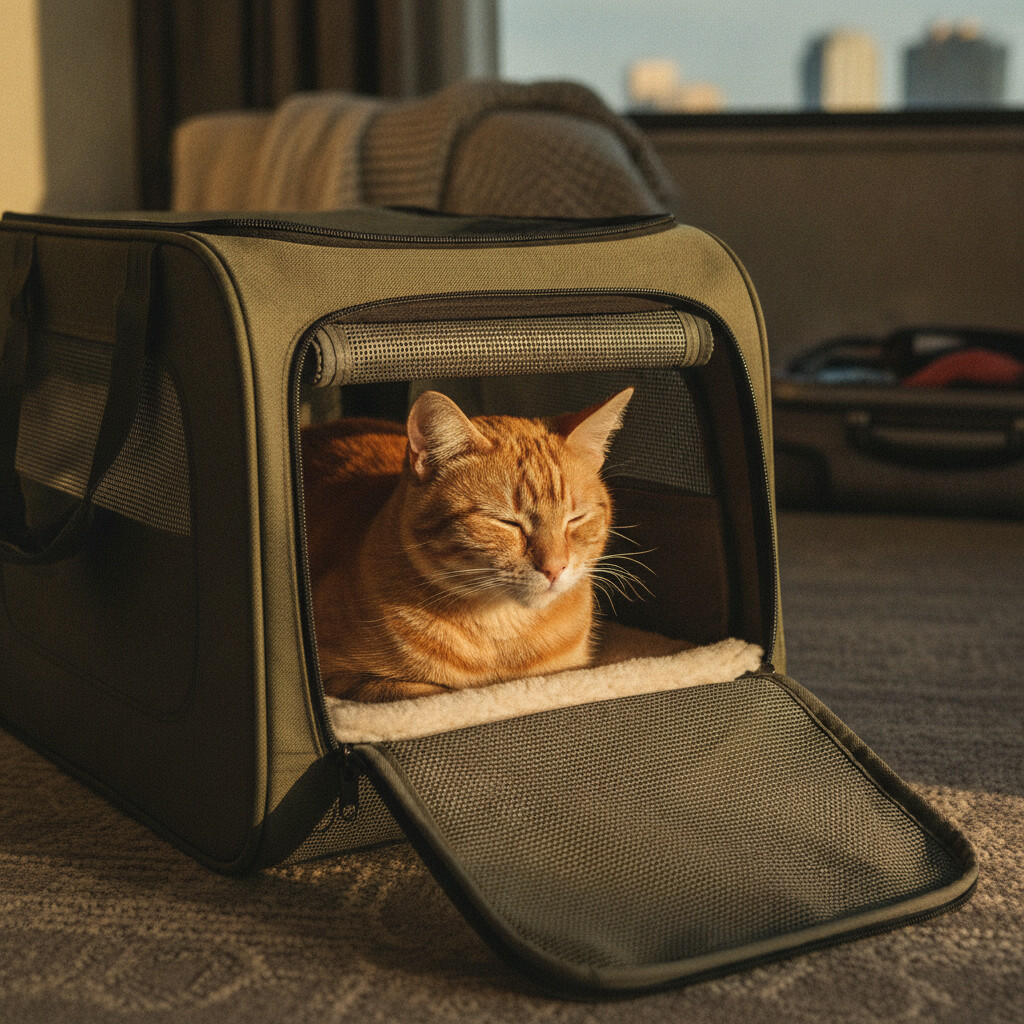
Most cats can fly safely — but “safely” depends almost entirely on preparation. Airlines have strict policies that catch unprepared owners off guard, and the process of getting a cat from gate to destination is genuinely stressful for the animal if you haven’t set it up right. Here’s what you actually need to know.
In-Cabin vs. Cargo: Choose Carefully
The single most important decision is whether your cat flies in-cabin with you or as cargo. In-cabin is almost always safer and less stressful. Cargo holds are louder, temperature-less-regulated, and your cat is out of your control for the entire journey. If there’s any way to bring your cat in-cabin, do it.
In-cabin eligibility:
- Your cat must fit in an approved carrier that slides under the seat in front of you (typically 18" x 11" x 11" or similar — check your specific airline)
- Most airlines allow only 1-2 pets in-cabin per cabin section, so book early
- Not all routes allow pets in-cabin; international flights often don’t
When cargo might be unavoidable:
- Cat is too large for in-cabin (rare but possible)
- International flights requiring specific entry procedures
- You have no other option and must travel
If your cat must travel as cargo, research airlines with strong live animal safety records (not all cargo programs are equal) and avoid peak summer/winter months when temperature extremes are highest.
What Airlines Actually Require
Requirements vary by airline, but expect these regardless of carrier:
Health certificate. Almost universally required for air travel. This is an official certificate signed by a licensed veterinarian, confirming your cat is healthy and fit to fly. Most airlines require it to be issued within 10 days of departure — some require it within 7. Domestic flights sometimes have more flexibility; international flights almost always require a USDA-endorsed certificate, which adds an extra step and time.
Vaccinations. Rabies vaccination is required by law for most domestic travel and is verified when you get the health certificate. Make sure your cat’s vaccines are current well before your trip.
Carrier that meets airline specs. Hard-sided and soft-sided carriers are both accepted by most airlines, but the dimensions must match the airline’s published under-seat allowance. Measure and buy the carrier first; then confirm with your airline it meets their current policy (policies change).
Pet fee. Budget $100–$200 each way per pet for in-cabin on most major US carriers. This is per segment, not per trip.
Preparing Your Cat: The 4-Week Timeline
Don’t wait until the week of travel to introduce your cat to the carrier. The goal is for the carrier to feel like a familiar, safe space — not a trap.
4 weeks out: Set the carrier open on the floor with familiar bedding inside. Let your cat investigate it voluntarily. Feed meals near the carrier, then inside it.
2–3 weeks out: Close the carrier door briefly while your cat is inside, then immediately open it. Gradually extend this. Take short car trips in the carrier so the motion isn’t new.
1 week out: Get the health certificate. Reconfirm your airline’s pet policy. Double-check that your carrier tags include your contact information and your destination address.
Day before: Withhold food 4–6 hours before departure (reduces the chance of vomiting; water can continue). Put a worn piece of your clothing in the carrier — familiar scent is calming.
At the Airport
Airports are loud, unpredictable, and full of unfamiliar smells. This is genuinely stressful for most cats, so minimise your time in the terminal where possible.
You will need to remove your cat from the carrier at the security checkpoint (it goes through the X-ray machine; your cat goes through the metal detector in your arms). Practice this at home — having your cat comfortable being held while the carrier is out of sight is worth doing in advance.
Keep the carrier covered with a blanket or towel during the flight. Darkness is calming for most cats. Offer water from a travel bowl during longer flights; don’t expect your cat to eat.
What to Expect on the Other End
Your cat will probably be stressed and may not eat or use the litter box for several hours after arrival. This is normal. Set up a quiet room with familiar items as soon as you arrive and give them time to decompress.
Most cats recover within 24–48 hours. If your cat is still refusing food at 48+ hours, showing laboured breathing, or has pale gums, that warrants a vet call.
Watch for signs of stress in the days following travel — our guide on 10 Signs Your Cat Is Stressed (And What To Do About Each One) walks through what to look for and how to respond.
What About Sedation?
Most vets advise against sedating cats for air travel. Sedatives can interfere with a cat’s ability to balance and stabilise at altitude, and the interaction between altitude, air pressure, and sedatives is unpredictable. The American Veterinary Medical Association (AVMA) specifically recommends against sedation for air travel.
If your cat has severe travel anxiety, talk to your vet about alternatives: gabapentin has become a commonly used anti-anxiety option for cats during travel and has a better safety profile in this context than traditional sedatives.
ID and Microchipping Before You Go
Airports are one of the higher-risk environments for cat escapes — carriers get opened, doors don’t fully close. Make sure your cat is microchipped and the registration is current before any trip. For step-by-step recovery guidance if the worst happens, see What to Do If Your Cat Gets Out.
When to See a Vet Before Flying
Schedule a vet visit before any air travel to:
- Get the required health certificate
- Discuss your cat’s specific health situation (older cats, cats with heart or respiratory conditions may not be good candidates for air travel)
- Ask about anxiety management options if your cat has significant travel stress history
Some cats genuinely shouldn’t fly — if your vet expresses concern, take it seriously. Driving or using a pet-transport service may be the better option.