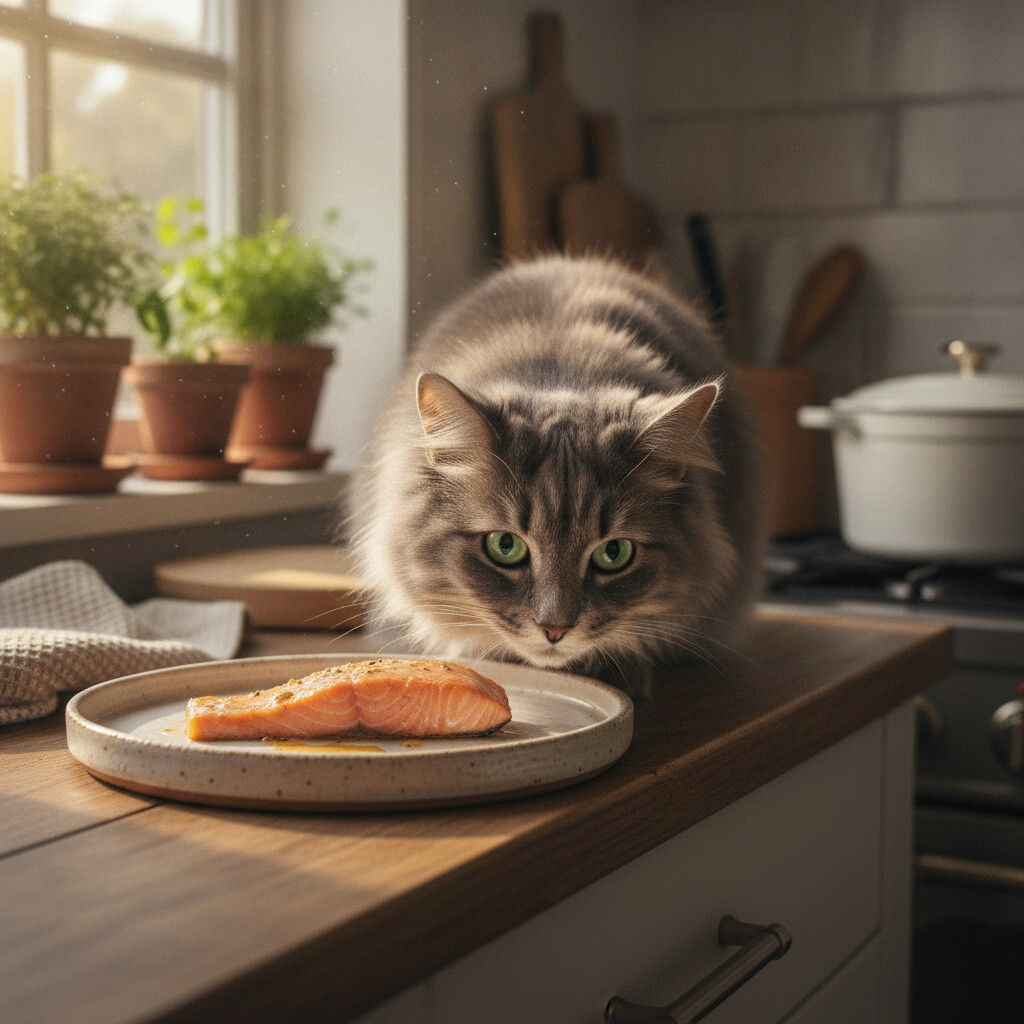
Fish is fine for cats in moderation, but it shouldn’t be a daily meal or the main ingredient in your cat’s diet — the risks (mercury buildup, thiamine breakdown, and a strong tendency to trigger food allergies) are cumulative, not immediate. A can of tuna as an occasional treat isn’t going to hurt anyone. A cat fed fish-based food every day, for years, is a different story.
Why cats seem to love fish so much
It’s a bit of a myth that fish is a “natural” cat food — most domestic cats descend from desert-dwelling wildcat ancestors who ate rodents and birds, not seafood. The appeal is more about smell and fat content than instinct: fish is oily, pungent, and highly palatable, which is exactly why pet food companies use it so heavily in wet food and treats. Cats respond to the smell, not some ancestral programming.
The mercury problem
This is the biggest long-term concern with fish-heavy diets. Larger, longer-living fish — tuna in particular — accumulate mercury from their environment over their lifespan, and it concentrates as it moves up the food chain. A cat eating tuna-based food or treats every day is getting a steady, low-dose exposure that a person eating tuna once or twice a week isn’t.
Chronic mercury exposure in cats has been linked to neurological symptoms in case reports, including tremors and loss of coordination, though it typically takes sustained, heavy exposure over months to get there — not the occasional flake of tuna off your plate. The practical rule of thumb from veterinary nutrition sources: tuna and other predatory fish are fine as an occasional treat, not a dietary staple.
Thiaminase and thiamine deficiency
Raw fish — particularly raw tuna, herring, and some other species — contains an enzyme called thiaminase that breaks down thiamine (vitamin B1) before the cat’s body can absorb it. Cats fed a diet heavy in raw fish over time can develop thiamine deficiency, which shows up as loss of appetite, weight loss, and in more advanced cases, seizures and other neurological signs. Cooking fish deactivates thiaminase, which is one of the reasons commercial fish-based cat foods are cooked or otherwise processed rather than raw, and one more reason raw fish diets in particular need to be planned carefully rather than assembled at home without guidance.
Fish and food allergies
Fish is one of the most common triggers in feline food allergies, alongside beef and dairy. If your cat has ongoing itchy skin, ear infections, or GI upset and you’ve been feeding a fish-based diet, that’s worth flagging to your vet as a possible cause — food allergies in cats usually show up as skin and digestive symptoms rather than the sneezing and watery eyes you’d associate with allergies in people. We’ve covered the full range of allergy symptoms and how they’re diagnosed if that sounds like what you’re dealing with.
So how much fish is actually okay?
For a healthy adult cat with no known allergies, an occasional serving of cooked, boneless fish — a spoonful of plain cooked salmon or a bit of canned tuna in water, not oil or brine — a couple of times a month is a reasonable treat. It shouldn’t be a daily addition, and it shouldn’t make up more than a small fraction of overall calories. If you’re choosing a commercial wet food, fish-flavored isn’t inherently worse than chicken or turkey varieties as a base diet — the mercury and thiamine concerns are mainly about feeding fish as the overwhelming majority of the diet, especially raw or homemade, not about an occasional canned meal that’s been through commercial processing and safety testing.
If you’re unsure what’s actually in your cat’s current food, our guide to reading a cat food label walks through how to tell how much of a formula is actually fish versus flavoring.
What to avoid entirely
- Raw fish as a regular diet, for the thiaminase risk above
- Fish bones, which can splinter and cause choking or intestinal injury
- Tuna packed in oil or brine, which adds unnecessary fat and sodium
- Any fish for a cat with a known or suspected fish allergy
When to call the vet
Fish itself is rarely an emergency. But watch for tremors, disorientation, or loss of coordination in a cat that’s been eating a lot of fish over time — those can be signs of either thiamine deficiency or mercury exposure, and both need veterinary attention rather than a wait-and-see approach. Persistent itching, hair loss, vomiting, or diarrhea after introducing a fish-based food is more likely an allergy and also worth a vet visit to sort out, ideally with an elimination diet trial rather than guessing.
The practical takeaway
Treat fish the way you’d treat any strong-flavored treat: fine in small, occasional amounts, not fine as the backbone of your cat’s daily diet. Cooked and boneless beats raw. And if your cat’s current food is fish-based and they’re showing any skin or digestive symptoms, that’s worth ruling out before assuming it’s something else.