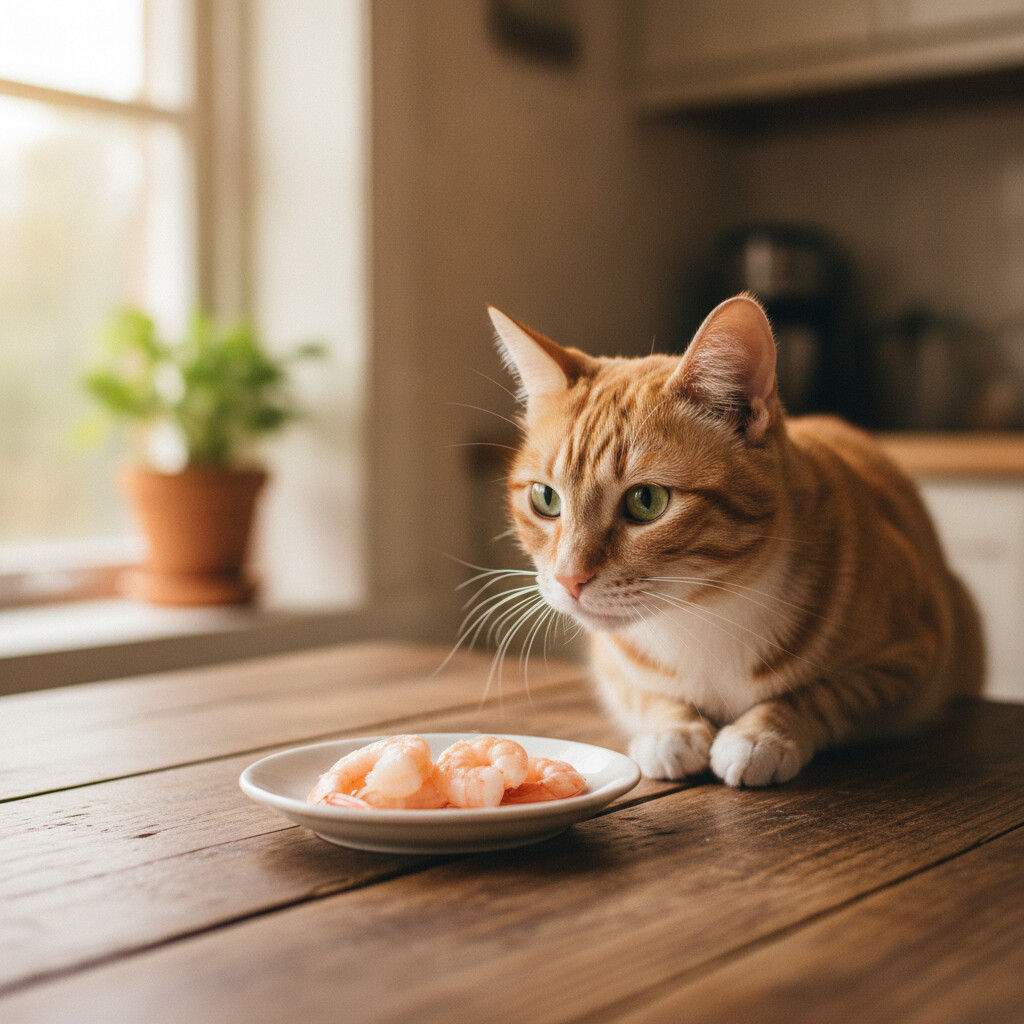
Yes, cats can eat shrimp. If it’s plain, fully cooked, peeled and given in small amounts, it’s a safe treat for most cats. The trouble usually comes from everything people do to shrimp: raw prep, shells and tails, garlic butter, salty brines and cocktail sauce. Here’s how to share it without a 2am cleanup.
The short answer
Plain cooked shrimp is not toxic to cats. It doesn’t appear on the ASPCA Animal Poison Control Center’s list of people foods to keep away from pets, and it’s almost pure animal protein, which suits an obligate carnivore. It’s also not a meal. Shrimp isn’t a complete and balanced food, so it belongs in the treat budget, and a cat’s treat budget is small.
The safe version looks like this:
- Cooked all the way through: boiled, steamed or baked, never raw
- Peeled, deveined, tail removed
- Nothing added: no butter, oil, salt, garlic, onion, lemon or seasoning
- Cut into bite-sized pieces, especially for kittens and cats who gulp
How much shrimp can a cat have?
Most vets use the 10% rule: treats of any kind should make up no more than about 10% of a cat’s daily calories. The 2021 AAHA Nutrition and Weight Management Guidelines use the same benchmark.
The numbers are small. A typical 10-pound indoor adult cat needs roughly 200 to 250 kilocalories a day (your vet can give you an exact figure for your cat), so the treat allowance is about 20 to 25 kcal. USDA nutrient data puts one medium cooked shrimp at around 6 to 7 kcal.
| Cat | Rough treat allowance per day | Shrimp equivalent |
|---|---|---|
| Small adult (7–8 lb) | ~15–20 kcal | 1–2 medium shrimp, max |
| Average adult (10 lb) | ~20–25 kcal | 2–3 medium shrimp, max |
| Kitten | Treats rarely needed | A few small pieces |
Those are ceilings for a day when shrimp is the only treat, not targets. A piece or two a few times a week is plenty. If your cat is overweight, count shrimp against their weight-loss plan (our guide to cat weight-loss diets explains how).
Is raw shrimp safe for cats?
No. Skip raw shrimp, including sushi, ceviche and shrimp thawed from the freezer but never cooked. There are two reasons.
Bacteria. Raw seafood can carry Vibrio, Salmonella and Listeria. The AVMA’s policy discourages feeding pets raw or undercooked animal-source protein because of the infection risk to the animal and to the people handling the food, and the FDA has issued similar warnings about raw pet foods. Cats don’t always get visibly sick, but they can shed bacteria into the home.
Thiaminase. Some raw fish and shellfish contain an enzyme that breaks down thiamine (vitamin B1). The Merck Veterinary Manual links thiamine deficiency in cats to diets heavy in raw fish. One raw prawn won’t cause it, but it’s the reason raw seafood should never become a habit. Cooking destroys the enzyme.
Ceviche brings its own problems: it’s “cooked” with citrus acid rather than heat, so the bacteria risk remains, and it’s usually full of onion.
Shrimp shells, tails and heads
Take them off. Shells and tails are hard and sharp-edged, and cats tend to gulp food rather than chew it. The likely result is vomiting, but a shell fragment can also irritate the mouth or throat, and a tail swallowed whole can in rare cases contribute to a blockage. The heads are hard too and are where most of the grit sits.
Cats raid garbage bins, so bag shrimp shells and take them outside after a seafood dinner. A hot kitchen bin full of shellfish waste is irresistible to a cat.
The shrimp to avoid: sauces, seasoning and processed shrimp
Most shrimp problems in cats come from how the shrimp was prepared:
- Garlic and onion in any form, including garlic butter, scampi, stir-fries and seasoning powders. All alliums can damage a cat’s red blood cells, and cats are more sensitive to them than dogs, according to the Merck Veterinary Manual. Powdered forms are concentrated.
- Butter and oil. These add rich fat a cat’s gut isn’t used to, which can mean vomiting or diarrhea.
- Salt. Many frozen and pre-cooked shrimp are brined or treated with sodium-based phosphates to hold moisture, and the sodium content on labels varies a lot. Pick raw, untreated shrimp and cook it yourself, or check the label for added salt.
- Breaded, battered, tempura and coconut shrimp. These are mostly coating and frying oil.
- Cocktail sauce, spicy sauces, lemon and anything with chili.
- Dried shrimp snacks made for people, which are usually very salty.
If your cat stole shrimp off a plate, what matters is what was on it. A plain peeled shrimp is nothing to worry about. Shrimp scampi with a garlic-heavy sauce is worth a call to your vet or a pet poison line.
Can cats be allergic to shrimp?
They can, but it isn’t well documented. A 2016 review of food allergy studies in BMC Veterinary Research (Mueller, Olivry and Prélaud) found beef, fish and chicken were the most commonly reported food allergens in cats. Shellfish wasn’t high on the list, but that may be because few cats are fed it.
Signs of a food reaction usually build over days or weeks rather than minutes: itching (often around the head and neck), overgrooming, scabs, vomiting or soft stool. If your cat is on an elimination diet for a suspected food allergy, no shrimp, and no other extras, until your vet says so.
Is shrimp good for cats at all?
It isn’t a superfood, but it’s a decent treat. Cooked shrimp is high in protein and low in fat and carbohydrate, so it’s a reasonable choice when you want to give a cat something special. It’s no substitute for their regular food, and cats don’t need seafood in their diet. If you’re thinking about fish more broadly, our guide to whether fish is good for cats covers mercury, tuna habits and how much is safe.
Shrimp is also useful as a high-value reward. Cats who won’t work for regular treats will often work for a crumb of shrimp, which helps with carrier training, nail trims or pill time.
When to see a vet
Call your vet, or the ASPCA Animal Poison Control Center (888-426-4435) or Pet Poison Helpline (855-764-7661) (both may charge a fee), if your cat:
- Ate shrimp cooked with garlic, onion, leeks or chives, or a seasoning containing them
- Swallowed shells or tails and is retching, gagging, drooling, pawing at the mouth or refusing food
- Vomits more than once or twice, or has diarrhea lasting more than 24 hours
- Seems lethargic, weak or has pale gums in the days after eating an allium-seasoned dish (allium damage can take a few days to show)
- Develops facial swelling, hives or trouble breathing after eating seafood (rare, but an emergency)
One episode of vomiting after a cat gobbled shrimp too fast is usually just that. Repeated vomiting, a cat that stops eating, or any of the signs above means it’s time to call.
The bottom line
Plain, cooked, peeled shrimp in small pieces is a safe occasional treat for most cats. Keep it to a piece or two, keep it inside the 10% treat budget, and skip anything raw, shelled, salted, buttered or garlicky. For more on sharing your plate, see our guides to human foods that are safe for cats and healthy cat treats.
Does your cat come running at the sound of a seafood dinner, or turn their nose up at it?