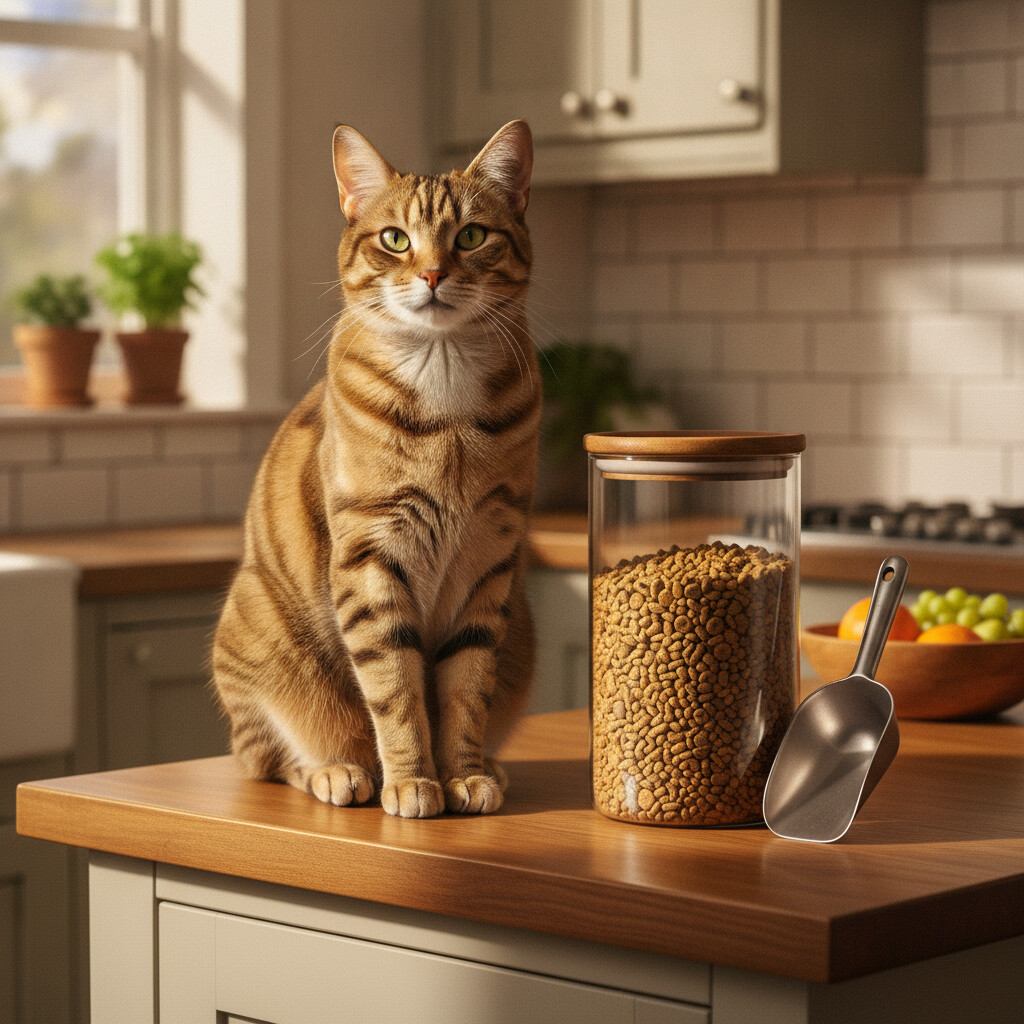
Dry food goes in its original bag, sealed inside an airtight container, somewhere cool and dark — and you’ve got roughly 4 to 6 weeks after opening before the fats inside start breaking down. Wet food goes straight in the fridge, covered, and gets tossed within 24 to 48 hours. That’s the short version. The longer version explains why storage matters more than most owners assume, and where people usually get it wrong.
Why Storage Actually Matters (Not Just Freshness)
It’s not just about taste. Dry cat food is coated in fats to make it palatable, and those fats oxidize once exposed to air — a process called rancidity. Rancid fat isn’t just less appetizing, it can lose nutritional value and, in poorly stored or damaged bags, create conditions for mold growth. The FDA and AAFCO both flag improperly stored pet food as a risk factor for mycotoxin contamination, particularly aflatoxins produced by certain molds that thrive in warm, humid conditions. Cornell Feline Health Center has noted mycotoxin poisoning as an uncommon but serious risk tied specifically to spoiled or improperly stored grain-based pet food.
None of this means your pantry is a health hazard. It means storage is a genuine variable in food quality, not just a tidiness preference — and it’s one of the easiest things to get right.
Dry Food: The Right Way to Store It
The single biggest mistake is dumping kibble straight into a plastic storage bin. The bag itself is doing real work: most dry food bags are lined to block oxygen and light, which slows fat oxidation. Pull the whole bag out, keep the food inside it, and place the sealed bag inside an airtight container. You get the container’s convenience without losing the bag’s barrier protection.
A few other things that actually make a difference:
- Keep it cool and dark. A pantry or cabinet beats a spot near the stove, a sunny counter, or the garage in summer. Heat accelerates fat breakdown.
- Don’t buy more than you’ll use in 4–6 weeks. Large bulk bags are cheaper per pound, but if a bag sits open for two months, you’re likely feeding food that’s past its nutritional prime well before it looks or smells obviously off.
- Wash the container between refills. Old fat residue left in a storage bin can go rancid and contaminate the next batch.
- Check the best-by date before buying, and again before you open it. Unopened, properly stored dry food is generally good until that date. Opened, the clock resets to weeks, not months.
Wet Food: Fridge Rules That Actually Apply
Wet food is a different equation because moisture creates a much faster window for bacterial growth. Once a can or pouch is opened, cover it and refrigerate — most veterinary nutrition guidance puts the safe window at 24 to 48 hours before it should be discarded, even if it still looks fine. Bacteria don’t announce themselves visually.
If your cat is a slow, picky eater and won’t finish a can in one sitting, portioning into smaller containers before opening — or buying smaller cans — cuts down on waste and risk more reliably than hoping a half-eaten bowl stays safe on the counter. Wet food left out at room temperature for more than an hour or two, especially in warm weather, should be treated as compost, not a snack for later.
Freeze-Dried and Dehydrated Food: A Different Set of Rules
Freeze-dried and dehydrated foods behave more like dry food in storage — low moisture content means a longer shelf life unopened — but they’re more sensitive to humidity once the package is opened, since removing moisture is the entire point of the process. Reseal the bag tightly after every use, or transfer to an airtight container, and keep it away from steamy kitchens or bathrooms. Once you rehydrate a portion with water, it should be treated exactly like wet food: refrigerate, and use within a day.
Signs Your Cat’s Food Has Gone Bad
Trust your nose before your cat’s opinion — cats will sometimes still eat food that’s turning, which isn’t a reliable safety test. Watch for:
- A stale, musty, or noticeably “off” smell compared to a fresh bag
- Visible mold spots (discard the entire bag or can, not just the affected portion)
- Kibble that feels oily or damp to the touch
- Sudden, unexplained pickiness or an upset stomach after a food that’s been open a while
If you notice repeated vomiting, diarrhea, or lethargy after a meal and suspect the food itself, stop feeding it, keep the bag or can (packaging details matter if you need to report a suspected contamination), and call your vet.
The Bottom Line
Storage isn’t the flashiest part of feeding a cat, but it’s one of the few nutrition variables that’s entirely within your control and costs nothing to fix. Keep dry food in its bag inside an airtight container, refrigerate opened wet food and use it within two days, and don’t stockpile more than you’ll go through in about a month. If you’re still working out what’s actually in the food you’re storing, it’s worth pairing this with how to read a cat food label without getting lost in marketing terms. And if freeze-dried food is part of your rotation, here’s an honest look at whether it’s worth the price — storage included.