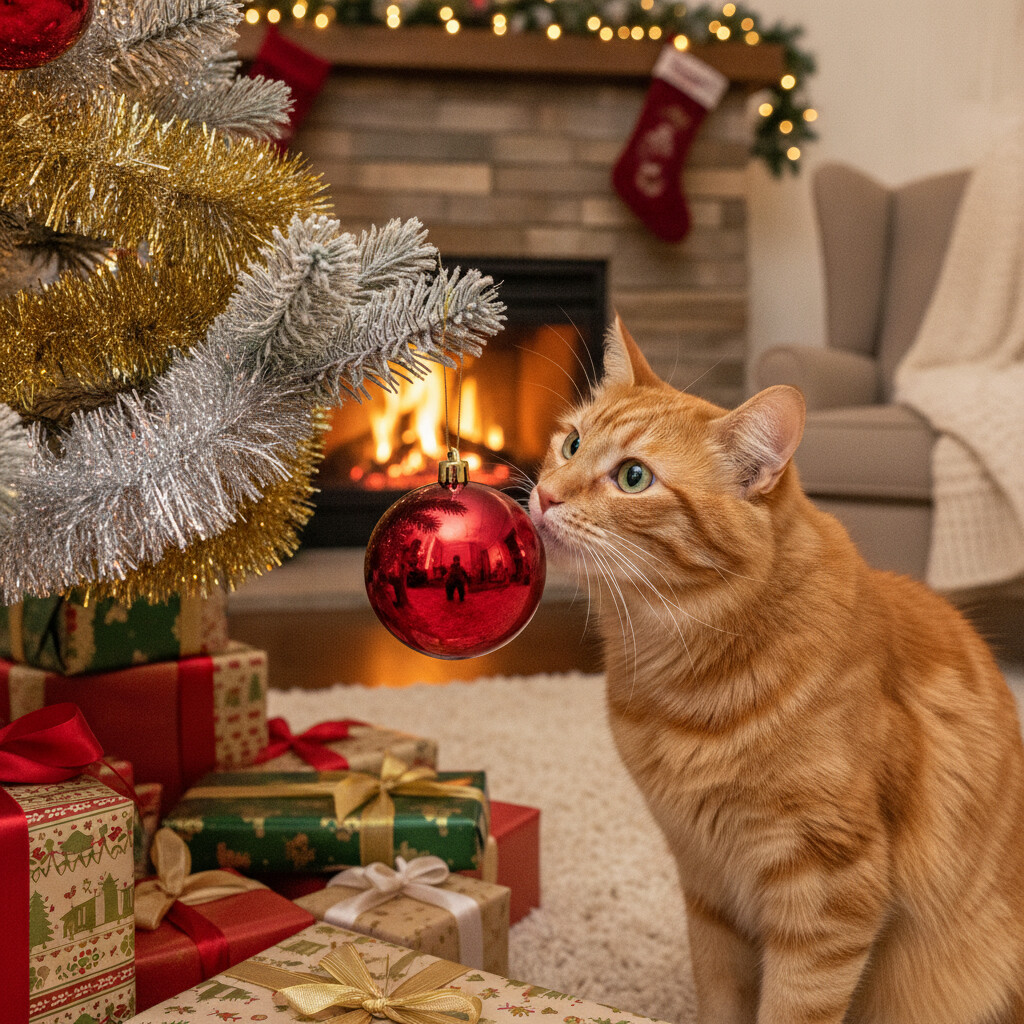
Holidays bring a unique set of hazards for cats — from table scraps to tree tinsel. Here’s what’s actually dangerous, what’s overblown, and when to call the vet.
Holidays are chaotic for cats: more guests, more food, more decorations, more disruption. Most cats manage fine. But every year, vets see a spike in calls — and sometimes emergencies — from well-meaning cat owners who didn’t know the roast onions, the poinsettia, or the ribbon on the gift were problems. This article covers the real risks, not the internet hysteria.
High-Risk Foods: The Ones That Can Actually Cause Serious Harm
Lilies — The single most dangerous holiday plant for cats. All species of the Lilium and Hemerocallis (daylily) genera are acutely toxic to cats. A nibble of a petal or leaf can cause acute kidney failure within 24–72 hours. The ASPCA Animal Poison Control Center considers true lilies the highest-priority emergency in cats. Easter lilies, tiger lilies, asiatic lilies — all of them. If you have cats, don’t have lilies. Not in a vase, not as a gift, not in a bouquet.
Grapes and raisins — Associated with acute kidney failure in some cats and dogs. The dose-response relationship is inconsistent — some animals eat them with no apparent effect, others develop serious illness from small amounts. The mechanism isn’t fully understood, which makes it more dangerous: there’s no safe threshold. No grapes, no raisin bread, no fruitcake if it contains them.
Xylitol — Found in some sugar-free baking ingredients and certain “health” treats. Extremely dangerous to dogs; the risk in cats is less well-characterised, but xylitol has no place near any pet.
Onions and garlic — Toxic to cats at high enough doses. Trace amounts in cooked food are unlikely to cause acute illness, but a cat that helps itself to onion-heavy leftovers risks Heinz body haemolytic anaemia. Keep onion-containing dishes inaccessible.
Alcohol — Even small amounts are dangerous. A cat that laps up spilled wine or drinks from a glass is at real risk. Symptoms: vomiting, disorientation, difficulty breathing, potentially fatal in larger quantities.
Chocolate — Theobromine toxicity is well-documented in cats. Darker chocolate is more dangerous. A cat stealing chocolate is worth a vet call, not a wait-and-see.
Cooked bones — Not toxic, but a physical hazard. Cooked poultry bones splinter and can perforate the intestines. Secure them in a bin the cat can’t access.
Holiday Plants: Separating Real Risk from Myth
Poinsettia — The most over-feared holiday plant. Poinsettias do cause GI irritation and mouth discomfort if eaten, but they aren’t acutely lethal. Vomiting and drooling are typical. Keep them out of reach because they’re unpleasant — not because they’re emergency-level dangerous.
Holly (Ilex) — Genuinely toxic. The leaves and berries contain saponins and other compounds that cause GI distress, depression, and lethargy. Requires vet attention if eaten in quantity.
Mistletoe — More toxic than people realise, particularly American mistletoe. Can cause GI symptoms, cardiovascular effects, and in large quantities, neurological signs. Keep it well out of reach.
Amaryllis — Popular holiday bulb plant. All parts are toxic, with the bulb being the most concentrated. Causes vomiting, abdominal pain, and lethargy; at high doses, more serious systemic effects.
Christmas tree (pine/fir) — Mildly irritating if chewed. The tree stand water is a bigger concern if fertilisers or preservatives have been added — keep it covered. Falling trees are also a physical risk worth addressing before your cat investigates.
For a broader reference on toxic and safe plants year-round, see the forum guide to common houseplants toxic to cats.
Decorations: The Underrated Hazards
Tinsel and ribbon — Among the most dangerous holiday hazards for cats. Cats are attracted to the shimmer and texture. If swallowed, ribbon or tinsel can cause a linear foreign body — the material anchors in the gut while the intestine bunches up around it (called plication). This requires surgery. Not maybe surgery — surgery. Keep tinsel off trees if you have cats. If you use it, know the risk and supervise closely.
Candles — Open flames are a burn risk, and cats around lit candles are unpredictable. Keep candles in stable holders; never leave them unattended with cats in the house.
Snow globes — Some contain ethylene glycol (antifreeze), which is acutely toxic to cats and extremely palatable. If a snow globe breaks, treat the spilled fluid as you would antifreeze: keep cats well away and clean it up thoroughly before they can access it.
Small ornaments and button batteries — Button batteries cause chemical burns if swallowed. Small ornaments are choking hazards and intestinal foreign bodies. Keep them off low branches on the tree.
Electrical cords — Cats that chew cords risk electrocution. Cord protectors or tucking cords behind furniture is worth the few minutes it takes.
What to Watch For After Exposure
If you see or suspect your cat ate something concerning:
- Vomiting within 0–2 hours — often means GI irritation; watch closely and call the vet
- Lethargy, wobbling, or collapse — emergency call immediately
- Drooling and pawing at the mouth — could be pain, nausea, or both; call the vet
- Loss of appetite for more than 24 hours — vet call
- Changes in drinking or urination (especially: increased drinking, then sudden decrease) — kidney concern; vet immediately
If you’re unsure, the ASPCA Animal Poison Control Center (888-426-4435, US) is available 24/7. There’s a consultation fee, but they’re the most reliable resource for real-time toxicology guidance.
When to See a Vet
Call immediately — treat as emergency:
- Any known lily exposure, even before symptoms
- Known ribbon or tinsel ingestion
- Known antifreeze or snow globe fluid exposure
- Collapse, difficulty breathing, or seizure
- Chocolate or alcohol ingestion with symptoms
Call same day:
- Known holly, mistletoe, or amaryllis ingestion
- Suspected grape or raisin exposure
- Prolonged vomiting (more than 3 episodes in 4 hours)
Monitor and call if symptoms develop:
- Poinsettia nibble (watch for GI signs)
- Single grape with no current symptoms (still worth a vet call for guidance)
- Chewed Christmas tree branch
Holiday vet emergencies are stressful and expensive for everyone. Reducing the hazards in advance is far easier than managing a crisis. If your cat is already anxious around the disruption of holiday guests and chaos, see the forum’s guide to recognising the signs of stress in cats — it can help you tell the difference between a worried cat and one that needs medical attention.