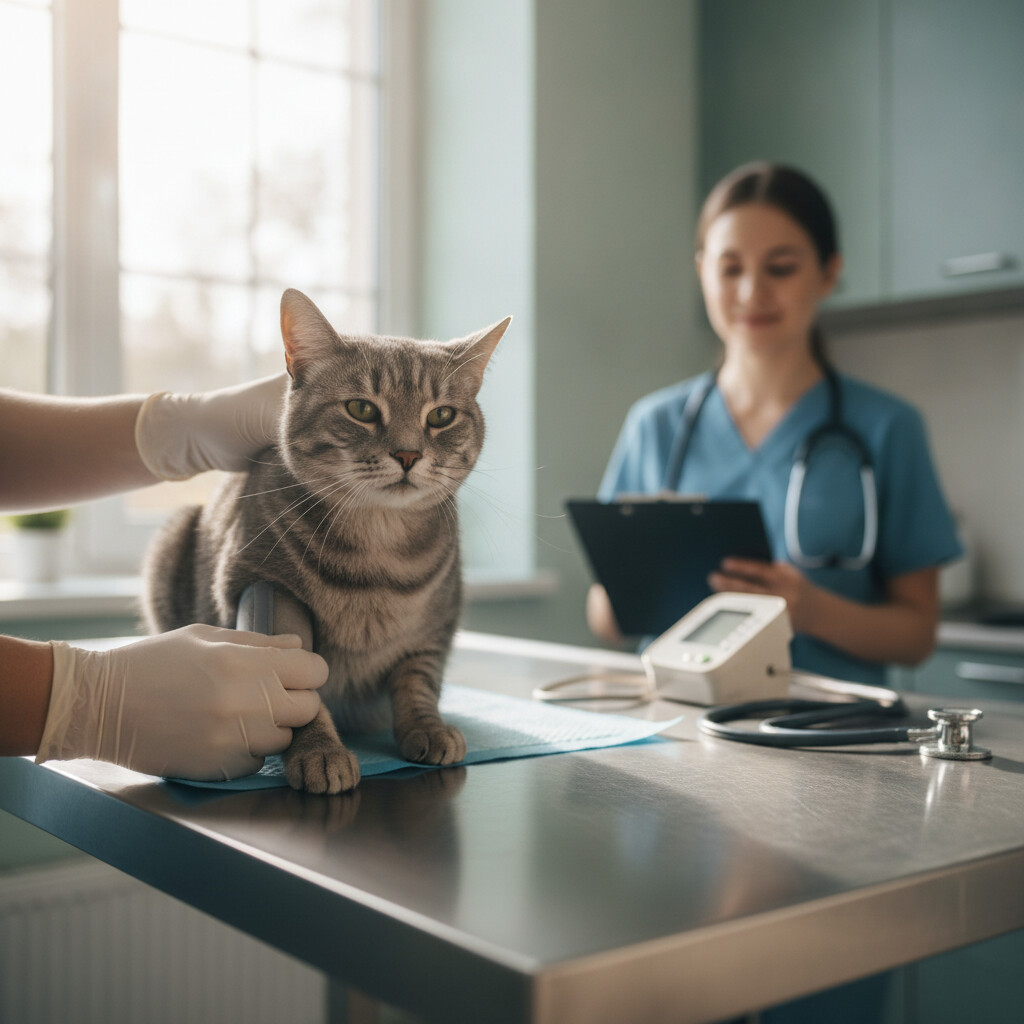
High blood pressure — hypertension — in senior cats is common, usually caused by another underlying disease, and dangerous mainly because of what it does to the eyes, kidneys, heart, and brain if it goes uncaught. The short version: it’s a silent condition until it isn’t, which is exactly why vets recommend checking blood pressure at senior wellness visits even when a cat seems fine.
What hypertension actually is in cats
A cat is generally considered hypertensive when systolic blood pressure consistently reads above 160 mmHg, with readings over 180 mmHg considered a high risk for organ damage, according to guidelines from the American College of Veterinary Internal Medicine (ACVIM). Unlike in humans, hypertension in cats is rarely “primary” — meaning it rarely shows up on its own with no cause. Instead, it’s almost always secondary to another condition, most commonly:
- Chronic kidney disease (CKD) — the most common cause, since damaged kidneys struggle to regulate blood pressure. See our guide on kidney disease in cats for more on how the two conditions overlap.
- Hyperthyroidism — an overactive thyroid speeds up the whole cardiovascular system, and untreated hyperthyroidism is a well-documented driver of high blood pressure. Our hyperthyroidism guide covers the signs to watch for.
- Diabetes, to a lesser extent, and rarer causes like adrenal gland tumors.
Because it’s usually secondary, the real question when a senior cat is diagnosed with hypertension isn’t just “how do we lower the number” — it’s “what’s driving it.”
Why it’s dangerous even though cats don’t ‘feel’ it
Cats don’t get headaches or dizziness from high blood pressure the way people report — or at least, they can’t tell us if they do. That’s part of what makes it dangerous: there’s no obvious discomfort prompting a vet visit. Instead, hypertension causes damage quietly to whichever organ has the least tolerance for pressure, and by the time signs appear, damage is often already done. The organs most commonly affected are:
- Eyes — sustained high pressure can cause retinal detachment or bleeding into the eye, sometimes leading to sudden, irreversible blindness. This is frequently the first sign owners notice: a cat that appears to go blind almost overnight, with dilated pupils that don’t react normally to light.
- Kidneys — hypertension both causes and worsens kidney disease, creating a cycle where each condition makes the other harder to manage.
- Heart — chronically elevated pressure makes the heart work harder, which can thicken the heart muscle over time (a pattern that overlaps with hypertrophic cardiomyopathy — see our heart disease guide).
- Brain — less common, but severe hypertension can cause neurological signs like disorientation, seizures, or abnormal behavior from pressure-related bleeding.
Signs to watch for
Because hypertension is often silent until an organ is affected, the signs owners actually notice tend to be signs of the complication, not the blood pressure itself:
- Sudden blindness, bumping into furniture, or dilated pupils that don’t constrict in bright light
- Disorientation, wobbliness, or head tilt
- Signs of the underlying disease — increased thirst and urination (kidney disease), weight loss with a ravenous appetite (hyperthyroidism), or lethargy
- Occasionally, a new heart murmur picked up during a routine exam
Because so many of these signs overlap with other senior cat conditions, blood pressure is genuinely difficult to “self-diagnose” as an owner — this is squarely a vet-visit problem, not a wait-and-watch one.
How it’s diagnosed and treated
Blood pressure is measured the same non-invasive way as in a doctor’s office — typically a cuff on the tail or a leg, using Doppler ultrasound. Most vets recommend cats be screened starting around age 9–10, especially if they have any of the underlying conditions above, and the AAFP’s senior care guidelines recommend blood pressure checks as a standard part of senior wellness visits given how easy the test is relative to how much damage untreated hypertension causes.
Treatment usually involves two tracks running together: managing the underlying cause (thyroid medication for hyperthyroidism, kidney support for CKD) and a blood-pressure-specific medication — amlodipine is the most commonly prescribed first-line drug in cats, and it’s generally effective and well tolerated. Cats on treatment need periodic blood pressure rechecks to make sure the dose is working, similar to how cats managing multiple senior diagnoses often need coordinated monitoring across conditions rather than treating each one in isolation.
When to see a vet
Sudden vision changes, disorientation, or dilated pupils that don’t react to light are an urgent, same-day vet visit — retinal detachment from hypertensive crisis can become permanent within hours to days. Beyond emergencies, any senior cat (roughly age 9+) should have blood pressure checked at least annually as part of a wellness exam, and more frequently if they’ve already been diagnosed with kidney disease, hyperthyroidism, or diabetes. Don’t wait for symptoms — that’s the entire point of screening for a condition that, by design, doesn’t show itself until it’s already caused harm.
The practical takeaway
Hypertension in senior cats is common, largely silent, and almost always tied to another underlying condition — which means the fix isn’t just “lower the number” but finding and treating what’s driving it. If your cat is a senior with kidney disease, hyperthyroidism, or diabetes, ask your vet to add a blood pressure check to their next visit, even if nothing seems wrong. It’s a two-minute test that can prevent irreversible blindness and catch a bigger problem early.