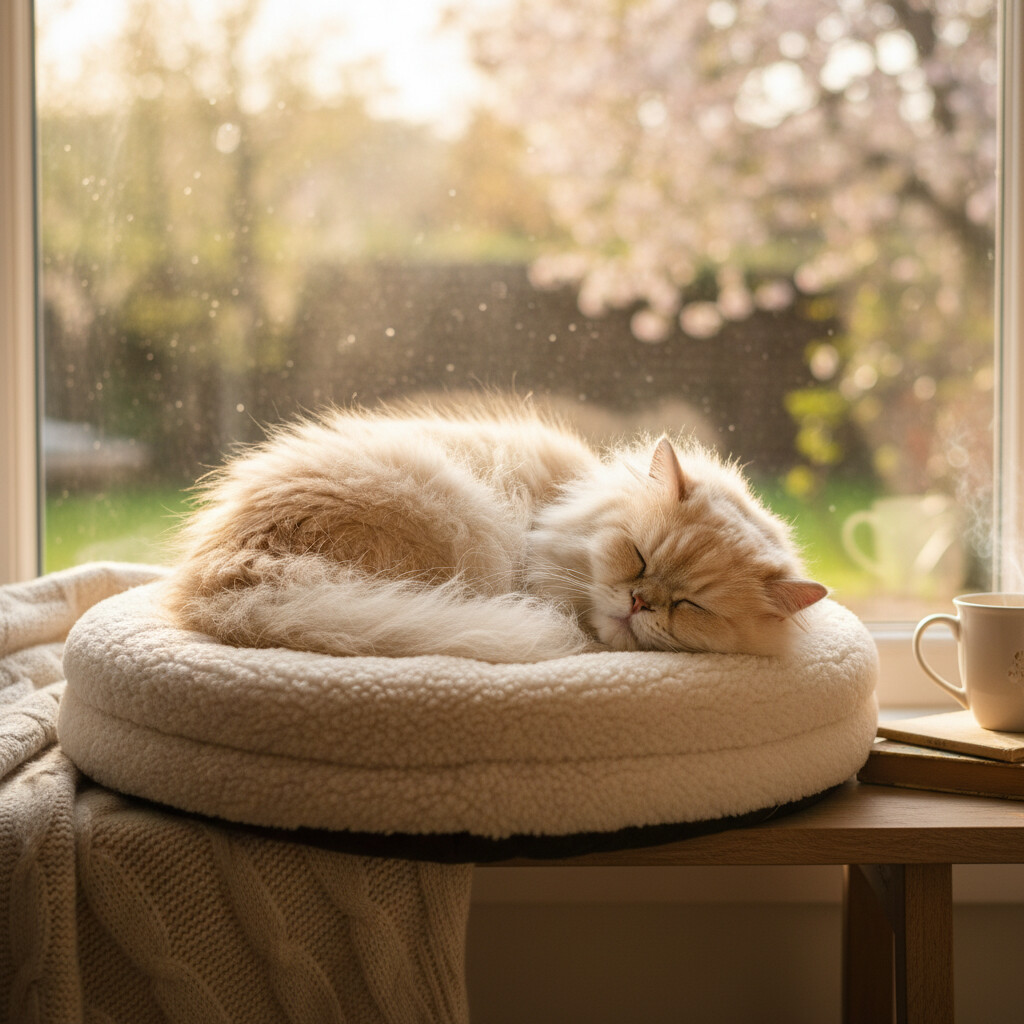
For most cats, a heated bed is safe and genuinely useful — especially for seniors, cats with joint issues, or any cat recovering from illness or surgery. The risks (overheating, electrical hazards) are real but avoidable if you pick the right product and use it sensibly. Here’s what you actually need to know.
Why Cats Are Drawn to Warmth
Cats thermoregulate differently from humans. Research in veterinary physiology puts their thermoneutral zone — the temperature range where they don’t expend energy to stay warm — at roughly 86–97°F (30–36°C). That’s well above the average home temperature, which is why your cat gravitates toward the laptop, the sunny windowsill, and the heating vent.
Senior cats and cats with chronic illness are especially cold-sensitive. Conditions like hyperthyroidism and chronic kidney disease often cause muscle wasting and weight loss, which reduces the body’s ability to retain heat. For these cats in particular, a reliable warm spot isn’t a luxury — it makes a measurable difference to their daily comfort.
Types of Heated Cat Beds
Electric (plugged-in)
These maintain a consistent set temperature, typically in the range of 100–102°F — designed to approximate normal feline body temperature. Higher-quality models use a thermostat to regulate temperature automatically. They provide steady warmth regardless of whether the cat is in the bed, which makes them useful in cold rooms.
The trade-off: they require a nearby outlet and good cable management. Any cat who chews electrical cords should not have unsupervised access to a plugged-in bed.
Self-warming (no electricity)
These use reflective materials — typically a metallic layer — to bounce the cat’s own body heat back toward them. No cord, no power, no overheating risk. The limitation is that they only warm up once the cat is actually lying in them.
For healthy adult cats who simply enjoy warmth, a self-warming bed is the simpler, lower-risk option.
Microwavable inserts
Heated in the microwave, these provide warmth for several hours before cooling. They’re standard in veterinary clinics for post-surgical recovery and in rescue settings for neonatal kittens. Useful for targeted, temporary warmth — not really suited as a permanent daily setup.
Are They Actually Safe?
Yes — with the right product and reasonable precautions.
Temperature is the key variable. Beds that maintain temperature at or below 102°F are safe for healthy cats. Beds with no thermostat or temperature regulation can overheat — a problem mainly for cats who can’t easily move away from a too-hot surface (elderly, post-surgical, very young, or ill cats). Always check the maximum temperature spec before buying.
Cord safety matters. Cats who chew cables face electrocution risk. For cord-chewers, either choose a self-warming bed or look for electric models with steel-braided or chew-resistant cords. Keep cables hidden or bundled where possible.
Avoid unventilated enclosures. Don’t put a heated electric bed inside a covered carrier or box with limited airflow — heat builds up.
Cheap unbranded products carry more risk. There are genuine reports of budget heated pads from unvetted online sellers causing burns and, in some cases, fires. A safety certification (UL listed, ETL listed) means the product has been independently tested. That’s worth paying for.
Who Benefits Most
Senior cats (10+): Arthritis is common in older cats, and joint stiffness worsens in cold. The American Association of Feline Practitioners (AAFP) notes that osteoarthritis is significantly underdiagnosed in cats — many owners attribute reduced mobility to “just getting old” when pain is actually the cause. Consistent warmth at the joint level can improve mobility and encourage movement. A heated bed placed where the cat already chooses to sleep is one of the least intrusive interventions you can make.
Cats with chronic illness: Thin cats — whether due to illness, age, or naturally lean build — lose heat faster. For a cat managing kidney disease, warmth management is one of the low-effort quality-of-life wins that doesn’t require medication adjustments.
Post-surgical recovery: Most vets warm patients after any procedure involving general anaesthesia. If your cat is coming home to recover from surgery, a safe heated bed during the recovery period is standard good practice — confirm the approach with your vet.
Kittens: Kittens under four weeks can’t thermoregulate at all. For very young kittens, a microwavable insert or low-wattage heating pad placed at one end of their enclosure — always with an unheated area they can move to — is standard rescue and breeder practice.
What to Look For When Buying
- UL or ETL listing — the product has been independently tested to safety standards
- Thermostat or fixed temperature cap — avoids the overheating risk from unregulated products
- Chew-resistant cord — steel-braided or reinforced, especially for kittens or cord-chewers
- Washable removable cover — cats shed, drool, and occasionally vomit; a washable cover is close to non-negotiable
- Appropriate size — the cat should fit comfortably in the centre without touching the edges; a bed that’s too small defeats the purpose
Avoid products with no visible safety certification, no stated maximum temperature, or user reviews mentioning it gets “very hot.” This is a product category where buying from a recognised pet brand rather than a generic marketplace listing genuinely matters.
Practical Setup Tips
- Place the bed where the cat already sleeps — don’t expect them to find a new spot
- Leave it on continuously in cold weather; a bed that’s already warm when the cat approaches is far more inviting than a cold one
- If you have multiple cats, each cat needs their own warm sleeping area — competing for a heated spot creates stress
- Before introducing a new electric bed, run it empty for a few hours and test the surface temperature by hand. It should feel comfortably warm — like a heated car seat — not hot
A good heated bed, used correctly, is one of the better low-effort investments you can make in a senior or chronically ill cat’s quality of life. For healthy adults who just happen to love warmth, a self-warming version gives you the same result without any electrical risk.