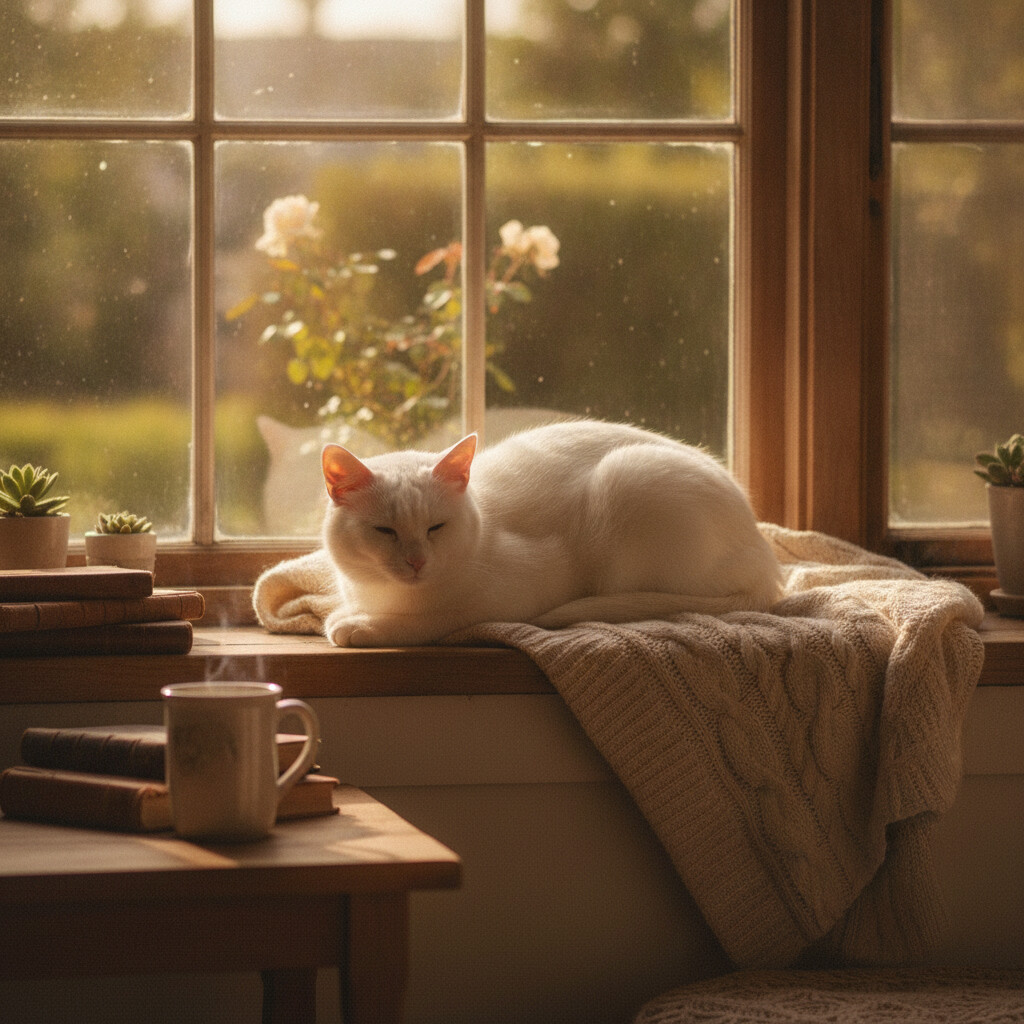
Cats get sunburned. Yes, really — and it’s not a minor issue: repeated sun damage on a cat’s ears, nose, or eyelids is the leading cause of one of the most common skin cancers in cats. If your cat is white, has pink skin under thin fur, or loves sprawling in a sunny window, this is worth five minutes of your attention.
Which Cats Are Actually at Risk
Sunburn in cats works the same way it does in humans: UV radiation damages skin cells. The difference is which cats are vulnerable. Fur is decent sun protection, but it isn’t uniform — the areas most at risk are the ones with the least coverage and the least pigment:
- Ear tips, especially on white or light-colored cats
- Nose and lips, particularly cats with pink (unpigmented) noses
- Eyelids
- Sparse-furred areas on hairless or thin-coated breeds like Sphynx, Devon Rex, and Cornish Rex
Pigment matters more than coat length. A black cat with thin fur has far more natural UV protection than a white cat with thick fur, because melanin absorbs UV radiation before it reaches living skin cells. That’s why white and light-colored cats — regardless of breed — carry the highest risk.
Indoor cats aren’t automatically safe, either. Glass blocks most UVB rays but lets a meaningful amount of UVA through, and a cat sunbathing in the same window spot for years accumulates real exposure. Outdoor and indoor-outdoor cats obviously face more direct sun.
What Sunburn Looks Like on a Cat
Early sun damage is easy to miss because cats don’t turn red and complain the way people do. Watch for:
- Pink or reddened skin on the ear tips or nose, especially after time in strong sun
- Skin that looks flaky, scaly, or crusty on the ear margins
- Hair loss around the ears
- Sensitivity to touch on affected areas
- In more advanced or chronic cases: sores that don’t heal, thickened or ulcerated skin, or a change in the shape of the ear tip
That last group of signs matters most, because they can indicate the damage has progressed beyond sunburn.
The Real Reason This Isn’t Trivial: Squamous Cell Carcinoma
Chronic, repeated sun exposure is the primary known cause of feline squamous cell carcinoma, a locally aggressive skin cancer that shows up almost exclusively on sun-exposed, lightly pigmented skin — the ear tips, nose, and eyelids. It’s one of the most common skin tumors diagnosed in cats, and white cats are dramatically overrepresented in the cases veterinary oncologists see, precisely because of the pigment issue described above.
This isn’t a reason to panic about every pink nose. It’s the reason vets treat feline sunburn as more than a cosmetic issue. Years of low-grade sun damage on the same unprotected patch of skin is the exact pattern that precedes these tumors, and catching precancerous changes (crusting, non-healing sores, thickening) early makes an enormous difference in outcome. The American Veterinary Medical Association and veterinary dermatology references consistently flag chronic actinic (sun) damage as the key risk factor for this cancer in cats, which is why sun protection for at-risk cats is a genuine preventive health measure, not just skincare.
How to Actually Protect a Sun-Exposed Cat
You don’t need to keep a light-colored cat indoors forever, but a few habits meaningfully cut the risk:
- Limit peak-sun exposure. Keep at-risk cats out of direct sun between roughly 10am and 4pm, when UV intensity is highest — the same window that’s riskiest for people.
- Provide shade wherever your cat likes to be. If they sunbathe on a porch or patio, make sure there’s a shaded spot nearby, not just full sun.
- Ask your vet about pet-safe sunscreen for ear tips and nose on cats who go outdoors or sit in strong window light for long stretches. Never use human sunscreen — zinc oxide and some other common ingredients are toxic to cats if licked off. Vet-formulated pet sunscreens exist for exactly this reason.
- UV-filtering window film is a low-effort fix for cats who mainly sunbathe indoors near a specific window.
- Check ear tips and nose periodically, especially in spring and summer, for any of the early signs above.
When to See a Vet
Book a vet visit if you notice any of the following on a cat’s ears, nose, or eyelids:
- Crusting, scabbing, or flaking that doesn’t resolve within a couple of weeks
- A sore that won’t heal, or keeps reopening
- Any thickening, swelling, or change in shape of the ear tip
- Bleeding from the ear margin without an obvious injury
- Persistent redness that doesn’t fade once the cat is out of the sun
Vets can biopsy suspicious areas to check for precancerous or cancerous changes, and early-stage squamous cell carcinoma on the ear tip is often treatable — which is exactly why “watch and wait” isn’t the right call once you see one of these signs.
The Takeaway
If your cat is white, pink-nosed, or thin-coated, sun exposure is a real and manageable health factor — not a fringe concern. A shaded spot, some awareness of peak sun hours, and a habit of checking ear tips and nose during warmer months goes a long way. For general summer safety beyond sun exposure, How to Keep Your Cat Cool in Summer Heat covers heat risks more broadly, and if you’re trying to read what your cat’s body is telling you day to day, 10 Signs Your Cat Is Stressed is a useful companion read.