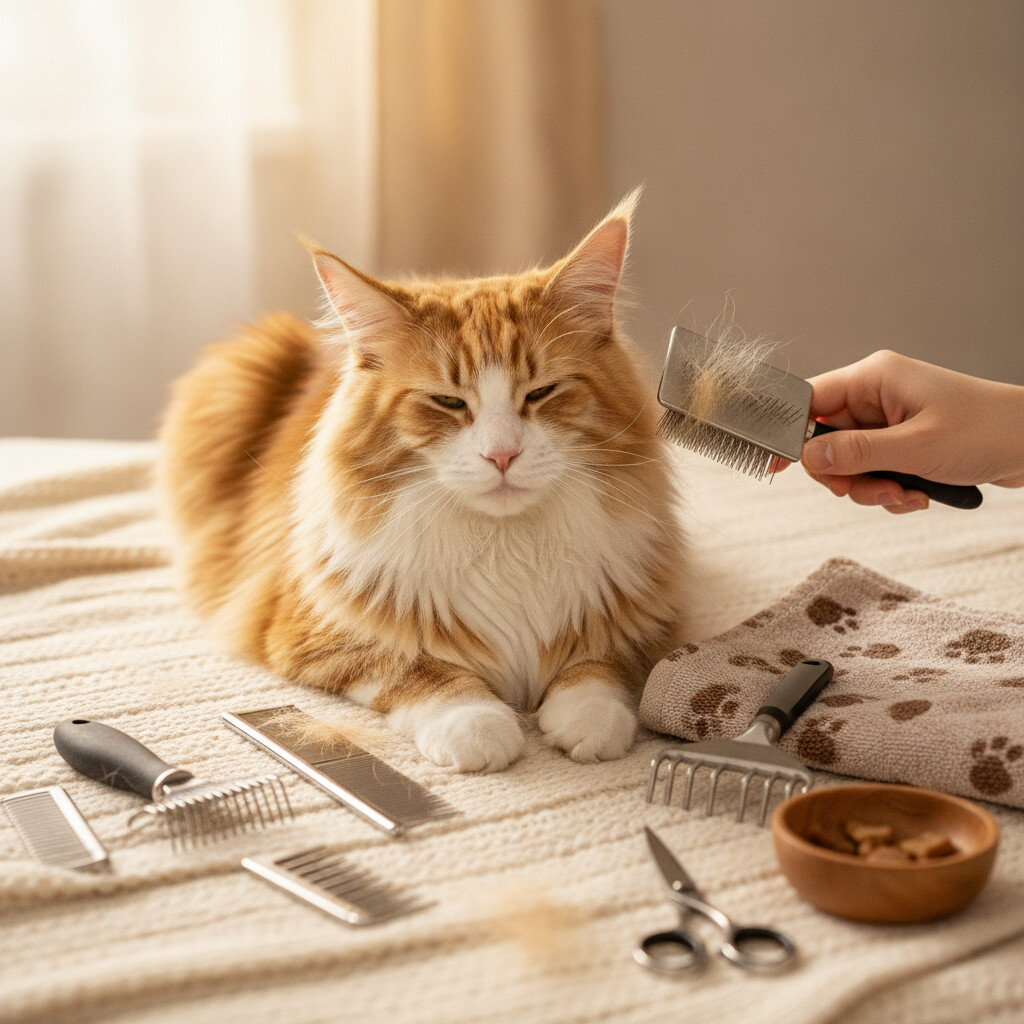
Most cats don’t need every tool at the pet store — they need the right one or two for their coat, used consistently. A slicker brush handles the everyday work for most cats; a deshedding tool earns its place only on double-coated breeds during heavy shedding seasons. Here’s how to tell which is which, and what’s actually worth buying.
The Core Tools Every Cat Owner Needs
You don’t need a drawer full of grooming gear. For the vast majority of cats, three tools cover it:
- A slicker brush — fine, short wires that lift loose fur and light tangles from the top coat. This is the everyday brush.
- A metal comb — finds mats a slicker brush skips over, especially behind the ears, in the armpits, and around the tail base.
- A rubber grooming glove or curry brush — good for cats who tolerate petting more than brushing, and for finishing touches that redistribute skin oils.
Everything else — deshedding rakes, mat splitters, grooming vacuums — is situational. Buy them when you have the specific problem they solve, not before.
Slicker Brushes vs. Deshedding Tools: What’s the Difference
This is the pairing people mix up most, and it matters because using the wrong one can irritate skin.
A slicker brush works on the topcoat — the visible outer layer of fur. It’s gentle enough for daily use on most cats and does a good job of preventing mats before they form.
A deshedding tool (the well-known brand-name versions use a fine metal comb edge) reaches into the undercoat, the dense insulating layer beneath the topcoat that double-coated breeds — Maine Coons, Norwegian Forest Cats, most domestic shorthairs and longhairs — blow out seasonally, usually spring and fall. These tools pull out a startling amount of loose undercoat in a single session, which is exactly why they shouldn’t be used more than once or twice a week. Overuse can thin the coat and irritate the skin, since you’re removing insulating fur the cat still needs.
If your cat is single-coated (Siamese, Sphynx, some Orientals), skip the deshedding tool entirely — there’s no undercoat to remove, and the tines will just scrape the skin.
Combs, Mats, and Grooming Gloves
Metal combs with both wide and narrow teeth are the best tool for finding mats before they become a problem. Run one through weekly, focusing on friction zones — behind the ears, under the front legs, the belly, and around the collar line. A comb that snags means there’s a mat starting; catching it early means a few minutes of careful work instead of scissors or a vet-clinic shave-down.
If a mat is already tight against the skin, don’t try to cut it out with regular scissors — cat skin is thin and mobile, and it’s easy to nick it even when you think you have clearance. A mat splitter (a small tool with a curved, guarded blade) or an electric clipper with a #10 blade is safer. For mats you can’t work loose with a comb in a few minutes, a groomer or vet tech can usually clear them faster and safer than you can at home.
Grooming gloves (silicone nubs built into a glove you pet with) are the lowest-effort option and genuinely useful for cats who won’t tolerate a brush but will tolerate being petted. They won’t get through tangles or reach the undercoat the way a slicker or deshedder will, but they’re a reasonable maintenance tool between real grooming sessions, and a good starting point for kittens or newly adopted cats who need to get used to handling first.
Grooming Tools by Coat Type
- Shorthair, single coat: grooming glove or soft slicker brush, weekly. Minimal maintenance.
- Shorthair, double coat (British Shorthair, American Shorthair): slicker brush weekly, deshedding tool during seasonal sheds only.
- Longhair (Maine Coon, Persian, Ragdoll): slicker brush 3–4 times a week minimum, metal comb weekly for mat checks, deshedding tool during heavy shed seasons. Persians in particular often need daily attention around the face and hindquarters.
- Hairless (Sphynx): no brush needed — skip grooming tools altogether and focus on a damp cloth or gentle wipe to manage skin oils, since hairless cats don’t self-groom as effectively as coated cats.
When Grooming Turns Up Something Worth a Vet Visit
Regular brushing is also a useful early-warning system, because you’re putting hands on your cat’s skin and coat every week. Flag these for your vet rather than assuming it’s “just shedding”:
- Bald patches with visible redness, scabbing, or a cat that overgrooms one specific area
- A mat that’s already tight against the skin and causing visible discomfort when touched
- Flaky, greasy, or unusually dull coat that doesn’t improve with regular brushing
- Small black specks in the coat that turn reddish-brown when wet (flea dirt)
- Sudden reluctance to be touched or groomed in a cat that previously tolerated it
None of these are emergencies on their own, but they’re worth mentioning at the next visit — or sooner if the skin looks irritated or infected.
The Practical Takeaway
Start with a slicker brush and a metal comb — that combination handles most cats, most of the time. Add a deshedding tool only if your cat has a true double coat and you’re dealing with seasonal blowouts, and use it sparingly. If your cat’s coat changes suddenly — thinning, dullness, or new bald spots — that’s a conversation for your vet, not just a grooming problem to brush through. For more on the technique side of this, How to Groom a Cat That Hates Being Groomed covers how to make the sessions themselves less of a fight, and Why Your Cat Is Losing Hair — And What It Might Mean is worth a read if shedding has turned into something more than seasonal.