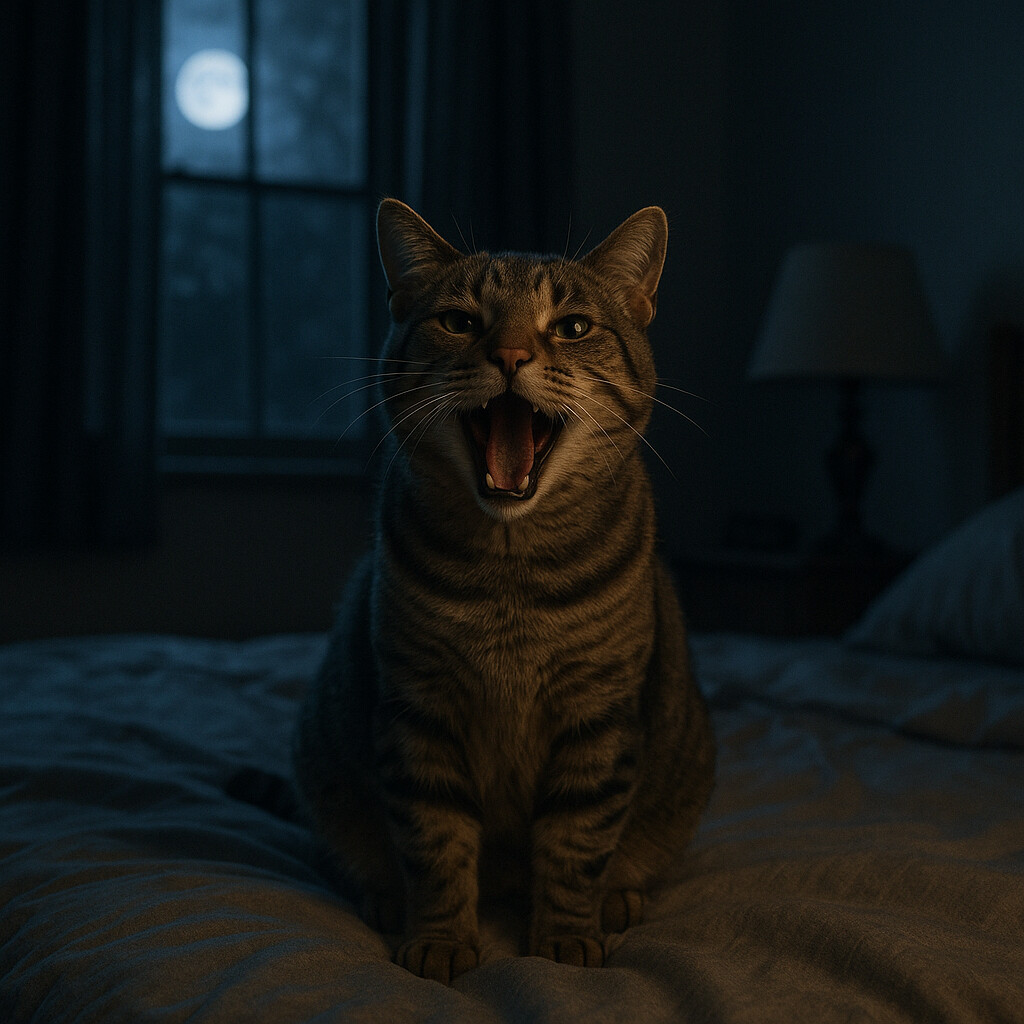
It’s 3 AM. Your cat is howling at the bedroom door — or worse, sitting on your chest yowling directly into your face. If you’ve Googled “why won’t my cat shut up at night,” you’re not alone. Nighttime vocalization is one of the top behavioral complaints cat owners bring to their vets, and the causes range from perfectly normal to genuinely concerning.
Here’s what’s actually going on, what you can do about it, and the specific warning signs that mean a vet visit is overdue.
Cats Aren’t Nocturnal — They’re Crepuscular
First, a common misconception: cats aren’t truly nocturnal. They’re crepuscular, meaning their peak activity windows are dawn and dusk. In the wild, this aligns with prime hunting hours when small prey is most active.
But here’s the catch — indoor cats don’t have prey to hunt. That burst of energy still comes, and with nothing to channel it into, it turns into zoomies, meowing, knocking things off your nightstand, or all three at once.
This is why “just ignore it” rarely works as advice. You’re fighting biology, not bad manners.
The 6 Most Common Reasons for Nighttime Yowling
1. Hunger or Thirst
The simplest explanation is often the right one. If your cat’s last meal was at 6 PM and they’re screaming at 4 AM, they’re hungry. Cats have small stomachs relative to their metabolism — they’re designed to eat 8-12 small meals a day, not two big ones.
What actually works: An automatic timed feeder set to dispense a small portion around 3-4 AM. This is the single most effective intervention for hunger-based nighttime crying, according to veterinary behaviorists. The PetSafe and SureFeed brands consistently get recommended.
2. Boredom and Under-Stimulation
If your cat sleeps 18 hours while you’re at work and awake, they’ve got a full battery of energy at midnight. Indoor cats need roughly 30-45 minutes of active play per day — not just access to toys, but interactive play where you’re involved.
What actually works: Two structured play sessions — one after work, one right before bed. Use a wand toy (Da Bird or similar) for 15-20 minutes, then immediately follow with a small meal. This mimics the natural hunt-catch-eat-groom-sleep cycle. Many owners report a dramatic difference within 3-5 nights.
3. Attention-Seeking (You Accidentally Trained This)
Cat meows at 2 AM. You yell “shut up” from bed. Cat learned: meowing = human responds. Congratulations, you’ve reinforced the behavior. Even negative attention is attention.
What actually works: This one is genuinely hard. You need to completely ignore the behavior — no yelling, no getting up, no tossing a pillow. It will get worse before it gets better (behaviorists call this an “extinction burst”). Expect 1-2 weeks of escalation before improvement. Earplugs help.
4. Cognitive Dysfunction (Senior Cats)
If your cat is over 10 years old and the nighttime vocalization is new, this is the first thing your vet should evaluate. Feline cognitive dysfunction syndrome (CDS) affects an estimated 28% of cats aged 11-14 and over 50% of cats 15+.
Signs that point to CDS:
- Yowling that sounds confused or distressed (not demanding)
- Staring at walls or getting “stuck” in corners
- Forgetting where the litter box is
- Reversed sleep-wake cycles
- Decreased grooming
What to do: Vet visit, full bloodwork. There’s no cure, but supplements like SAMe (S-adenosylmethionine, typically 90mg/day for an average cat) and dietary changes (Hill’s b/d or Purina Pro Plan Bright Mind) show modest evidence of slowing progression. Night lights can help disoriented cats navigate.
5. Hyperthyroidism
This is the medical cause that gets missed most often. Hyperthyroidism is extremely common in cats over 8, and increased vocalization — especially at night — is a hallmark symptom.
Other signs to watch for:
- Weight loss despite eating more
- Increased thirst and urination
- Vomiting or diarrhea
- Hyperactivity or restlessness
- Unkempt coat
What to do: A simple blood test (Total T4) catches most cases. Treatment options include daily medication (methimazole, ~$15-30/month), radioactive iodine therapy ($1,000-1,500, often curative in one treatment), or prescription diet (Hill’s y/d).
6. Mating Behavior
Unspayed females in heat will yowl persistently — and it’s loud, distinctive, and unmistakable. Intact males may also vocalize in response to outdoor cats they can hear or smell.
What to do: Spay/neuter. The ASPCA and every major veterinary organization recommends it. Beyond ending heat cycles, it reduces roaming behavior, territorial aggression, and certain cancer risks. Most vets charge $200-500 depending on your area.
A Nighttime Routine That Actually Quiets Most Cats
If your cat is healthy (vet-cleared) and just being a typical nocturnal nuisance, this protocol works for the majority of cats within 1-2 weeks:
- 6:00 PM — Interactive play session (15 min with wand toy)
- 6:20 PM — Dinner (largest meal of the day)
- 9:30 PM — Second play session (10-15 min, tire them out)
- 10:00 PM — Small bedtime snack
- 3:00-4:00 AM — Automatic feeder dispenses small portion
- All night — Ignore vocalization completely (no exceptions)
The key is consistency. Every time you break and respond to meowing, you reset the clock.
When to See the Vet Immediately
Nighttime vocalization needs urgent veterinary attention if:
- It started suddenly in a cat over 8 years old
- Your cat is also losing weight, drinking more, or having litter box changes
- The vocalization sounds painful (low, guttural) rather than demanding
- Your cat seems disoriented or confused
- There’s any change in appetite combined with the vocalization
A basic wellness panel with thyroid check typically runs $150-300 and can rule out the scariest possibilities.
If you’re dealing with a healthy cat who simply has too much nighttime energy, giving them safe outdoor time during the day can be a game-changer. Even a secured backyard space lets them burn energy naturally — here’s a useful guide on transitioning indoor cats to safe outdoor access.
— CatLady6 