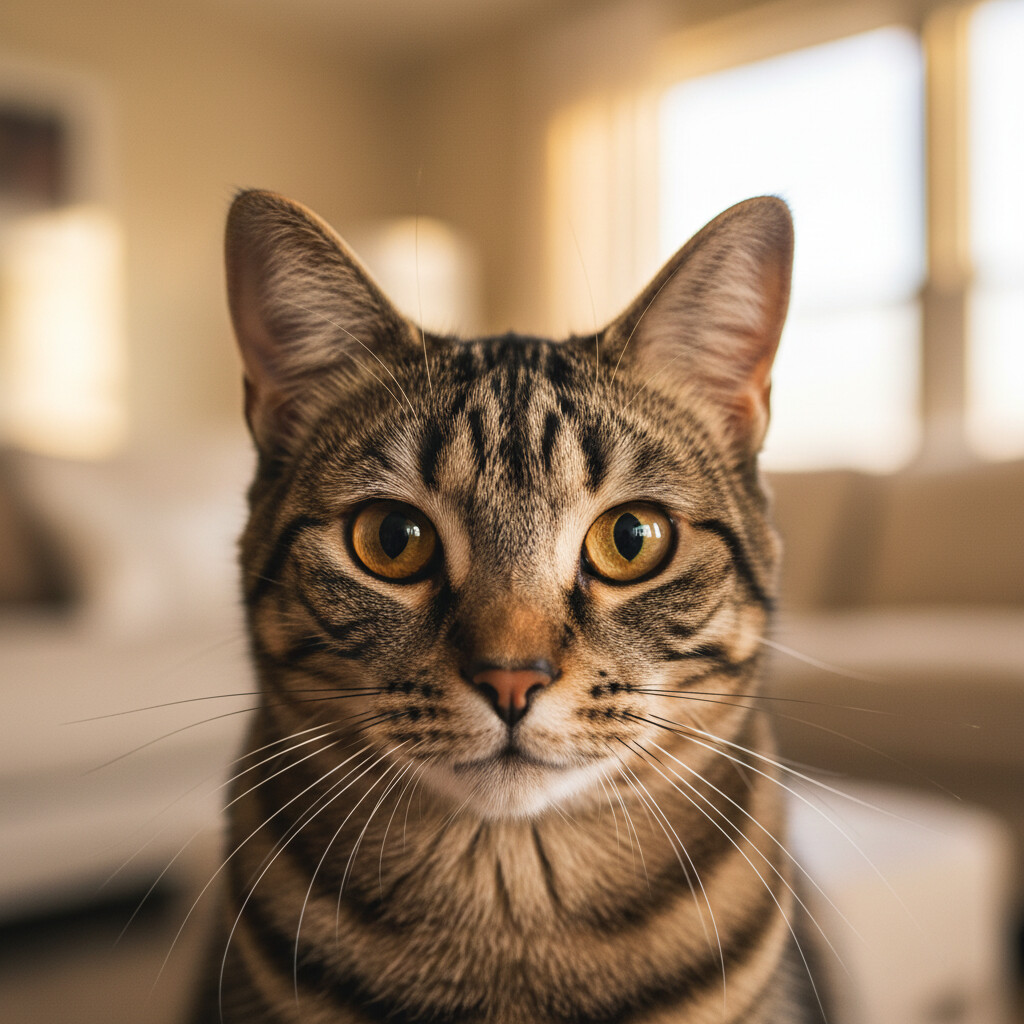
Your cat isn’t plotting against you — though they might be studying you. Unblinking stares from cats mean different things depending on context, and most of them are completely normal. The key is reading the whole picture, not just the eyes.
What Cat Staring Actually Means
Cats use eye contact differently than humans do. In cat-to-cat communication, a direct, sustained stare is often a challenge or a threat. Between a cat and their trusted human, though, the same behavior usually signals something much friendlier: attention, curiosity, or anticipation.
The most common reason your cat stares at you without blinking? They want something. Breakfast, a door opened, a toy retrieved from wherever you hid it. Cats are highly observant animals — they notice your patterns, your facial cues, and your habits. An unblinking stare is often a deliberate attempt to communicate.
The Science Behind Feline Eye Contact
Research by Dr. Karen McComb at the University of Sussex found that cats have developed a range of subtle signals specifically for communicating with humans — signals they don’t use with other cats. Eye contact is one of them.
Cats with positive relationships with their humans tend to seek eye contact more than cats in less trusting ones. In other words, your cat staring at you may be a social gesture, not a standoffish one.
Pupil size tells you a lot too. A cat watching you with relaxed, normal pupils (not dilated, not slit-narrow) is in a calm, neutral state. The stare is observational. Compare that to a cat with wide, dilated pupils staring at something you can’t see — that’s more likely agitation, prey-tracking, or high stimulation.
The Slow Blink: How It’s Different
A sustained stare is not the same as a slow blink, and both are worth understanding.
When your cat holds eye contact and then deliberately closes and reopens their eyes — that’s the slow blink, sometimes called a “cat kiss.” A 2020 study in Scientific Reports (Humphrey et al., University of Sussex and University of Portsmouth) confirmed what cat owners had long suspected: cats were significantly more likely to slow blink at humans who had slow blinked at them first, and more likely to approach afterward. It’s a genuine affiliative signal.
The unblinking fixed stare, without the slow blink, is more neutral — watchful rather than affectionate. It usually means your cat is alert and focused, not necessarily signalling warmth.
If you want to test the slow blink yourself: make soft eye contact, then blink slowly. Many cats will return it. It’s one of the more reliable cross-species communication tools we know of.
For a deeper look at how cats signal mood and intent, the cat body language guide covers the full picture — from ear angle to tail position.
Should You Stare Back?
With a trusted cat, yes — especially paired with a slow blink. You’re speaking their language.
With an unfamiliar cat, be more careful. For cats that don’t know you well, sustained direct eye contact can be perceived as threatening. When meeting a new cat, soft brief eye contact followed by looking away is the better move — it signals you’re not a threat.
Even with your own cat, if they seem tense — body rigid, tail low or tucked, ears angled back — breaking eye contact is the right call. A staring contest with a stressed cat can escalate.
When a Stare Might Signal Stress or Illness
Occasional staring at walls, into the air, or at spots on the floor is usually nothing. Cats pick up on sounds, smells, and movements we can’t perceive — they’re just tracking something.
However, persistent glazed or unfocused staring that is new behavior — especially combined with disorientation, head pressing against surfaces, circling, or sudden behavioral shifts — can occasionally indicate neurological issues or pain. This is uncommon but worth knowing.
Similarly, a cat who has become suddenly and unusually staring when they previously weren’t, alongside changes in appetite, litter box use, or social behavior, is worth a call to your vet. Context and change over time is what matters — a cat who has always been a starer is normal; sudden changes are the flag.
For a full rundown of behavioral changes worth paying attention to, our article on signs your cat is stressed breaks down each one.
The Practical Takeaway
When your cat stares at you:
- Check the body language overall — relaxed body with a stare means curious or wanting something. Tense body with a stare may signal stress or a threat display.
- Try the slow blink — hold eye contact, blink slowly, see if they return it.
- Figure out what they want — stare at you, then the bowl, then back at you is cat for “breakfast is late.”
- With unfamiliar cats: use brief, soft eye contact, not a prolonged stare.
- Monitor for change — a sudden new pattern of staring, especially with other behavioral changes, is worth a vet conversation.
The unblinking stare usually means your cat is engaged, curious, or trying to tell you something. Take it as what it most often is: a sign that you matter to them.