Why Cat Body Language Matters
Cats communicate almost entirely through body language and vocalisation. Unlike dogs, which evolved to read human facial expressions, cats communicate primarily with other cats — and by extension, with us — through posture, tail position, ear angle, eye contact, and sound. Learning to read these signals accurately can help you build trust with your cat, prevent bites and scratches, and identify when your cat is unwell or stressed.
Tail Positions and What They Mean
The tail is one of the most expressive parts of a cat’s body.
Tail held high, straight up
A universally positive signal. This is a cat greeting you or another cat with confidence and friendliness. A slight hook at the very tip is a particularly warm greeting — think of it as a wave.
Tail high with puffed fur (bottlebrush tail)
Extreme fear or aggression. The cat is trying to appear larger. Combined with an arched back, this is a defensive display — they feel threatened.
Tail tucked low or between legs
Submission, anxiety, or fear. A cat carrying their tail low is signalling they want no confrontation.
Tail wrapped around body while sitting
Contentment and calm. A resting cat with their tail neatly wrapped is comfortable and at ease.
Slow, sweeping tail wag
Not excitement like a dog’s wag — this is concentration or mild irritation. If the swipe accelerates, the cat’s tolerance is decreasing.
Quick flicking or lashing tail
Agitation or frustration. Stop what you’re doing. This is a clear warning that a swat or bite may follow.
Ear Positions
Cats have over 30 muscles in each ear, giving them remarkable expressive range.
Ears forward and upright
Engaged, alert, curious, and content. A cat with forward ears is paying attention but is not threatened.
Ears rotated sideways (“airplane ears”)
Early sign of irritation or uncertainty. If you’re petting your cat and their ears start rotating sideways, ease off.
Ears flat back against the head
Fear or aggression. Combined with dilated pupils and a hissing vocalization, this means the cat is ready to defend themselves. Do not approach.
One ear forward, one back
Conflicted — the cat is uncertain about a situation and is monitoring multiple inputs simultaneously.
Eye Signals
Slow blink
Perhaps the most famous cat signal. A slow blink — eyes closing slowly and reopening — is a sign of trust and relaxation. You can return the slow blink to communicate the same. Many cats will mirror it back.
Fully dilated (large) pupils
Can mean excitement, fear, or low light. Context matters. A cat with wide eyes in a well-lit room who is also crouching is frightened.
Constricted (narrow, slit) pupils
Focus, confidence, or aggression. A confident cat about to assert dominance may have narrow pupils.
Direct, unblinking stare
In cat social language, prolonged eye contact is a threat or challenge. Staring at a nervous cat can escalate their anxiety. Look away or offer a slow blink instead.
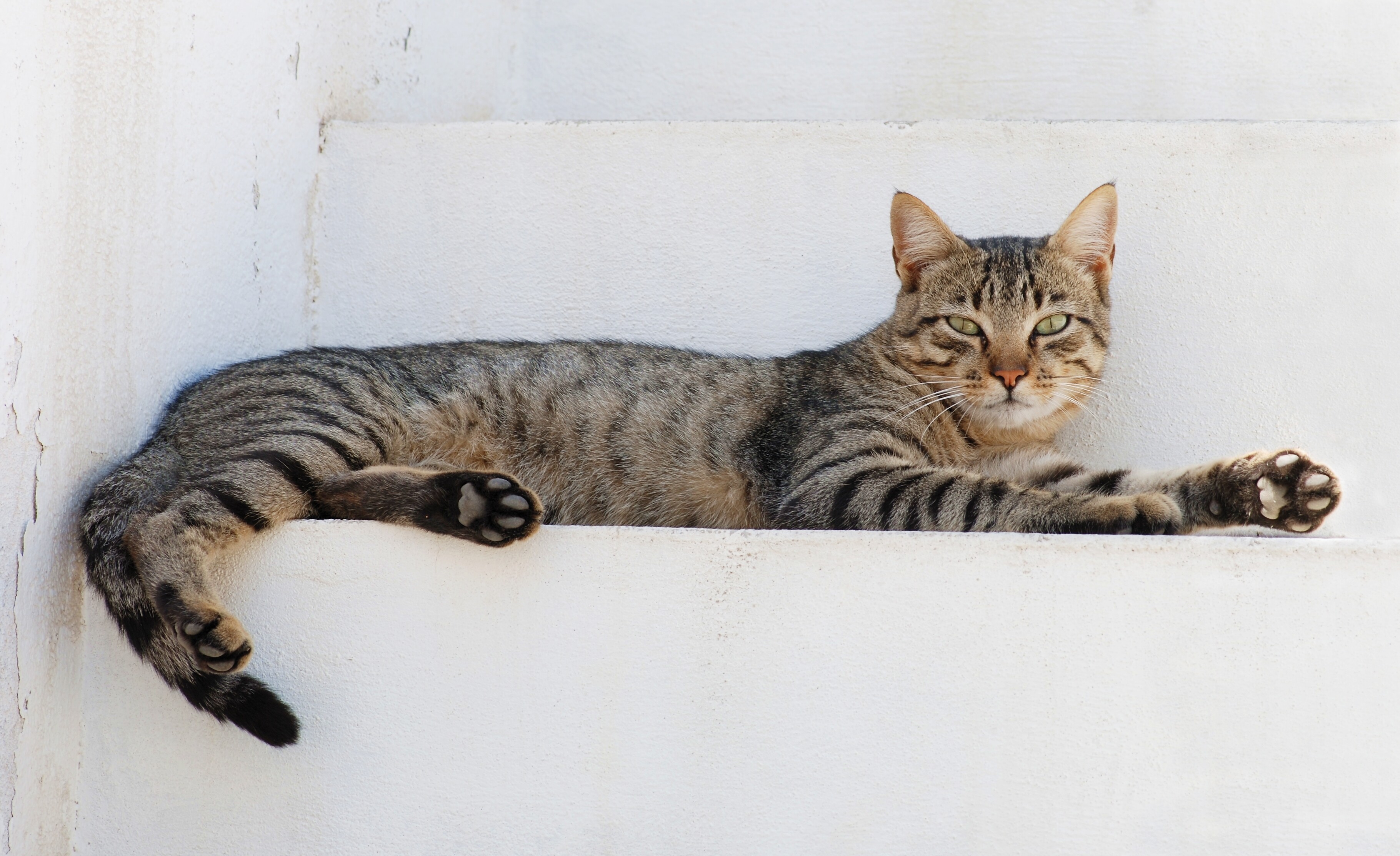
Half-closed eyes while resting
Contentment and trust. A cat that dozes near you with half-closed eyes is fully relaxed in your presence.
Body Posture
Arched back, fur up
Classic Halloween cat pose — fear or aggression. This is a maximum-escalation display.
Belly exposed, lying on back
Counterintuitively, this is not necessarily an invitation to rub. A cat showing their belly is displaying trust, but many cats dislike having their belly touched. Read accompanying signals: a relaxed face and slow blink means they’re comfortable; a twitching tail and active paws means hands-off.
Loaf position (paws tucked under body)
Contentment. A cat in “loaf” is comfortable and not anticipating movement or threat.
Crouching low with wide eyes
Fear or uncertainty. The cat wants to be smaller and less visible.
Kneading (making biscuits)
Comfort and contentment. This behaviour originates in kittenhood (stimulating milk flow) and is retained by adults as a self-soothing response. A kneading cat is happy.
Headbutt (bunting)
Affection and territorial marking. Cats have scent glands on their cheeks, forehead, and chin. Rubbing against you leaves their scent — it’s a sign they consider you part of their group.
Vocalisations
Purring
Most commonly signals contentment, but cats also purr when injured, unwell, or stressed — the vibration appears to have self-soothing and even healing properties.
Meow
Adult cats rarely meow to other cats — they developed this vocalisation largely to communicate with humans. Meows vary enormously between individuals and can signal anything from hunger to greeting to complaint.
Chirping or chattering
Typically directed at birds or prey through a window. Thought to be an instinctive hunting response — possibly mimicking prey sounds, or expressing frustration.
Hissing and spitting
Unambiguous warnings. Back away and give the cat space.
Growling
Low, sustained growl means serious threat or pain. Do not approach a growling cat.
Trilling
A rising, rolled sound used by mothers to call kittens, and by adult cats to greet favoured humans. It’s an affectionate sound.
Yowling
Prolonged, mournful wail. Can indicate pain, disorientation (common in senior cats with cognitive decline), mating behaviour (in unspayed/unneutered cats), or distress.
Reading Multiple Signals Together
No signal exists in isolation. A cat with a puffed tail may be startled rather than aggressive. A cat showing their belly may want proximity but not touch. Always read the full picture: ears + eyes + tail + posture + vocalisation together tell you the complete story.
With practice, reading your cat’s body language becomes automatic — and the relationship that follows is one built on genuine understanding.