Why Does My Cat Chirp at Birds? The Science Behind the Chatter
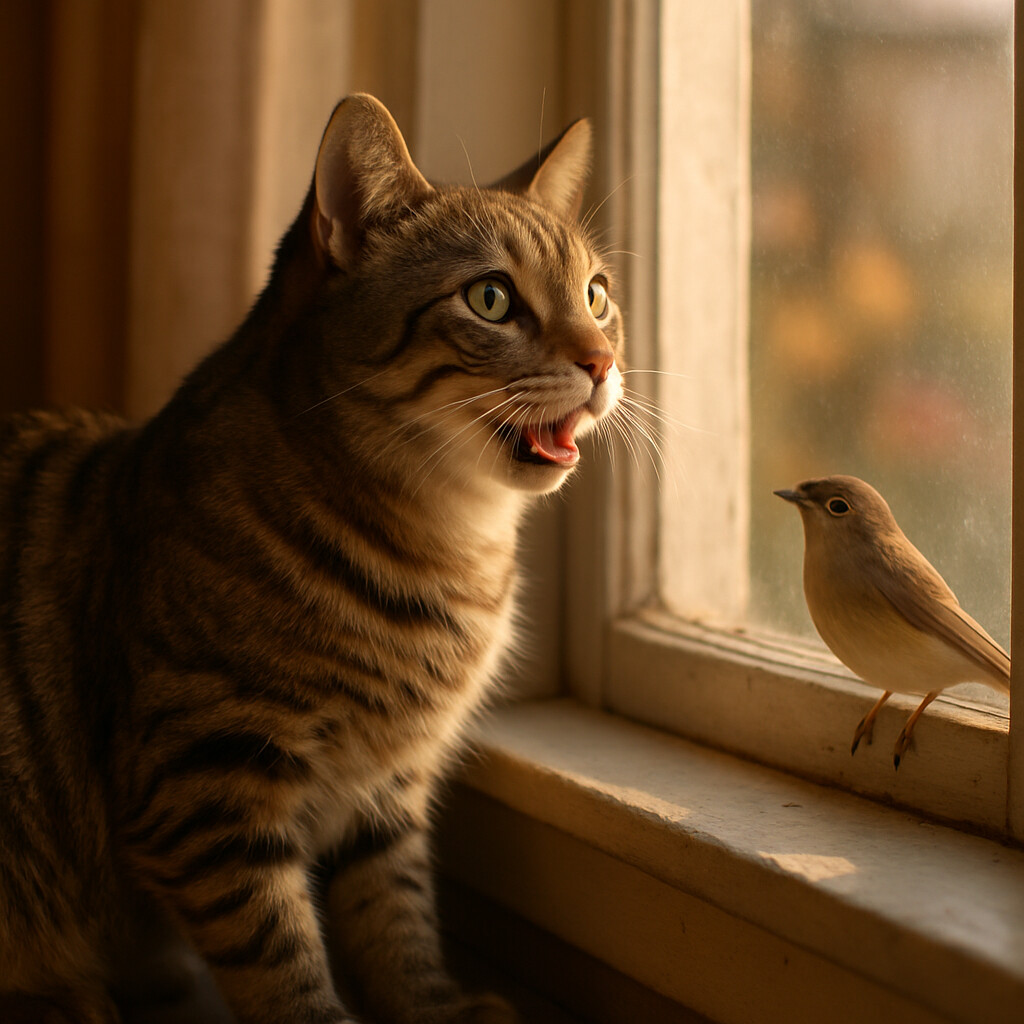
If you’ve ever watched your cat fixate on a bird outside the window — tail flicking, pupils wide, jaw trembling — you’ve probably heard it: a rapid, stuttering sound somewhere between a chirp, a click, and a chatter. It lasts just a few seconds, then your cat goes back to staring intently at the window like a tiny furry sniper.
So what is that sound? Is your cat trying to communicate with the bird? Are they frustrated? Are they plotting world domination one sparrow at a time?
The science is actually pretty fascinating — and it tells us a lot about your cat’s instincts, emotional state, and even hunting strategy.
What Exactly Is the Chirp-Chatter Sound?
The technical term is “chattering” or “chittering” — though some cat owners call it chirping, clicking, or twittering. It’s characterized by rapid, repetitive jaw movements accompanied by a staccato vocalization that sounds almost like teeth chattering in the cold.
Cats typically make this sound when they can see prey — usually birds or squirrels — but can’t reach them. The window glass might as well be Kryptonite; the prey is right there, and yet somehow not available for catching.
The Leading Theory: A Hunting Reflex Gone Haywire
The most widely accepted explanation comes from feline behavior researchers who believe chattering is an involuntary motor response linked to the killing bite. When a cat catches prey, it delivers what’s called the “nape bite” — a rapid series of small jaw movements at the back of the neck that severs the spinal cord. It’s a precise, instinctive action.
When a cat sees a bird from behind the safety of a window, that same neurological sequence gets triggered — but there’s no prey to actually bite. The jaw starts moving anyway, producing the distinctive chattering sound as a kind of frustrated dry run.
Think of it as your cat’s hunting system booting up with no prey loaded.
Could It Be Frustration?
Probably yes — at least partly. Cats that chatter at birds are typically highly aroused from a predatory standpoint. Their pupils dilate, their tail may lash or puff, and their attention becomes laser-focused. Being unable to act on that drive is inherently frustrating.
According to feline behavior experts at the ASPCA, cats are hardwired predators regardless of how domesticated they are. The urge to hunt doesn’t disappear just because dinner comes from a can. When the prey response fires but goes unfulfilled, there’s a genuine emotional tension there.
Is It Actually Communication?
Here’s where it gets really interesting. A 2010 study by researchers at the Wildlife Conservation Society documented wild pied tamarin monkeys in Brazil mimicking the calls of their prey — small birds — in what appeared to be a form of predatory deception designed to lure the birds closer.
Shortly after, some researchers raised the question: could cats be doing something similar? Could the chirping sound actually be an attempt to mimic bird vocalizations and draw prey in?
The jury is still out, but anecdotal reports of domestic cats making chirping sounds at actual birds (not just through glass) have added fuel to the debate. Some behaviorists think it’s at least possible that some cats have figured out that mimicking prey sounds gets a reaction.
Whether your cat is a tactical genius or just misfiring neurologically — either way, it’s impressive.
Why Does It Only Happen With Certain Prey?
Most cats chatter at birds and squirrels more than they do at, say, a bug on the floor. This likely comes down to the combination of accessibility and arousal level. Birds move quickly, are often visible through windows in ways that feel tantalizingly close, and trigger the visual predatory response more intensely than slow-moving prey on the ground.
Cats also tend to chirp more at prey that’s clearly out of reach. When a cat can actually chase something (like a toy), they shift into full hunting mode — no chirping needed. The chirp-chatter seems specifically tied to that particular maddening combination of high prey drive and zero access.
Is Chattering Healthy and Normal?
Absolutely. Chattering is a completely normal feline behavior. There’s no cause for concern if your cat does it regularly — it just means they have a healthy prey drive and excellent eyesight.
What you should pay attention to is your cat’s overall stress level. Cats that spend a lot of time watching prey they can never access can sometimes develop redirected aggression — frustration that spills over into snapping at other pets or even people after a particularly intense window-watching session. If you notice this happening, try interrupting the staring session with playtime before it escalates.
How to Channel the Energy Constructively
Your cat’s chattering instinct is basically telling you: “My hunting drive is fully online right now and I have nowhere to put it.” Here’s how to help:
Interactive play sessions using wand toys that mimic bird movements are gold. Feather toys, toys on strings that flutter and dart — anything that activates that same visual prey response but actually lets your cat complete the hunt sequence.
Puzzle feeders and hunting toys let cats forage for food in a way that satisfies the seek-and-find part of their predatory brain.
Safe outdoor access is the ultimate upgrade. Cats with controlled access to a yard — via an enclosed catio or a cat-proof fence system — get to engage their senses in the real environment without the risks of free roaming. The difference in enrichment compared to window-only watching is significant.
Bird feeders near windows are a double-edged sword — they provide great mental stimulation and enrichment, but for high-prey-drive cats, they can also amplify frustration. If your cat seems more stressed than entertained, move the feeder to a spot where it’s visible but less immediately tantalizing.
The Bottom Line
That strange little chirp-chatter your cat makes at birds isn’t random noise or even just frustration (though there’s probably some of that in there). It’s a window — no pun intended — into your cat’s deep predatory wiring. Millions of years of evolution packed into a few seconds of jaw-chattering instinct.
The fact that your fully fed, perfectly cozy house cat still has that hunter’s spark? That’s not a bug. That’s a feature. Work with it, give them ways to express it safely, and enjoy the show.
— CatLady6