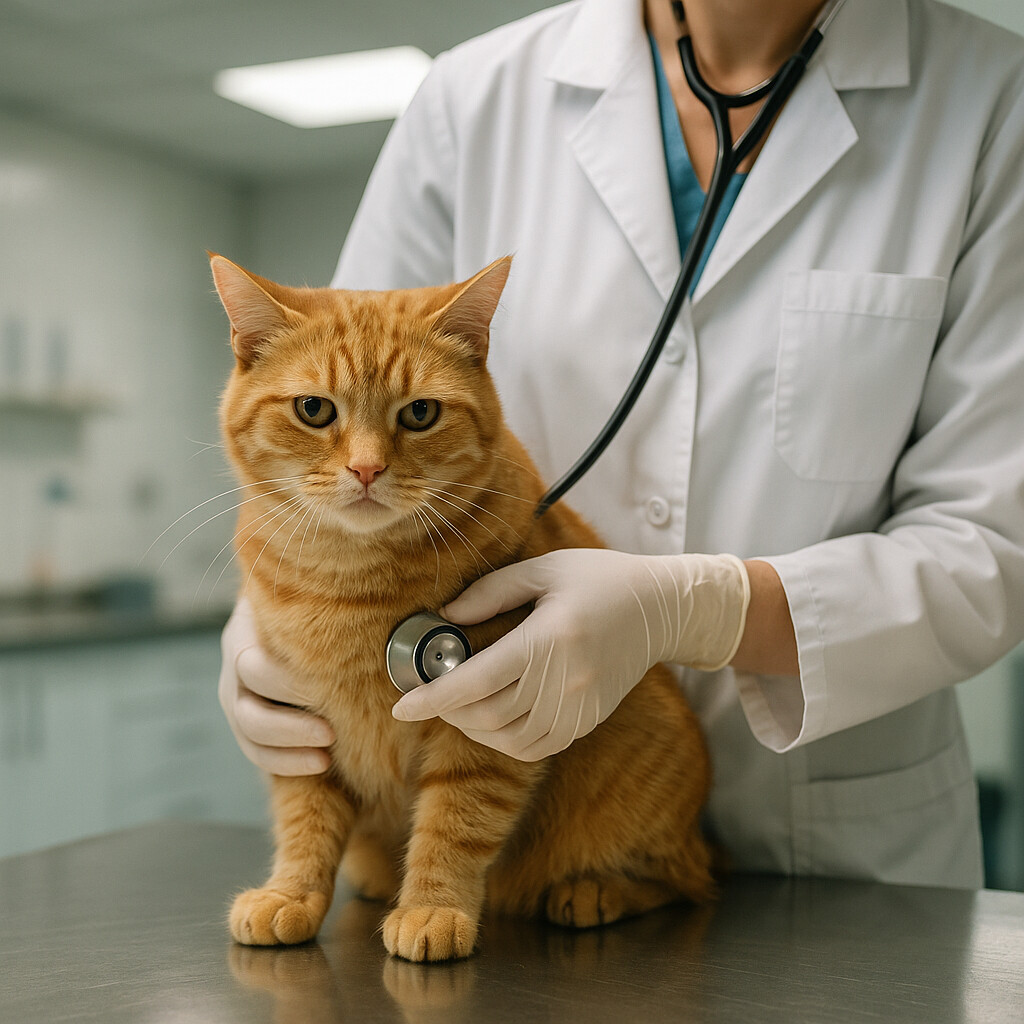
If your cat is suddenly peeing outside the litter box, crying while urinating, or making frequent trips to the box with almost nothing coming out, you’re probably dealing with a urinary tract problem. And you need to act fast — what looks like a simple UTI can become a life-threatening emergency within 24-48 hours, especially in male cats.
Here’s everything you need to know: what’s actually happening, how vets diagnose it, what treatment costs, and the specific steps that genuinely reduce recurrence.
UTI vs. FLUTD vs. Blockage: Know the Difference
First, an important distinction most articles skip. When people say “cat UTI,” they usually mean one of three things:
Urinary Tract Infection (true UTI): A bacterial infection in the bladder or urethra. Surprisingly, true bacterial UTIs are actually uncommon in young cats (under 10). They account for only about 1-3% of lower urinary tract cases in cats under 10, but become much more common in senior cats — roughly 45% of urinary issues in cats over 10 are genuine infections.
Feline Lower Urinary Tract Disease (FLUTD): An umbrella term covering any condition affecting the bladder and urethra. The most common form is Feline Idiopathic Cystitis (FIC) — essentially an inflamed bladder with no identifiable infection. FIC accounts for roughly 55-65% of all lower urinary tract cases in cats. Stress is a major trigger.
Urethral Blockage: A medical emergency where crystals, mucus, or stones physically block the urethra, preventing urination. Almost exclusively affects male cats due to their narrow urethra. Without treatment, a blocked cat can die within 24-72 hours from kidney failure and potassium buildup causing cardiac arrest.
Symptoms: What to Watch For
The tricky part is that all three conditions look nearly identical from the outside. Watch for:
- Frequent trips to the litter box with little or no urine produced
- Straining or crying while trying to urinate
- Blood in urine (may appear pink or reddish in the litter)
- Urinating outside the litter box — often on cool, smooth surfaces like bathtubs or tile floors
- Excessive genital licking
- Behavioral changes — hiding, decreased appetite, irritability
The Emergency Red Flags
Call your vet or emergency animal hospital immediately if you see:
- Cat makes repeated trips to the box and produces nothing at all
- Crying or vocalizing in pain when attempting to urinate
- Vomiting combined with inability to urinate
- Lethargy — cat seems weak, unresponsive, or unusually still
- Hard, distended belly (bladder is full and can’t empty)
A male cat who hasn’t urinated in 12+ hours and is showing these signs needs emergency care within hours, not days.
How Vets Diagnose Urinary Issues
Your vet will typically run through this process:
Urinalysis ($30-75): The baseline test. Checks urine concentration, pH, presence of blood, crystals, and bacteria. A urine sample can be collected via cystocentesis (needle directly into the bladder — sounds scary but is quick and nearly painless) or free catch.
Urine Culture ($50-150): Determines the exact bacteria present and which antibiotics will work. This is the only way to confirm a true bacterial UTI. Results take 3-5 days.
Blood Panel ($100-250): Checks kidney values (BUN, creatinine, SDMA), electrolytes, and overall organ function. Critical for blocked cats to assess kidney damage.
X-rays or Ultrasound ($150-400): Used to check for bladder stones, which need to be distinguished from crystals. Stones may require surgical removal; crystals can often be managed with diet.
Treatment: What to Expect and What It Costs
For True Bacterial UTI
- Antibiotics: 7-14 day course, typically amoxicillin or Clavamox. Cost: $20-60
- Pain medication: Buprenorphine or meloxicam for comfort. Cost: $30-60
- Follow-up urinalysis: To confirm the infection is cleared. Cost: $30-75
- Total typical cost: $150-400
For Feline Idiopathic Cystitis (FIC)
- Pain management: Short-term pain meds
- Anti-anxiety medication: Gabapentin or amitriptyline for chronic cases. Cost: $15-30/month
- Environmental modification: Stress reduction (more on this below)
- Prescription diet: Hill’s c/d, Royal Canin Urinary SO, or Purina UR. Cost: $40-70/month
- Total typical cost: $200-500 initially, plus ongoing diet costs
For Urethral Blockage (Emergency)
- Catheterization: Vet inserts a catheter to relieve the blockage, often under sedation. The catheter typically stays in for 24-72 hours.
- Hospitalization: IV fluids, blood monitoring, pain management. Usually 2-4 days.
- Total typical cost: $1,500-4,000+ depending on severity and length of stay
- Perineal urethrostomy (PU surgery): For cats with recurrent blockages, this surgery widens the urethral opening permanently. Cost: $2,000-5,000. It’s a last resort but has a high success rate.
Prevention: What Actually Works
Recurrence rates for urinary issues are frustratingly high — roughly 40-50% of cats with FIC will have another episode within a year. Here’s what the evidence actually supports:
1. Water Intake Is Everything
The single most impactful change you can make is increasing your cat’s water consumption. More dilute urine means less crystal formation and less bladder irritation.
- Switch to wet food or at least add water to dry kibble. Wet food is roughly 75-80% moisture vs. 10% in dry food. The difference in daily water intake is dramatic.
- Cat water fountains encourage drinking — many cats prefer running water. We recently reviewed the best cat water fountains for 2026 if you’re looking for options.
- Multiple water stations — at least one per floor of your home, away from food bowls and litter boxes.
- Target intake: Approximately 3.5-4.5 ounces of water per 5 lbs of body weight per day. A 10-lb cat should consume roughly 7-9 ounces daily from all sources (food + drinking).
2. Stress Reduction (This Matters More Than You Think)
FIC is fundamentally a stress-related disease. The bladder lining in FIC cats is deficient in a protective glycosaminoglycan (GAG) layer, and stress hormones make it worse. Reducing stress directly reduces flare-ups.
Proven stress reducers:
- Feliway diffusers (synthetic feline facial pheromone) — place near litter boxes and resting areas
- Adequate litter boxes — the rule is one per cat plus one extra, scooped daily
- Vertical space — cat trees, shelves, window perches
- Safe outdoor access — even 30 minutes of supervised time in a secured backyard dramatically reduces cortisol levels in cats
- Consistent routine — cats are creatures of habit; sudden changes trigger stress responses
- Hiding spots — covered beds, boxes, or elevated spaces where cats feel secure
3. Prescription Urinary Diets
For cats with a history of crystals or stones, prescription urinary diets are genuinely effective — not just marketing. These diets are specifically formulated to:
- Control urine pH (struvite crystals form in alkaline urine; calcium oxalate in acidic)
- Reduce mineral concentration
- Promote increased water intake
- Dissolve existing struvite crystals (calcium oxalate stones cannot be dissolved and require surgical removal)
Your vet will recommend a specific diet based on the type of crystals found in your cat’s urinalysis.
4. Litter Box Management
Poor litter box conditions cause cats to hold their urine, which concentrates it and worsens bladder problems.
- Scoop daily, full change weekly
- Unscented, clumping litter preferred by most cats (fragrance can be a deterrent)
- Large, open boxes — most commercial boxes are too small. Storage containers (e.g., a Sterilite 66-quart bin with one side cut low) are often better
- Quiet, accessible location — not next to the washer/dryer or in a high-traffic area
The Bottom Line
Urinary problems in cats are common, painful, and potentially deadly — but they’re also highly manageable once you know what you’re dealing with. The most important things to remember:
- Male cat not urinating = emergency. Don’t wait.
- Young cats rarely have true infections — it’s almost always stress-related FIC.
- Water intake is the #1 prevention tool. Switch to wet food if you can.
- Stress reduction works. Enrichment, routine, and safe outdoor access make a measurable difference.
- Follow up. Even after symptoms resolve, get a recheck urinalysis to confirm everything’s clear.
Your cat can’t tell you they’re in pain — they can only show you through behavior changes. If something seems off, trust your gut and get it checked.
— CatLady6 