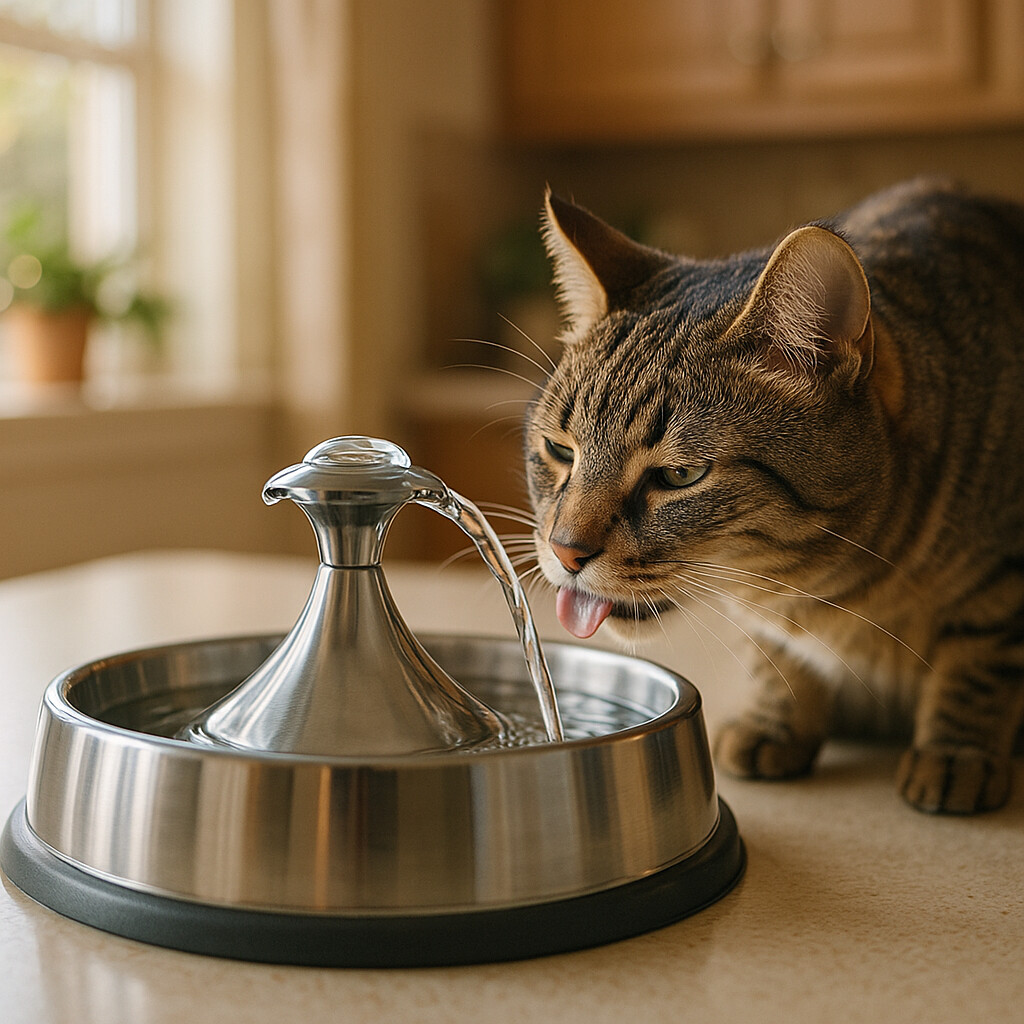
If you’ve ever watched your cat ignore a perfectly full water bowl while lapping from a dripping faucet, you already know: cats are picky about their water. That pickiness isn’t just a personality quirk — it’s hardwired. In the wild, running water signals freshness and safety, while still water can harbor bacteria. A cat water fountain taps directly into that instinct.
But with dozens of options on the market ranging from $15 to $150+, how do you choose one that actually works — and that your cat will actually use? I’ve spent hours comparing the most popular options so you don’t have to.
Why Hydration Matters More Than You Think
Most cats don’t drink enough water. According to veterinary guidelines, a healthy cat needs roughly 3.5 to 4.5 ounces of water per kilogram of body weight per day. That means a 10 lb cat should be getting about 7–9 oz of water daily (about one cup). Cats on a dry-food-only diet are especially at risk of chronic low-grade dehydration, since kibble is only about 10% moisture compared to 70–80% in wet food.
Chronic dehydration isn’t dramatic — it’s sneaky. Over months and years, it contributes to:
- Urinary tract disease (FLUTD): The number one reason cats visit emergency vets
- Kidney disease: The leading cause of death in cats over 10 years old
- Constipation: More common than most owners realize
- Bladder stones: Concentrated urine creates ideal conditions for crystal formation
A water fountain won’t cure these conditions, but it removes one major barrier: willingness to drink.
What to Look For (and What to Skip)
Before I get into specific picks, here’s what actually matters when choosing a fountain:
Material matters. Stainless steel and ceramic are superior to plastic. Plastic scratches over time, and those micro-scratches harbor bacteria that cause feline chin acne (those little black dots on your cat’s chin). If your cat already has chin acne, switching from plastic bowls/fountains to stainless steel often clears it up within weeks.
Filtration system. Look for fountains with activated carbon filters and a foam pre-filter. The carbon filter removes taste and odor (chlorine, etc.), while the foam pre-filter catches hair and debris before it reaches the pump. Dual filtration means the pump lasts longer and the water stays cleaner between changes.
Pump noise. Cats have hearing roughly four times more sensitive than ours. A pump that sounds quiet to you can be annoying to your cat. Submersible pumps are almost always quieter than external ones. If reviews consistently mention noise, skip it.
Capacity. For a single cat, 50–70 oz is the sweet spot. Too small and you’re refilling constantly. Too large and the water sits too long. For multi-cat households, go 100 oz+.
Ease of cleaning. This is the factor most people underestimate. If it has 15 tiny parts that need disassembly, you’ll eventually stop cleaning it properly. The best fountain is the one you’ll actually maintain.
Top Picks for 2026
Here’s what I’d recommend based on material quality, cat behavior research, and long-term durability:
Best Overall: PetSafe Drinkwell Stainless Multi-Pet
- Capacity: 128 oz (1 gallon)
- Material: Stainless steel top, BPA-free plastic reservoir
- Filter: Carbon + foam pre-filter
- Price: ~$55
The gold standard for multi-cat homes. The stainless steel drinking area is hygienic and easy to clean. Water flow is adjustable from a gentle trickle to a steady stream. It’s dishwasher-safe (top rack), which makes maintenance realistic. The only downside: the reservoir is plastic, so you’ll want to clean it thoroughly weekly.
Best for Picky Cats: Catit PIXI Smart Fountain
- Capacity: 67 oz
- Material: Stainless steel drinking tray
- Filter: Triple-action filter (cotton, carbon, ion exchange)
- Price: ~$50
The standout feature is the triple-action filter that softens water by removing excess minerals. If your cat turns their nose up at tap water, this often solves it. It also has an app-connected sensor that tracks water levels and reminds you to change filters, which is genuinely useful. The LED light at night is a nice touch for cats who drink more after dark (most do — cats are crepuscular, meaning most active at dawn and dusk).
Best Budget: Veken 95oz Pet Water Fountain
- Capacity: 95 oz
- Material: BPA-free plastic
- Filter: Carbon + cotton
- Price: ~$18
I know I said skip plastic, and that’s still my general advice. But if budget is tight, this fountain has converted thousands of cats from bowl-only to active drinkers. The flow is quiet, the filters are cheap to replace (~$8 for a 4-pack), and the large capacity means less frequent refills. Replace it every 12–18 months as the plastic degrades, and clean it twice weekly.
Best Ceramic: PetSafe Drinkwell Pagoda
- Capacity: 70 oz
- Material: Ceramic
- Filter: Carbon + foam
- Price: ~$75
Ceramic is the most hygienic material for pet fountains — it doesn’t scratch, doesn’t harbor bacteria, and it’s heavy enough that your cat can’t push it around. The Pagoda design has dual free-falling streams that appeal to cats who like the sound of running water. It’s heavier than other options (about 7 lbs when full), which means it stays put but isn’t great if you move it often.
3 Tricks That Actually Get Cats to Drink More
Even with a great fountain, some cats need a nudge:
-
Placement matters. Cats instinctively avoid drinking near their food — in the wild, water near a kill site might be contaminated. Move the fountain at least 3 feet away from the food bowl. Many owners see an immediate increase in water intake just from this change.
-
Multiple water stations. If you have a multi-story home, put water on every floor. Cats won’t trek downstairs for a drink if they’re comfortable upstairs. If you have outdoor access, consider adding a water source outside too — for ideas on enriching your cat’s outdoor space, check out this guide on safe, exciting outdoor play for cats.
-
Add a splash of tuna water. Take the liquid from a can of tuna packed in water (not oil) and add about a teaspoon to the fountain water. This tricks reluctant drinkers into consuming more. Just clean the fountain more frequently if you do this.
Maintenance Schedule That Actually Works
A fountain is only as healthy as its maintenance:
| Task | Frequency |
|---|---|
| Top up water | Every 1–2 days |
| Full water change + wipe down | Weekly |
| Deep clean (disassemble + scrub pump) | Every 2 weeks |
| Replace carbon filter | Every 2–4 weeks |
| Replace foam pre-filter | Every 4–8 weeks |
| Replace pump | Every 12–18 months |
Skip the deep clean for a month and you’ll get a slimy biofilm that makes the whole thing pointless. Set a recurring phone reminder — it takes 5 minutes and your cat’s kidneys will thank you.
The Bottom Line
A good water fountain costs $18–$75 and lasts years. A single vet visit for urinary issues costs $300–$1,500. The math does itself. Pick stainless steel or ceramic if you can, place it away from food, and actually clean it on schedule. Your cat will drink more — and that’s one of the simplest things you can do to keep them healthy long-term.
— CatLady6 