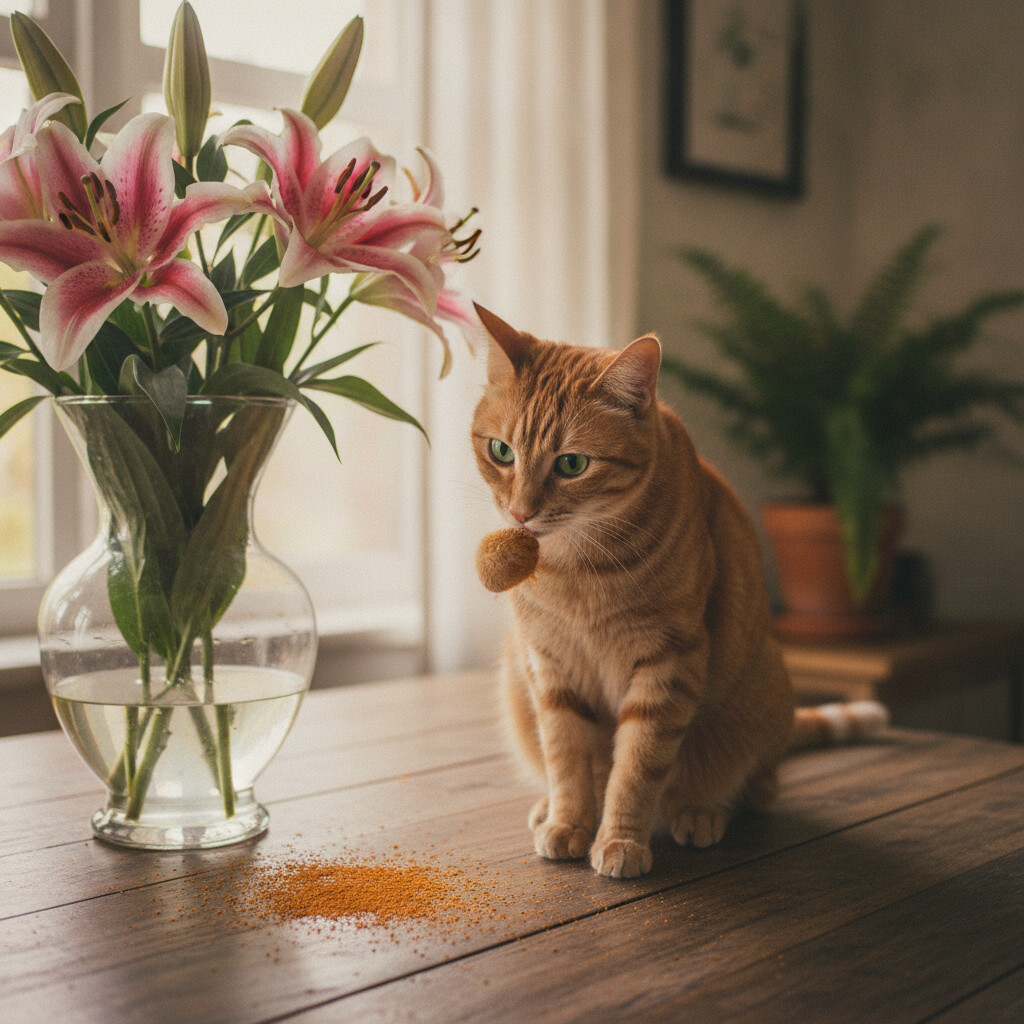
A bunch of lilies on the kitchen table nearly cost us our cat Pepper. She never ate a petal. A dusting of pollen on her face was enough, and the only reason she’s fine is that we got her to an emergency vet within a few hours.
If you’re here because your cat has just been near lilies: stop reading and call your vet, an emergency clinic, or the ASPCA Animal Poison Control Center on (888) 426-4435 now. With lily exposure, speed matters more than anything else. If you have a minute, here’s what happened to us and what we learned.
The bouquet
It was a birthday bouquet: roses, some greenery, and three big pink-and-white stargazer lilies. I put it on the kitchen table, admired it, and didn’t think about it again.
Pepper was six, a healthy tabby who had never been sick a day in her life. She had zero interest in plants. She’d ignored every bunch of flowers we’d ever brought home, which is exactly why I didn’t worry.
The next morning she came to breakfast with a smear of rusty orange across the top of her head and down one cheek. It took me a second to work out what it was. Then I looked at the table and saw the lily pollen scattered across the wood, and a couple of anthers lying next to the vase. She’d brushed past the flowers, probably more than once, and come away coated.
I almost wiped her face and carried on with my day. I only Googled because the colour was so bright. The first result was from the FDA, and the first line told me lilies can cause kidney failure in cats.
Why lilies are so dangerous to cats
This is the part I wish I’d known before I bought anything.
True lilies (the Lilium genus, which includes Easter, tiger, Asiatic, Oriental and stargazer lilies) and daylilies (Hemerocallis) are severely toxic to cats. The US Food and Drug Administration and the ASPCA both warn that every part of the plant is dangerous: petals, leaves, stem, pollen, and even the water in the vase. A cat can be poisoned by licking pollen off its fur while grooming, which is exactly what Pepper would have done.
The toxin attacks the kidneys. According to the FDA’s consumer guidance and the veterinary literature, early signs usually show up within a few hours: vomiting, drooling, hiding, and not eating. Without treatment, acute kidney injury can follow within one to three days, and it can be fatal. Researchers still haven’t identified the exact toxin, which is part of why vets treat any exposure as an emergency instead of waiting to see what happens.
Dogs, interestingly, don’t get the same kidney damage from lilies. This one is very much a cat problem.
Not everything called a “lily” works this way. Peace lilies and calla lilies aren’t true lilies. They contain insoluble calcium oxalate crystals, which irritate the mouth and can cause drooling and pawing at the face, but they don’t cause kidney failure. Lily of the valley is a different danger altogether: it affects the heart. If you’re not sure what you’ve got, take a photo of the plant to the vet.
The vet visit
I phoned the closest emergency clinic, described what I’d found, and they told me to come in immediately. They didn’t ask me to watch for symptoms first. That alone told me how seriously they took it.
At the clinic, the vet explained the plan:
- Decontamination. They washed the pollen off Pepper’s face and fur so she couldn’t keep grooming more of it in. If she’d eaten plant material recently, they would also have considered making her vomit, which is something only a vet should decide to do.
- Bloodwork. A baseline kidney panel, so they could see whether her kidney values were already climbing.
- IV fluids. This was the big one. Pepper stayed on intravenous fluids for 48 hours to keep her kidneys flushed while the toxin passed through.
- Repeat bloodwork before discharge, to confirm her kidneys were holding up.
The vet was honest that early treatment makes an enormous difference. A 2013 study in the Journal of Veterinary Emergency and Critical Care (Bennett and Reineke) followed cats with known lily exposure that received decontamination and IV fluids, and none of them developed acute kidney injury. Delayed treatment is a different story, and cats that already have kidney failure by the time they reach a clinic have a much poorer outlook. The vet put it plainly: “You found it early. That’s the whole game.”
Two days and a sizeable bill later, Pepper came home with normal kidney values. She was furious about the shaved patch on her leg and fine in every other way.
What we changed at home
We don’t bring lilies into the house anymore. Not even “just for the bathroom” or “just where she can’t reach”, because cats reach everything and pollen drifts. Here’s what we do now:
- Check every bouquet before it comes inside. Supermarket and florist arrangements often include lilies, especially around Easter, Mother’s Day and the holidays. If there’s a lily in it, the lily goes straight in the outside bin.
- Tell people who send flowers. Friends and family genuinely don’t know. A quick “we’ve got a cat, so no lilies please” saves everyone a scare.
- Look up plants before buying them. The ASPCA keeps a searchable toxic and non-toxic plant list, and it’s the quickest way to check. Our guide to houseplants that are toxic to cats covers the common ones and some safe swaps.
- Watch the garden too. Daylilies are a popular garden plant, and outdoor cats can come into contact with them over the fence.
- Keep the poison control number in our phones. ASPCA Animal Poison Control is (888) 426-4435 (a consultation fee may apply). It’s saved under “Cat Emergency” now.
If you want the bigger seasonal picture, our holiday hazards guide covers lilies alongside the other plants and foods that turn up at Easter and Christmas.
When to see a vet
Don’t wait for symptoms with lilies. Call a vet straight away if:
- you see pollen on your cat’s face or fur, or anywhere they could groom it from
- a leaf, petal or flower looks chewed
- your cat drank from a vase that held lilies
- you can’t be sure, but lilies were in the house and your cat starts vomiting, drooling, hiding or refusing food
Bring the plant, or a clear photo of it. And if your cat has had any toxin exposure, it’s worth knowing what kidney trouble looks like longer term. Our article on early signs of kidney disease in cats explains what vets look for.
Pepper is nine now. She still ignores flowers, and we still don’t buy lilies. Do you keep cut flowers at home, and how do you check whether they’re safe for your cat?
A note on this story: it’s a composite, built from situations owners commonly describe and checked against published veterinary guidance. Names and personal details are illustrative. The medical and safety information is not, so please talk to your vet about your own cat.