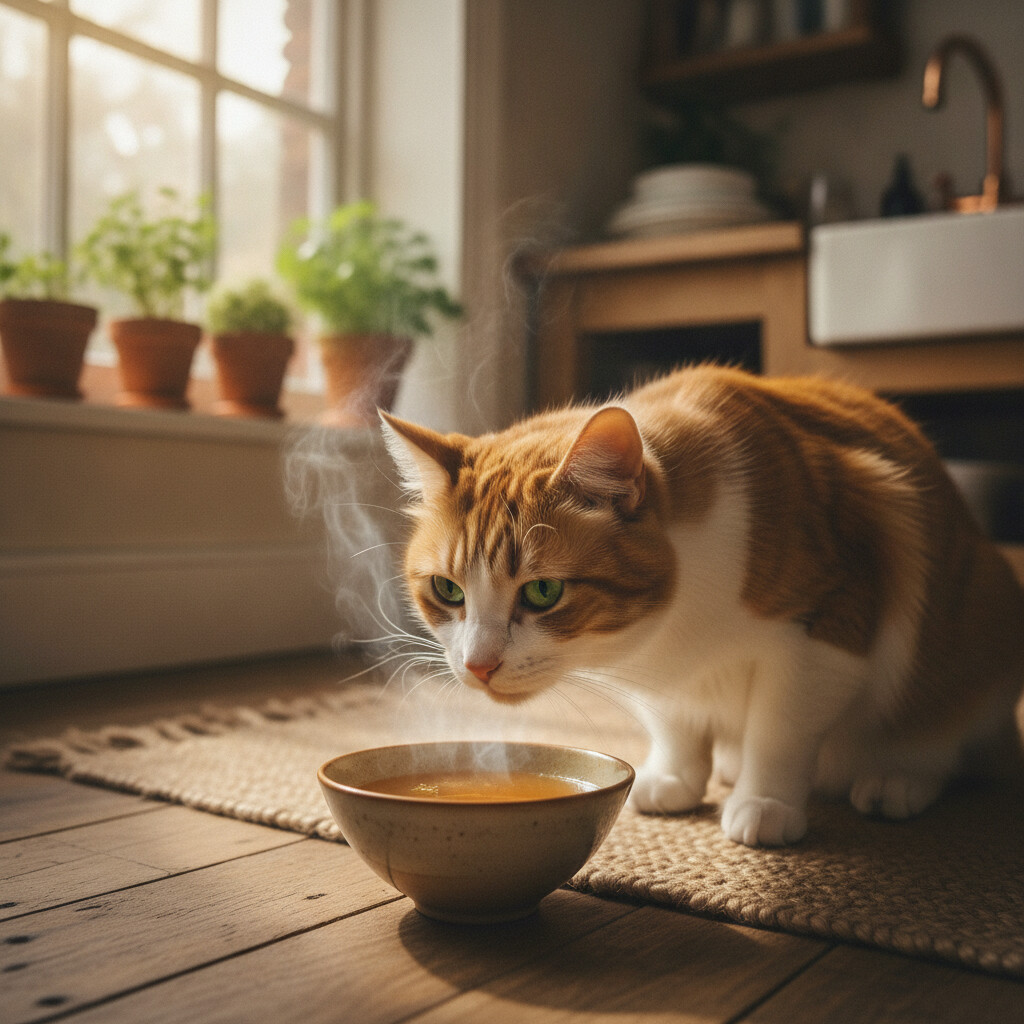
Bone broth won’t fix a picky eater or replace a real diet, but as a hydration booster and appetite stimulant, plain, unseasoned bone broth is genuinely fine for most cats — and can help in a few specific situations. The catch is almost everything sold as “bone broth for pets” and “bone broth for humans” is seasoned in ways that make it unsafe. Here’s what it actually does, and how to not mess it up.
What’s actually in bone broth
Bone broth is water simmered for a long time (often 12–24 hours) with animal bones, connective tissue, and sometimes a little meat. The slow simmer pulls collagen out of the bones, which breaks down into gelatin — that’s what gives cooled bone broth its jiggly texture. It also contains small amounts of minerals (calcium, phosphorus, magnesium) and amino acids like glycine and proline.
None of this makes bone broth a superfood, despite what a lot of pet-wellness marketing implies. It’s mostly water with flavor and a bit of gelatin. That’s not a knock on it — it’s just useful to know what you’re actually giving your cat before believing any bigger claims about it.
What the evidence supports (and what it doesn’t)
The strongest, least controversial case for bone broth is hydration and palatability, not joint health or “gut healing,” despite those being the two claims you’ll see most often online.
Hydration: Cats are famously bad at drinking enough water — they evolved from desert-dwelling ancestors and get most of their fluid from prey rather than a water bowl, which is part of why chronic mild dehydration is common in cats on dry food. A cat that won’t drink extra water will often lap up a bowl of unseasoned broth without hesitation, and the moisture content is functionally similar to wet food. If your cat’s water intake is a concern, broth is a reasonable tool alongside — not instead of — the usual fixes covered in our guide to cat hydration.
Appetite stimulation: This is where bone broth has the most legitimate use. Cats recovering from illness, surgery, or a vet visit often go off their food, and the smell and taste of warm broth can coax eating when nothing else will. Vets frequently recommend small amounts of low-sodium broth for exactly this reason — it’s one of the few “human food” hacks that has real clinical backing, cited by veterinary nutrition sources including Tufts’ Cummings Veterinary Medical Center as a reasonable short-term appetite aid.
Joint health and “gut healing”: This is where the marketing outruns the evidence. The collagen and glycine in bone broth are real, but the amounts in a typical serving are small, and there’s no controlled research showing meaningful joint or gut benefit in cats specifically from bone broth as opposed to actual glucosamine/chondroitin supplementation or a complete diet. If your goal is joint support, talk to your vet about supplements that have data behind them rather than relying on broth to do that work.
The part that actually matters: what NOT to use
This is the section that matters more than any of the benefits above, because most bone broth sold for human consumption is not safe for cats as-is.
Onion and garlic are the big one. Both are toxic to cats — they damage red blood cells and can cause hemolytic anemia — and they’re in the overwhelming majority of commercial and homemade broth recipes, including most “bone broth” cartons at the grocery store. Even small, repeated amounts add up. This alone rules out most broth in your fridge.
Sodium. Commercial broths, especially anything not labeled “low sodium” or “unsalted,” can carry a surprising amount of salt. This matters most for cats with kidney disease or heart conditions, where sodium management is part of the treatment plan — but it’s worth checking labels for every cat, since feline kidneys aren’t built to process a human-scale sodium load regularly.
Cooked bones themselves. Bone broth should have the bones strained out before serving — never let a cat chew on the simmered bones. Cooked bones become brittle and can splinter, creating a choking or intestinal perforation risk that raw bones don’t carry in the same way.
Xylitol and other additives. Rare in broth specifically, but worth a label check on anything flavored or “enhanced” — xylitol is highly toxic to pets in general.
The safest broth is one you make yourself: bones (chicken, turkey, or beef), water, nothing else. Simmer, strain thoroughly, cool, and skim off any fat before serving. If you’re buying, look specifically for broths labeled unsalted, unseasoned, and onion/garlic-free — they exist, they’re just not the default.
How much and how often
Bone broth is a supplement to a complete diet, not a meal replacement — it doesn’t have the protein, taurine, or fat content a cat needs to actually live on. A few tablespoons mixed into food, or served on its own occasionally as a treat, is plenty. There’s no established daily requirement because it isn’t a required part of feline nutrition; think of it the way you’d think of a gravy topper, not a food group.
If you’re using it to encourage a sick or recovering cat to eat, warming it slightly (body temperature, not hot) makes it more appealing — cats respond strongly to smell, and a cold bowl of broth releases a lot less scent than a warm one.
When to check with a vet first
Skip bone broth, or run it by your vet before starting, if your cat has:
- Chronic kidney disease or is on a prescription renal diet (the added minerals and any sodium can complicate management)
- A history of pancreatitis (fat content in broth, even trimmed, can be a trigger)
- Any known sodium-sensitive heart condition
And regardless of the reason you’re offering broth — appetite loss is worth mentioning to a vet on its own. A cat refusing food for more than 24 hours, or showing reduced appetite alongside lethargy, vomiting, or weight loss, needs an actual diagnosis, not just a more appealing bowl. Broth can help bridge a rough day; it’s not a substitute for finding out why the rough day is happening.
The bottom line
Homemade, unseasoned bone broth is a low-risk, occasionally genuinely useful tool — mostly for hydration and coaxing a reluctant eater, not for the joint or gut-health claims attached to it online. Skip anything from a carton unless the label explicitly says no onion, no garlic, and low or no sodium, and treat it as a topper, not a diet.