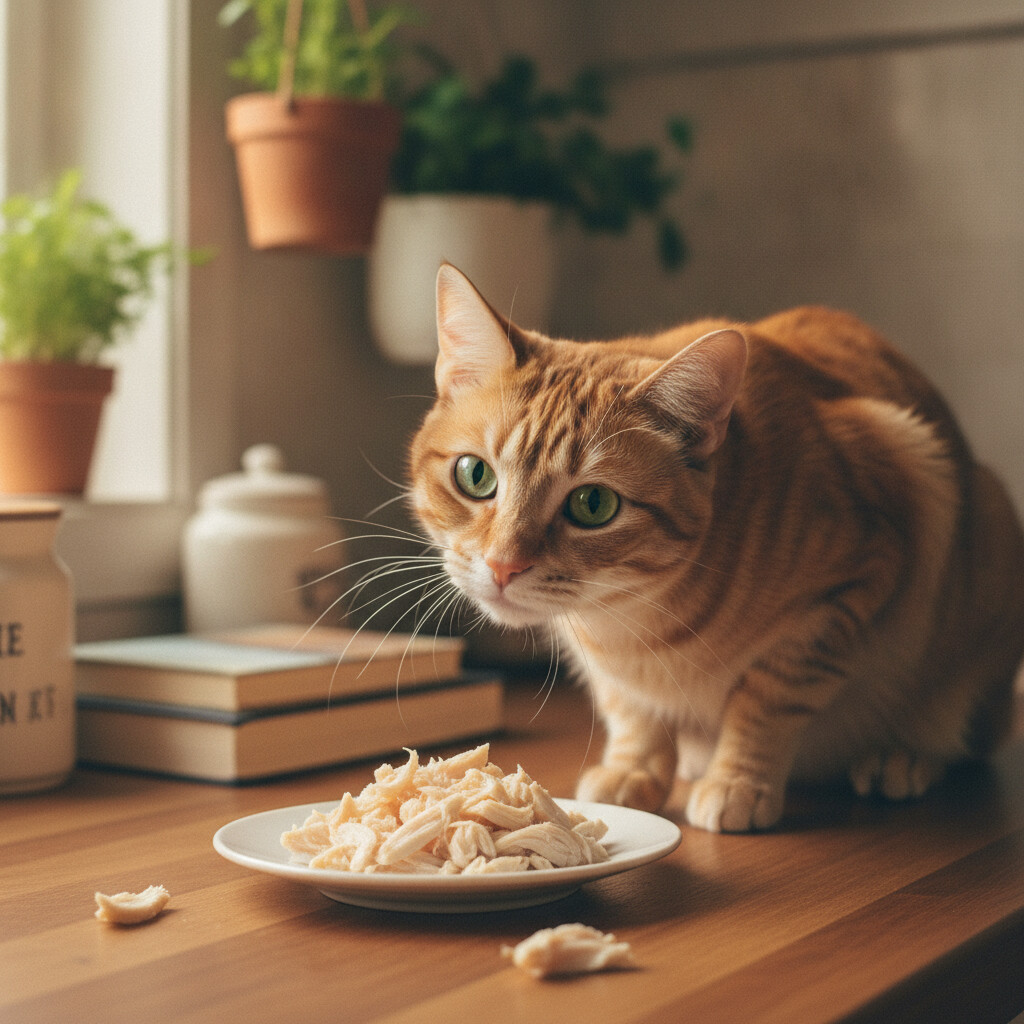
Yes, cats can eat chicken. Plain, cooked, boneless chicken is one of the safest human foods you can share with a cat. The catches are what comes with it (seasoning, onion, garlic, skin, bones and raw-meat bacteria) and how much of it ends up in the bowl. Here’s how to share it without causing problems.
The short answer
- Cooked, plain, boneless chicken: safe in small amounts as a treat.
- Seasoned, fried or rotisserie chicken: best avoided, mainly because of onion, garlic and salt.
- Raw chicken: not recommended by US veterinary bodies because of the bacteria it can carry.
- Chicken bones, cooked or raw: skip them.
- Chicken as a whole diet: no. On its own it’s missing nutrients cats need.
Cats are obligate carnivores, which means they’re built to run on animal protein, and chicken is a major ingredient in many complete commercial cat foods for good reason. If you want the deeper science on why meat matters so much, our explainer on why cats need so much protein covers it.
How much chicken can a cat eat?
The usual vet guidance is that treats, including human food, should make up no more than about 10% of a cat’s daily calories. The rest should come from a complete and balanced cat food.
That’s less chicken than most people expect. A typical indoor 10-pound (4.5 kg) adult cat needs very roughly 200 to 250 calories a day, depending on age, activity and whether they’re neutered. Ten percent is 20 to 25 calories. Cooked skinless chicken breast has about 165 calories per 100 grams (USDA FoodData Central), so that works out to around 12 to 15 grams. That’s about half an ounce, or a level tablespoon or two of shredded meat.
A few practical points:
- Cut it small. Shred or dice it into pea-sized pieces. Cats don’t chew much, and bigger chunks can be a choking risk.
- Count it. If your cat gets chicken, cut back slightly on their regular food that day, especially if they’re already on the heavy side. Our guide to how much to feed your cat helps you work out their actual calorie needs.
- Introduce it slowly. Some cats get loose stools from any new food. Start with a few pieces and see how it goes.
Is chicken skin or fat okay for cats?
Best kept to a minimum. Skin and fat are where most of the calories in chicken sit, and a cat’s daily calorie budget is small. Fatty foods can also cause vomiting or diarrhea in some cats. A sliver of skin isn’t an emergency, but don’t make it a habit. Remove the skin before sharing.
Can cats eat rotisserie or seasoned chicken?
This is where most of the risk is. Store-bought rotisserie chicken, leftovers from dinner and takeout chicken often contain:
- Onion and garlic, including powders, which are a problem in very small amounts. These plants (the Allium family) damage red blood cells and can cause anemia, and the ASPCA Animal Poison Control Center notes cats are more sensitive to them than dogs. Effects can build up over several days.
- Salt and brines. Many rotisserie chickens are injected with a salty solution. A cat’s body is small, so it doesn’t take much.
- Butter, oil, sauces and marinades, which add fat and sometimes more onion or garlic.
If you’re not sure what something was cooked with, don’t share it. The safest chicken for a cat is cooked specifically for them: boiled, baked or poached with nothing added. The same goes for store-bought chicken broth, which very often contains onion. Our article on bone broth for cats covers what to look for on the label.
Can cats eat raw chicken?
Some people feed raw diets, and the debate is real. But the major US veterinary bodies don’t recommend raw meat for pets. The American Veterinary Medical Association’s policy discourages feeding cats and dogs any animal-source protein that hasn’t been treated to kill pathogens, and the FDA has repeatedly warned about Salmonella and Listeria in raw pet foods.
Raw chicken is a known carrier of Salmonella and Campylobacter. Cats can carry and shed these bacteria without looking sick, and the bigger concern is often the people in the house, especially young children, older adults, pregnant people or anyone with a weakened immune system.
If you’re considering a raw diet anyway, our article on raw cat food diets goes through the benefits people claim, the documented risks and what vets actually say. For an occasional treat, cooked chicken gives your cat the same protein without the bacterial risk.
Can cats eat chicken bones?
Don’t give them. Cooked bones become brittle and can splinter, and sharp fragments can injure the mouth or throat or cause a blockage further down. Raw bones are softer but still carry risks, including fractured teeth, choking and obstruction, plus the bacterial concerns above.
Be careful with the trash too. A cat that gets into a carcass in the kitchen bin can swallow bones, string and skin all at once.
Can I feed my cat only chicken?
No. This is the most important point in the whole article.
Plain chicken meat is good protein, but it isn’t a complete diet. Meat alone is very low in calcium compared with phosphorus, which is why cats fed all-meat diets over time can develop serious bone problems (veterinary texts describe this as nutritional secondary hyperparathyroidism). Chicken muscle meat also doesn’t supply everything else a cat needs in the right amounts, including some vitamins, and cooking reduces taurine, an amino acid cats can’t make enough of themselves. Taurine deficiency can cause heart disease and blindness. Our article on taurine deficiency in cats explains why it matters.
If you’d like to cook for your cat regularly, the safe route is a recipe formulated by a board-certified veterinary nutritionist, not a chicken-and-rice improvisation. Our guide to homemade cat food covers why most online recipes fall short.
Chicken for an upset stomach
You may have heard of feeding boiled chicken to a cat with a sensitive stomach. Vets sometimes do recommend a short-term bland diet after a mild bout of vomiting or diarrhea. That should be a short-term plan your vet signs off on, not something you try first. Vomiting and diarrhea can have many causes, and some of them need treatment.
Can cats be allergic to chicken?
Yes, though it’s not the most common culprit. A 2016 review of published studies by Mueller, Olivry and Prélaud (BMC Veterinary Research) found beef, fish and chicken were among the food allergens most often reported in cats, with beef and fish ahead of chicken. Food allergy in cats usually shows up as itchy skin (especially around the head and neck) and sometimes digestive upset. If you suspect it, your vet will usually recommend a strict elimination diet trial. Our article on food allergies in cats walks through how that works.
When to see a vet
Call your vet, an emergency clinic or the ASPCA Animal Poison Control Center on (888) 426-4435 (a consultation fee may apply) if your cat has eaten:
- chicken cooked with onion, garlic, onion powder or garlic powder, especially a meaningful amount
- cooked chicken bones, or a carcass from the trash
Go to a vet promptly if, after eating chicken or anything else, your cat:
- vomits repeatedly, gags, drools or paws at their mouth
- strains to pass stool, has a swollen or painful belly, or stops eating
- seems weak or lethargic, or has pale gums (a possible sign of anemia, which can appear days after onion or garlic exposure)
Also check with your vet before adding chicken, or any extra food, if your cat is on a prescription diet for kidney disease, urinary problems, allergies or weight loss. A few extra bites can undo what the diet is designed to do.
A small amount of plain cooked chicken is one of the easiest ways to make a cat very happy, and it’s safe as long as it stays a treat. Does your cat come running at the sound of chicken being shredded, or are they not interested?