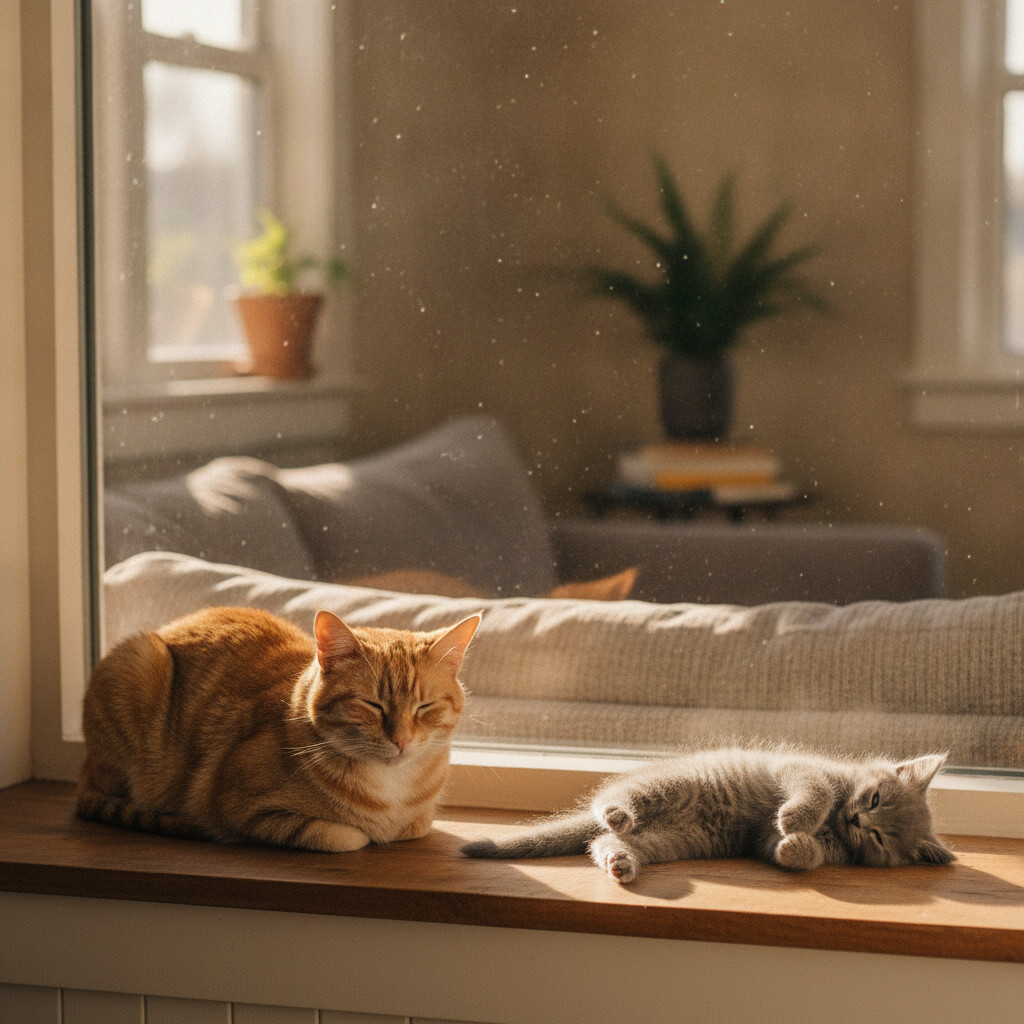
A senior cat doesn’t want a new kitten showing up in their space, full stop — but with the right pacing, most seniors learn to tolerate, and often genuinely enjoy, a younger companion. The mistake most owners make isn’t getting a kitten. It’s introducing it too fast.
Older cats aren’t just “set in their ways” as a personality quirk. Many have arthritis, reduced vision or hearing, or less energy reserve for conflict — all of which make a bouncing, boundary-ignoring kitten feel like more of a threat than it would to a younger cat. The good news: slowing down the introduction to match your senior cat’s tolerance, not the kitten’s enthusiasm, is what actually works.
Why Senior Cats React Differently to a New Arrival
A healthy adult cat in their prime can usually handle a clumsy kitten cannonballing into their space — annoying, but manageable. A senior cat with sore joints often can’t retreat as fast, can’t jump to a high perch to get away, and may be more easily startled if their hearing has declined. That combination tends to produce more hissing, swatting, or hiding than an owner expects, and it’s not the cat being “difficult” — it’s a reasonable response from an animal whose options for self-protection have narrowed.
This is also why introductions that work fine for two adult cats can go sideways with a senior in the mix. If your resident cat already has diagnosed arthritis, it’s worth reading up on how joint pain affects mobility and mood before you bring a kitten home — a cat in pain has less patience for anything, feline or otherwise.
A Realistic Introduction Timeline
Rushing this is the single biggest cause of failed introductions. Plan on two to four weeks minimum, longer if your senior cat is anxious by nature.
Days 1–3: Total separation, scent first. Keep the kitten in its own room with food, water, litter, and a hiding spot. Swap bedding between the two cats daily so each gets used to the other’s scent without any visual contact. This step does most of the psychological work and it’s the one people skip.
Days 4–7: Supervised scent swapping and door exposure. Let the cats sniff each other under a closed door. Feed them on opposite sides of that door so they start associating the other cat’s smell with something good.
Week 2: Controlled visual contact. Use a baby gate, a cracked door, or a carrier to let them see each other without full access. Keep sessions short — five to ten minutes — and end on a calm note, not when tension is building.
Week 3 onward: Supervised free time. Only after your senior cat shows curiosity rather than fear or aggression (approaching to sniff, relaxed body posture, ignoring the kitten and going about their business) should you allow supervised time in the same room. Keep sessions brief and always give your senior cat an easy exit route.
Every step should move at the pace your senior cat sets, not your calendar. If they’re still hissing at the smell alone after a week, stay in that phase longer rather than pushing forward.
Signs the Introduction Isn’t Working
Some hissing and grumbling in the early weeks is normal and doesn’t mean it’s failing. Watch instead for:
- Persistent hiding beyond two to three weeks, with no curiosity at all toward the kitten’s scent or sounds
- Loss of appetite or using the litter box less — both are reliable stress indicators in cats and worth taking seriously in an older cat whose health margin is already thinner
- Redirected aggression, where your senior cat starts lashing out at you or other pets, not just the kitten
- Over-grooming or excessive hiding that doesn’t ease as the weeks pass
If you see these, go back a step in the timeline rather than pressing forward. A senior cat that’s chronically stressed for weeks isn’t just unhappy — chronic stress can suppress appetite and immune function, which matters more in an older animal.
Setting Up the Home So Your Senior Cat Still Feels Safe
The environment matters as much as the introduction schedule.
- Preserve your senior cat’s core territory. Their favorite bed, litter box, and feeding spot should stay exactly where they are — don’t rearrange the house to accommodate the kitten.
- Give them an easy vertical or physical escape route that the kitten can’t easily follow — a cat tree with a ramp rather than a jump, if arthritis is a factor, or a room the kitten can’t access.
- Keep resources separate and plentiful. Separate food bowls, water stations, and litter boxes reduce competition-driven stress — the general rule of one litter box per cat plus one extra still applies.
- Let your senior cat opt out. A door they can push open to leave, or a gate the kitten can’t clear, gives them control over their own exposure — and a cat that feels in control tolerates change far better than one that feels cornered.
When to Get Extra Help
If after four to six weeks your senior cat still shows no signs of easing — persistent hiding, ongoing appetite loss, or aggression that isn’t settling — it’s worth a call to your vet. Sometimes what looks like “won’t accept the kitten” is actually an underlying pain issue or illness making your cat less tolerant than usual, and it’s worth ruling that out rather than assuming it’s purely behavioral. A vet can also refer you to a certified feline behaviorist for cases that need more structured guidance than a general introduction plan.
The Takeaway
Go slower than feels necessary, protect your senior cat’s sense of control over their own space, and judge progress by their body language, not the calendar. Most senior cats do eventually settle into coexistence with a kitten — some even end up unlikely best friends — but it happens on the older cat’s timeline, not yours.
For the mechanics of a standard two-cat introduction, see our guide on introducing two cats for the first time. If you’re setting up a home with more than two cats long-term, our piece on multi-cat household setup covers how to structure resources so conflict stays low.