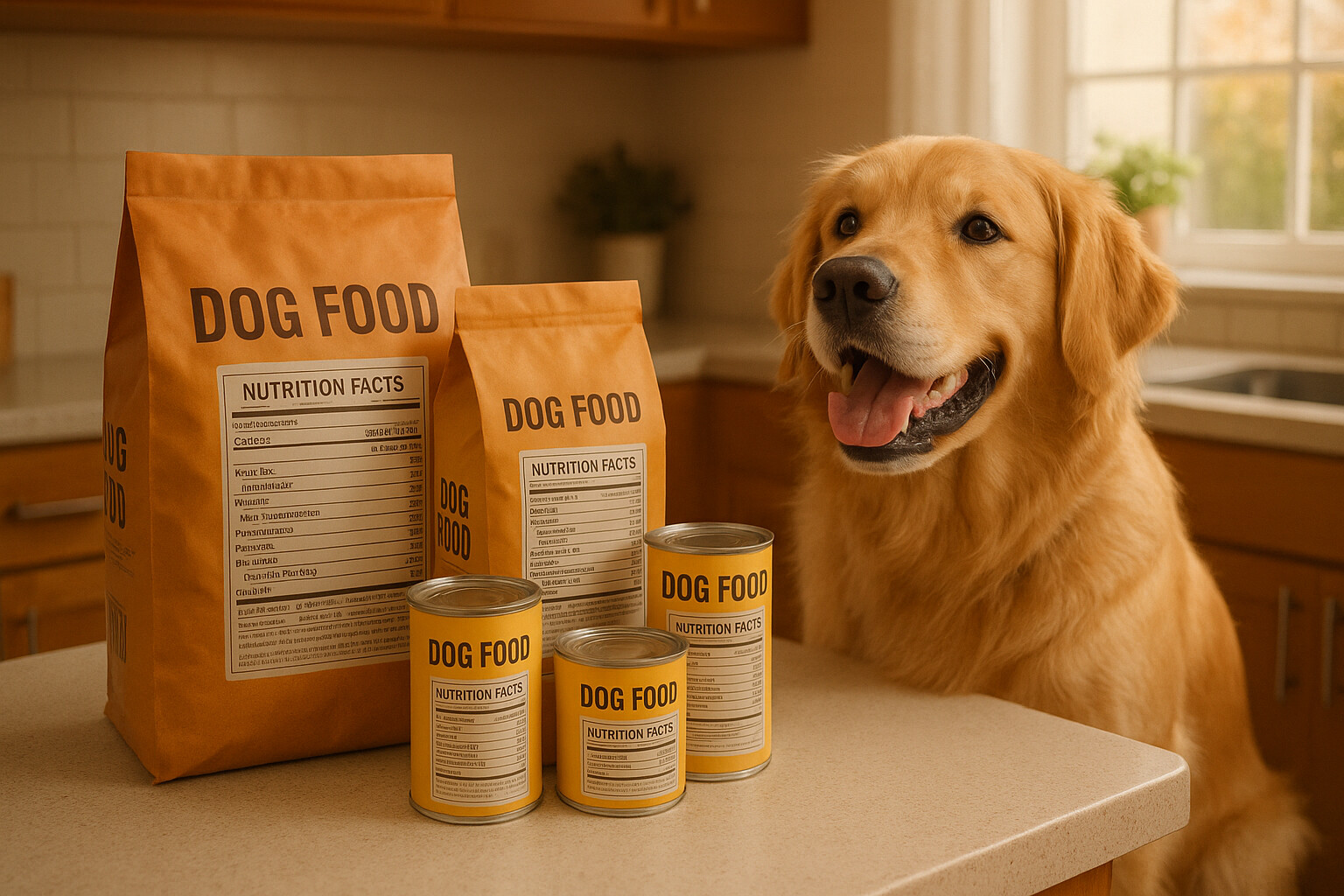
Walk down the dog food aisle at any PetSmart or Petco and you’ll find dozens of bags making bold claims: “grain-free,” “all-natural,” “veterinarian recommended,” “high-protein.” Most of it is marketing. The actual truth about what’s in your dog’s food is buried in small print on the side of the bag — if you know how to read it.
Here’s a plain-English guide to decoding a dog food label, written for US pet owners who want to make smarter choices without needing a nutrition degree.
AAFCO: The Baseline You Should Always Look For
The Association of American Feed Control Officials (AAFCO) sets the nutritional standards for pet food sold in the United States. Look for the AAFCO nutritional adequacy statement — it’s usually printed near the bottom of the label in small text. It should say something like:
“[Product name] is formulated to meet the nutritional levels established by the AAFCO Dog Food Nutrient Profiles for all life stages.”
Or it may specify a life stage: puppy, adult maintenance, or senior. If a food lacks this statement entirely, it doesn’t meet minimum nutritional requirements and should be avoided.
How the Ingredient List Works
Ingredients are listed by weight before processing — which matters more than most people realize. “Chicken” as the first ingredient sounds impressive, but raw chicken is roughly 80% water. After cooking, it shrinks dramatically. Meanwhile, “chicken meal” (dried, concentrated chicken) listed fourth or fifth may actually contribute more usable protein per serving.
Look for:
- Named protein sources (chicken, beef, salmon, lamb) as the first ingredient
- Whole grains, legumes, or vegetables as secondary ingredients
- Fish oil or flaxseed for omega-3 fatty acids
Be cautious of:
- Generic “meat” or “animal by-products” without naming the animal species
- Excessive fillers like corn syrup or artificial dyes (Red 40, Yellow 5)
- Ingredient splitting — where the same ingredient appears in multiple forms (e.g., “corn flour,” “ground corn,” and “corn gluten meal” listed separately) to push each lower on the list
Understanding the Guaranteed Analysis Panel
The guaranteed analysis shows minimum percentages of crude protein and fat, and maximum percentages of fiber and moisture. These are limits, not exact values — a 26% minimum protein may actually be 28% in the bag.
For most healthy adult dogs, general targets include:
- Protein: 18–30% (on a dry matter basis)
- Fat: 8–18% (dry matter basis)
- Fiber: Under 5% for most breeds
One important note: if you’re comparing dry kibble to wet or canned food, you need to convert to dry matter basis to make a fair comparison. Wet food can be 70–80% moisture, which makes raw percentages look much lower than they really are. The formula is: divide the nutrient percentage by (100 minus the moisture percentage), then multiply by 100.
Life Stage and Breed Size Matter More Than You Think
A Labrador puppy and a 12-year-old Chihuahua have completely different nutritional needs. AAFCO labels specify:
- “All life stages” — meets requirements for both puppies and adults
- “Adult maintenance” — not appropriate for puppies or pregnant/nursing dogs
- “Large breed puppy” — specially formulated calcium-to-phosphorus ratios to support healthy bone growth in bigger breeds
This last point is important: feeding a large breed puppy a standard puppy formula can actually cause developmental joint problems. Large breed dogs (those expected to exceed 50–70 lbs as adults) need slower, steadier bone growth — not the calcium-heavy formulations designed for small breeds.
Marketing Terms That Mean Very Little
Several terms on dog food labels are largely unregulated under current FDA and AAFCO rules:
- “Natural” — loosely defined; products can still contain synthetic vitamins and additives
- “Grain-free” — not the same as low-carb or low-glycemic; grains are often replaced by potatoes or peas (Note: since 2019, the FDA has been investigating a possible link between grain-free diets and dilated cardiomyopathy, or DCM, in dogs — it remains under investigation)
- “Human-grade” — not an officially regulated term in pet food labeling
- “Premium” or “gourmet” — no legal or regulatory definition whatsoever
What US Vets Actually Recommend
Most veterinary nutritionists in the US recommend looking for brands that:
- Employ a board-certified veterinary nutritionist (DACVN) on staff
- Conduct actual feeding trials — not just nutrient analysis — to meet AAFCO standards
- Have published research, transparent sourcing, and a direct line for consumer questions
Brands like Hill’s Science Diet, Royal Canin, and Purina Pro Plan are frequently recommended by vets — not because they’re trendy or “natural,” but because they have decades of research, quality control infrastructure, and documented feeding trials behind them.
When to Ask Your Vet
Generic feeding guidelines on a bag are a starting point, not a prescription. Your vet can help you dial in the right formula if your dog:
- Is overweight or underweight
- Has food allergies or sensitivities
- Has been diagnosed with kidney disease, diabetes, heart disease, or joint issues
- Is a senior dog (generally 7+ years for large breeds, 10+ for small breeds)
- Is a working or highly active dog with different caloric needs
Bottom Line
The front of the bag is marketing. The back of the bag is information. When in doubt: look for the AAFCO statement, scan the first five ingredients, check the life stage designation, and don’t be swayed by words like “premium” or “natural.” Your dog can’t read the label — but you can. And it makes a bigger difference than most people realize.