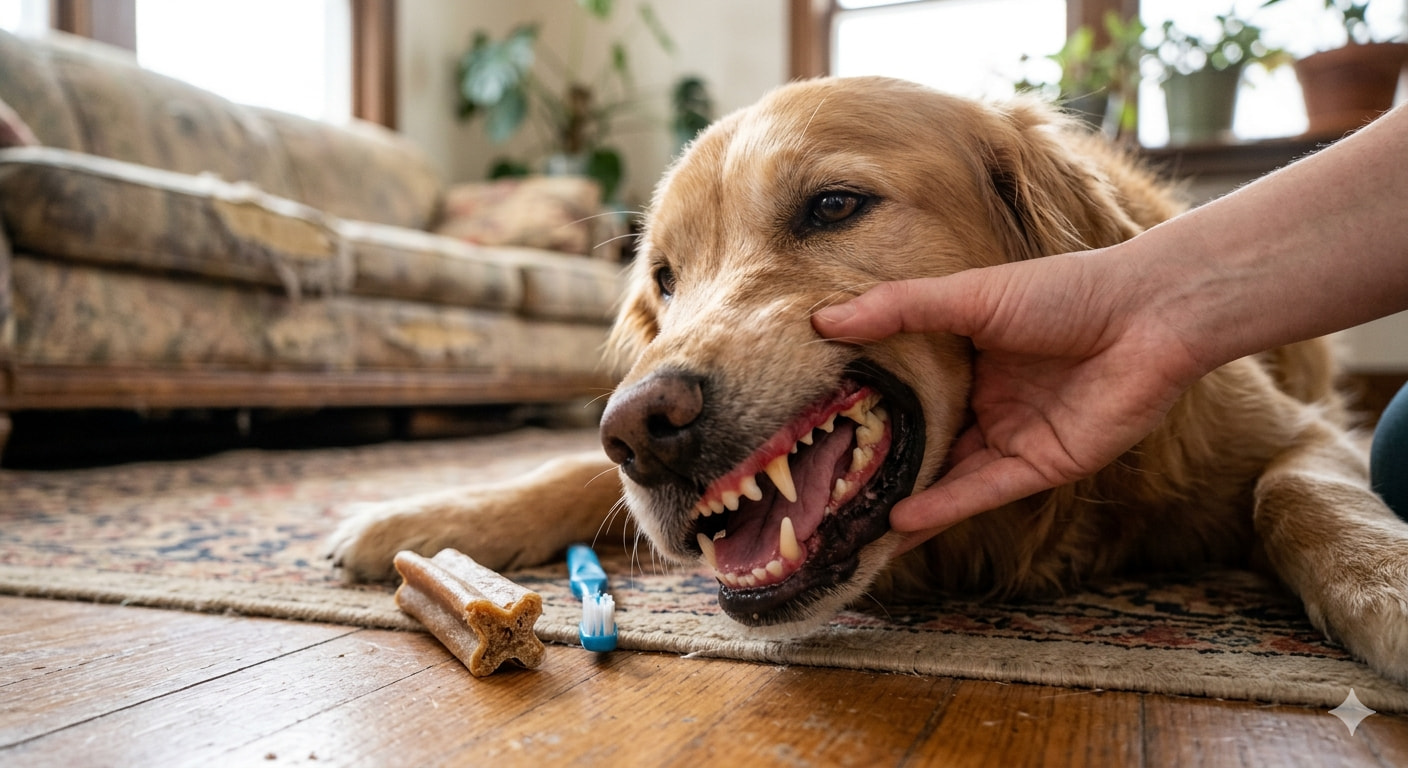
By the time most dog owners notice a dental problem, it’s been developing for months — sometimes years. The AVMA estimates that 80 percent of dogs show signs of periodontal disease by age three, making it the most common health condition in dogs. Most of it goes undetected until a vet does a proper examination.
This isn’t a lecture about brushing. It’s a practical guide to what’s actually happening in your dog’s mouth, what to look for, and what to do about it.
What Periodontal Disease Actually Is
Periodontal disease isn’t just bad breath. It’s a progressive bacterial infection of the structures that support the teeth — the gums, the ligaments, and eventually the jawbone itself.
It starts with plaque: a film of bacteria that forms on teeth within 24 hours of eating. Left undisturbed, plaque mineralizes into tartar (calculus) within days. Tartar is rough, porous, and clings to teeth above and below the gum line. Bacteria thrive in that environment, irritating the gums and causing gingivitis — the earliest stage of periodontal disease, and also the only reversible one.
From there, without intervention, the disease progresses below the gum line. Bacteria break down the bone and tissue holding teeth in place. By this stage, treatment requires anesthesia, professional scaling, and often extractions.
The window to stop the progression is the gingivitis phase. After that, you’re managing damage, not reversing it.
Warning Signs Worth Knowing
Dental disease in dogs is easy to miss because dogs hide discomfort well and can’t tell you their mouth hurts. Look for:
Persistent bad breath — not “dog breath” from whatever they just ate, but a sour, offensive smell that doesn’t go away. The odor comes from bacteria colonizing below the gum line.
Red or inflamed gums along the gum line — healthy gums are pink and firm. Swollen, red-edged gums are gingivitis in progress. In early stages this can be subtle; you need to look deliberately.
Yellow or brown buildup on teeth, especially near the gum line. This is tartar, and you cannot brush it off. Once tartar has formed, professional cleaning under anesthesia is the only way to remove it properly.
Bleeding from the mouth, particularly during eating or chewing.
Reluctance to eat hard food, or a new preference for soft food when they previously had no trouble with kibble. This is often the first behavioral change owners notice.
Pawing at the mouth, visible facial swelling, or dropping food while eating can indicate more advanced disease or a tooth root abscess.
Unexplained changes in behavior — becoming quieter, less playful, less interested in chew toys — can indicate a dog is eating less or avoiding activity because of mouth pain. These changes often get attributed to “getting older” when there’s a treatable cause.
If you’re not sure whether what you’re seeing is pain-related, our guide to recognizing the signs of pain in dogs walks through the behavioral and physical cues vets look for.
Why It Matters Beyond the Mouth
Chronic oral bacteria don’t stay local. Veterinary research has documented associations between severe periodontal disease and kidney, liver, and heart disease in dogs. The proposed mechanism is bacteremia — bacteria entering the bloodstream through inflamed, ulcerated gum tissue, then reaching organs. This connection isn’t established with certainty for every individual case, but it’s taken seriously enough by veterinary cardiologists and internists that dental health is considered part of general systemic health management, not just an aesthetic issue.
Beyond systemic risk, periodontal disease causes chronic pain that often goes unaddressed because it develops so gradually. A dog who’s been uncomfortable for two years has adapted their behavior — they just don’t show it the way an acutely injured animal would.
Prevention: What Actually Makes a Difference
Brushing remains the most effective intervention. Daily is best; a few times a week provides real benefit. Use a dog-specific enzymatic toothpaste — human toothpaste contains xylitol and fluoride, both harmful to dogs. Soft-bristled brushes or finger brushes work well. Starting young makes adoption easier, but adult dogs can absolutely be trained to accept it with consistent, patient desensitization.
VOHC-approved dental chews and treats have clinical evidence behind them. The Veterinary Oral Health Council (VOHC) only grants its seal to products that demonstrate measurable plaque or tartar reduction in controlled trials. Plenty of dental products make impressive claims without this evidence. Check the package for the VOHC seal — it’s the difference between marketing and data.
Water additives have some evidence of reducing bacterial load and are useful as a complement to brushing, not a replacement for it.
What to feed plays a small but real role. High-carbohydrate diets can accelerate plaque formation; dry kibble has a mild mechanical cleaning effect for some dogs (though not a substitute for brushing). If you’re reviewing your dog’s diet, our guide on reading a dog food label covers what to actually look for in the ingredients list.
Professional dental cleanings under general anesthesia are the only way to fully assess and address what’s happening in the mouth. Pre-anesthetic bloodwork evaluates organ function, dental X-rays reveal bone loss and root disease that are invisible externally, and proper scaling reaches below the gum line where disease actually lives. Many vets recommend annual cleanings; small-breed dogs and dogs with crowded teeth often need them more frequently.
When to See the Vet
If you notice tartar buildup, red gums, persistent bad breath, any sign of pain, or just a feeling that something is off — schedule a dental exam. Don’t hold it for the annual wellness visit if you see warning signs now.
At routine check-ups, specifically ask your vet to comment on dental health. It’s included in a thorough physical but can pass quickly without a specific question.
For owners who are concerned about anesthesia: modern pre-anesthetic protocols for healthy dogs are very safe, and the risks of untreated dental disease — both in terms of quality of life and potential systemic effects — typically outweigh the anesthesia risk. Your vet can assess the risk-benefit profile for your specific dog’s age and health status.
The standard of dental care available for dogs has improved substantially in recent decades. Dental disease used to be considered an inevitable part of aging. It isn’t — and catching it early is what makes the difference.