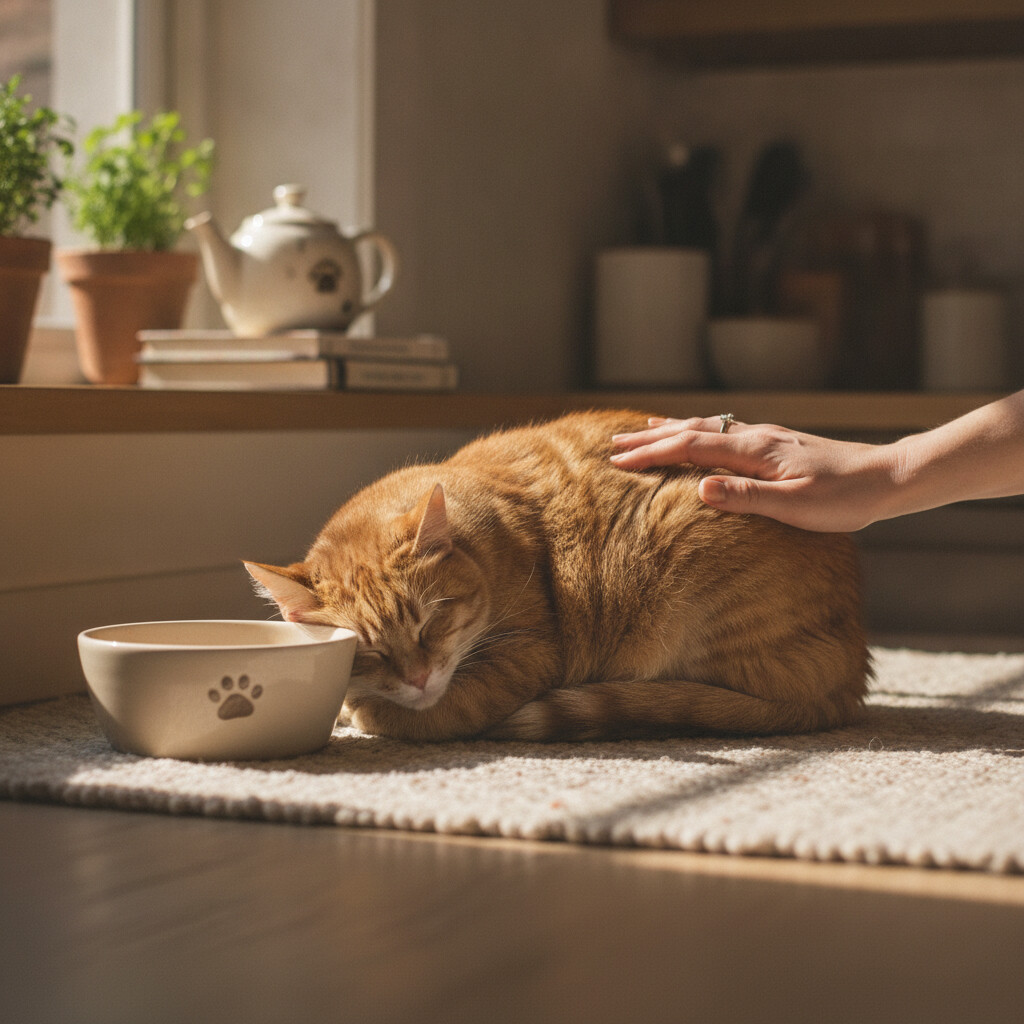
Hepatic lipidosis — often called “fatty liver disease” — is one of the few feline health emergencies that can be triggered by something as ordinary as a cat skipping meals for a few days. Unlike most mammals, cats can’t safely go without food for long. If your cat has stopped eating, even for what feels like a minor reason, it’s worth taking seriously before it becomes a liver problem.
Why Cats Are Uniquely Vulnerable
Most mammals can fast for several days without major consequences — the body shifts to burning stored fat for energy, and the liver processes that fat in a controlled way. Cats are built differently. As obligate carnivores, their metabolism is wired to run on a steady, protein-heavy fuel supply, and their livers aren’t efficient at processing large amounts of fat quickly.
When a cat stops eating — for any reason — the body still needs energy, so it starts mobilizing fat reserves and sending them to the liver to be converted into usable fuel. In cats, this process overwhelms the liver. Fat accumulates faster than it can be processed, builds up inside liver cells, and impairs the organ’s ability to function. Within as little as 2 to 3 days of not eating, particularly in an overweight cat, this process can already be underway.
This is why vets treat feline anorexia — any cat that isn’t eating — as a real problem, not a “wait and see” situation the way you might with a dog.
Who’s Most at Risk
Hepatic lipidosis can affect any cat that stops eating, but a few groups are especially vulnerable:
- Overweight and obese cats — they have more fat to mobilize, which means a much higher burden on the liver during a fast. This is the single biggest risk factor.
- Cats under stress — a house move, a new pet, boarding, or a hospital stay can trigger a stress-related loss of appetite that snowballs.
- Cats with an underlying illness — dental pain, pancreatitis, kidney disease, or nausea from another condition often start the cycle: the cat feels unwell, stops eating, and then develops secondary liver disease on top of the original problem.
- Cats recovering from anesthesia or illness — appetite can lag behind recovery, and owners sometimes assume it will return on its own within a few more days.
Hepatic lipidosis is sometimes described as “idiopathic” (primary) when no other trigger is found, but in most real-world cases, something set off the initial loss of appetite — the fatty liver disease is a secondary complication layered on top.
Signs to Watch For
Early signs are easy to miss because they overlap with whatever caused the cat to stop eating in the first place:
- Not eating, or eating noticeably less than usual, for more than a day or two
- Lethargy and hiding more than normal
- Vomiting
- Weight loss that seems fast for the timeframe
- Yellowing of the gums, ears, or the whites of the eyes (jaundice) — this is a more advanced sign and means the liver is already struggling
- Excess drooling
Jaundice is the sign most owners notice and worry about, but by the time it’s visible, the disease has usually progressed significantly. The window to intervene early is before that point — which is the appetite loss itself.
How It’s Diagnosed and Treated
A vet will typically run bloodwork to check liver enzyme levels, and may recommend an ultrasound or a liver biopsy/fine needle aspirate to confirm the diagnosis and rule out other causes of liver disease, such as pancreatitis or cancer (this often gets investigated alongside conditions like pancreatitis in cats, since the two frequently occur together).
Treatment centers on getting nutrition into the cat as soon as possible — because the liver can’t recover while the body is still in a fasting, fat-mobilizing state. Depending on severity, this may involve:
- A feeding tube (esophagostomy or nasogastric tube) — often the most effective approach, since it allows reliable calorie intake without forcing a sick, nauseated cat to eat on its own, and it can stay in for weeks if needed
- Anti-nausea medication to make eating more tolerable
- IV fluids to correct dehydration and electrolyte imbalances
- Appetite stimulants, though these are usually a supplement to — not a replacement for — assisted feeding in moderate-to-severe cases
- Treating the underlying cause, whatever originally triggered the appetite loss
With aggressive, early treatment, the prognosis is genuinely good — most cats recover fully, since the liver has strong regenerative capacity once the fat-mobilization cycle is broken. Cats diagnosed late, or with significant underlying disease, have a harder road, which is exactly why early intervention matters so much here.
The Practical Rule of Thumb
Vets generally use 24 to 48 hours of not eating (or markedly reduced eating) as the point to stop waiting it out — especially in an overweight cat. This isn’t about panicking over one skipped meal; cats can be finicky, and a single missed dinner because of a new food or a stressful afternoon isn’t an emergency. But a cat that isn’t eating normally by the next day, or is eating only token amounts, needs a vet visit, not another day of “let’s see.”
Never try to force-feed a large amount at home or start a home-made “recovery diet” without veterinary guidance — an already-nauseated cat with an inflamed liver can be made worse by force-feeding, and the underlying cause still needs to be identified and treated.
When to See a Vet
Call your vet the same day if your cat hasn’t eaten at all for 24 hours, or has been eating significantly less than normal for 2 days, especially if your cat is overweight. Treat it as urgent if you notice yellowing of the gums or eyes, repeated vomiting, or a cat that’s lethargic and unresponsive — these suggest the liver is already under real strain and the situation needs same-day veterinary attention, not a wait-and-monitor approach.
The Takeaway
A cat that isn’t eating is never something to shrug off, even if nothing else seems obviously wrong. The 24-to-48-hour window matters because cats’ bodies handle fasting so differently from ours — what would be a minor inconvenience in a human or dog can spiral into liver failure in a cat within days. If your cat is overweight, has recently been under stress, or has stopped eating for any reason, don’t wait for other symptoms to appear before calling the vet. If weight has been a long-term concern for your cat, it’s also worth reading up on helping an overweight cat lose weight safely, since crash diets or sudden reduced feeding can themselves trigger this exact condition.