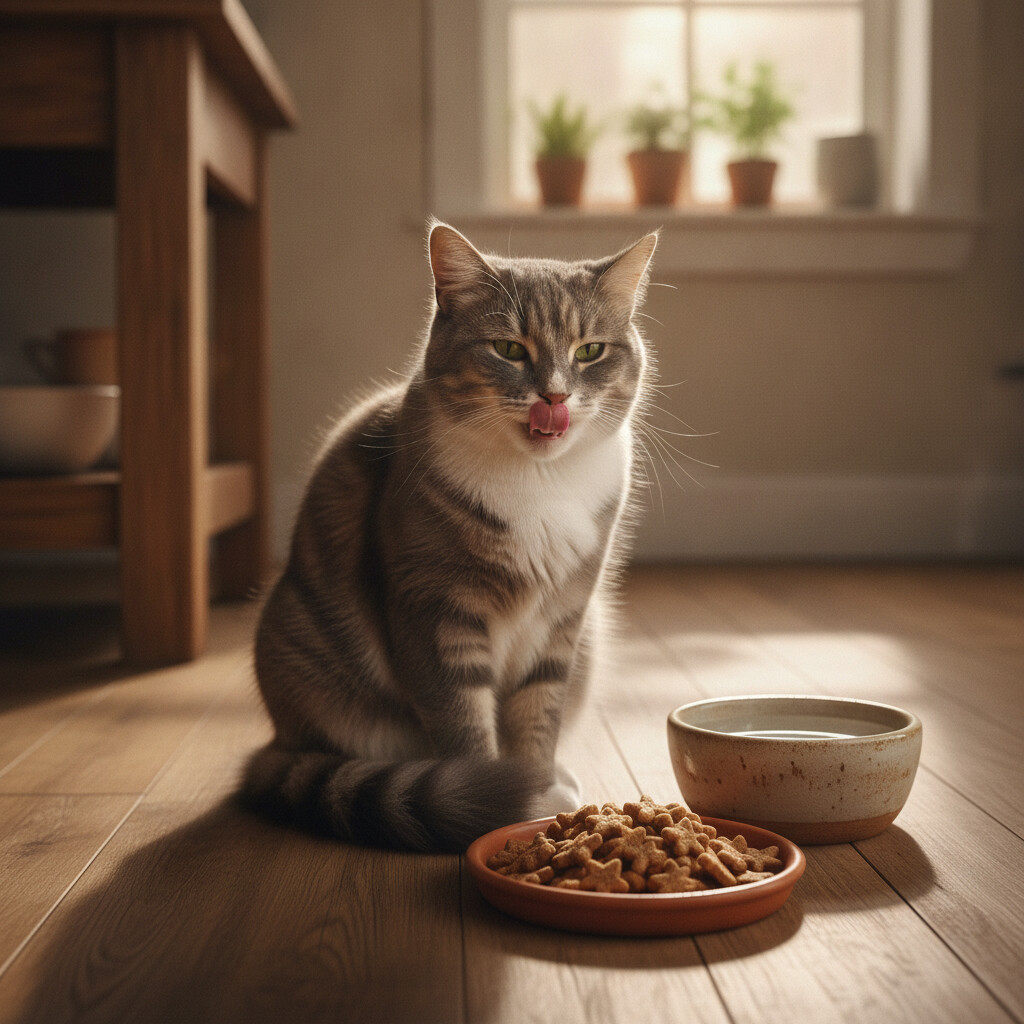
Some cat dental treats, diets and water additives genuinely help — but only modestly, and only the ones that have been tested. The quickest way to tell the difference is the Veterinary Oral Health Council (VOHC) seal. Even the best of these products are a supplement to toothbrushing and vet dental care, not a replacement. Here’s what works, what’s mostly marketing, and how to choose.
Why Cat Dental Products Matter at All
Dental disease is one of the most common health problems vets see in cats. The Cornell Feline Health Center estimates that a large majority of cats over age three have some degree of dental disease, and periodontal disease is painful long before most owners notice anything. Cats almost never stop eating because of mouth pain until it’s severe.
Plaque — a soft film of bacteria — forms on teeth within hours of cleaning. Left alone, it hardens into tartar (calculus) within days, and the bacteria under the gum line drive gingivitis and, eventually, periodontal disease and tooth loss.
The American Animal Hospital Association’s 2019 Dental Care Guidelines for Dogs and Cats is blunt about the hierarchy: daily toothbrushing is the gold standard for home care. Products like treats, diets and additives are recommended as additions — useful, particularly for cats who won’t tolerate a toothbrush, but less effective on their own. If you want to try brushing first, our guide to brushing your cat’s teeth walks through it step by step.
What Is the VOHC Seal (and Why Should You Look for It)?
The Veterinary Oral Health Council is an independent body set up by the American Veterinary Dental College. Manufacturers submit data from controlled trials, and products that meet a pre-set standard for reducing plaque, tartar, or both are awarded the VOHC Seal of Acceptance.
A few things worth knowing:
- The seal says what it’s for. Some products are accepted for plaque, some for tartar, some for both. Tartar-only products slow hardening but don’t address the bacterial film that causes gum disease as directly.
- It’s voluntary. A product without the seal isn’t necessarily useless — but it hasn’t shown independent evidence that it works, which is the whole point.
- The list changes. Check the current list at vohc.org before buying. It’s short, separated into dog and cat products, and easy to scan.
- “Vet recommended” or “dental formula” on a pack means nothing on its own. Those phrases aren’t regulated the way the seal is.
Do Cat Dental Treats Actually Work?
Some do, a little. Dental treats work mechanically: a fibrous or textured structure scrapes the tooth surface as the cat chews, and some include ingredients that slow tartar formation. Several feline dental treats have earned the VOHC seal for tartar or plaque reduction.
The catch is how cats eat. Many cats swallow treats almost whole, or chew only with the back teeth on one side, which limits the contact the treat makes. That’s why the effect in trials is real but modest — think “slows buildup” rather than “cleans teeth.”
Practical tips:
- Count the calories. Treats should make up no more than about 10% of a cat’s daily calories — a guideline widely used by vets and the WSAVA. A few dental treats a day can add up fast for a small or overweight cat.
- Pick a VOHC-accepted treat over a generic “dental” one.
- Don’t swap meals for treats. They’re a supplement, not nutrition.
For a wider look at what’s healthy and what’s filler in the treat aisle, see best cat treats: what’s healthy and what’s junk.
Do Dental Diets Work Better Than Treats?
Usually, yes — because your cat eats them every day in quantity. Prescription and over-the-counter dental diets use larger kibble with a fibre matrix designed not to shatter on contact, so the tooth sinks in and the kibble scrubs as it breaks. Several have earned the VOHC seal for both plaque and tartar.
A common myth worth clearing up: ordinary dry food does not meaningfully clean teeth. Standard kibble is small and brittle, cracks at the tip, and many cats swallow it whole. If you’re deciding between wet and dry for other reasons, our wet vs. dry cat food comparison covers the trade-offs — but dental benefit shouldn’t be the reason you pick regular dry food.
Dental diets are complete foods, so they need to replace (not top up) your cat’s usual food to avoid weight gain. They aren’t right for every cat — cats with kidney disease or other conditions on a therapeutic diet should stick with what their vet prescribed, so ask before switching.
Are Cat Water Additives Safe and Effective?
Water additives are the lowest-effort option: you add a measured amount to the water bowl and walk away. They generally work through antibacterial or anti-plaque ingredients rather than mechanical cleaning. At least one water additive for cats has earned the VOHC seal for plaque reduction, but many on the market have no published evidence at all.
Things to watch for:
- Your cat must still drink. Cats are sensitive to taste and smell changes, and many are already borderline underhydrated. If your cat drinks less after you add a product, stop — hydration matters more than plaque control. Our guide to how much water a cat should drink explains what’s normal.
- Offer a plain bowl too for the first few weeks, so you can see whether your cat is avoiding the treated water.
- Check for xylitol if you have a dog. Xylitol is highly toxic to dogs. Research in cats suggests it’s far less dangerous for them, but a dog drinking from the cat’s bowl is a real risk. In a mixed household, choose a xylitol-free product.
What About Gels, Wipes, and Sprays?
Oral gels and rinses (often containing chlorhexidine, an antiseptic vets use routinely) and dental wipes sit in the middle: more effective than an additive because you apply them directly, less effective than brushing because there’s little mechanical cleaning. They’re a good stepping stone for a cat who won’t accept a brush yet — get them used to a finger in the mouth with a wipe, then progress. Ask your vet which products they use; many clinics sell the same ones they recommend.
Products to Skip
- Anesthesia-free dental cleaning. Scaling a cat’s teeth while they’re awake removes visible tartar but can’t clean under the gum line, where disease actually happens, and it gives a false sense of security. The American Veterinary Dental College explicitly opposes it.
- Anything promising to “dissolve tartar” or “replace brushing” without VOHC acceptance or published data.
- Human toothpaste. It often contains fluoride and foaming agents that cats shouldn’t swallow. Use a pet toothpaste.
When to See a Vet
No product reverses existing dental disease. Once tartar is established or gums are inflamed, a professional cleaning under anesthesia — with X-rays to check the roots — is the only way to treat it. Book a vet visit if you notice:
- Bad breath that’s stronger than usual “cat food breath”
- Red or swollen gums, especially a red line where the gum meets the tooth
- Drooling, pawing at the mouth, or dropping food
- Chewing on one side, or a sudden preference for soft food
- Visible brown tartar, a broken tooth, or a pink spot on a tooth (a possible sign of tooth resorption — a common, painful condition in cats that home care can’t prevent)
Cats should have their mouth checked at every annual exam, and more often as they age — see dental care for senior cats for what changes later in life.
The Bottom Line
If you can brush, brush. If you can’t, a VOHC-accepted dental diet is the strongest single product option, with VOHC-accepted treats or water additives as useful extras. Skip anything that can’t show evidence, keep an eye on calories and water intake, and let your vet check your cat’s mouth at least once a year.