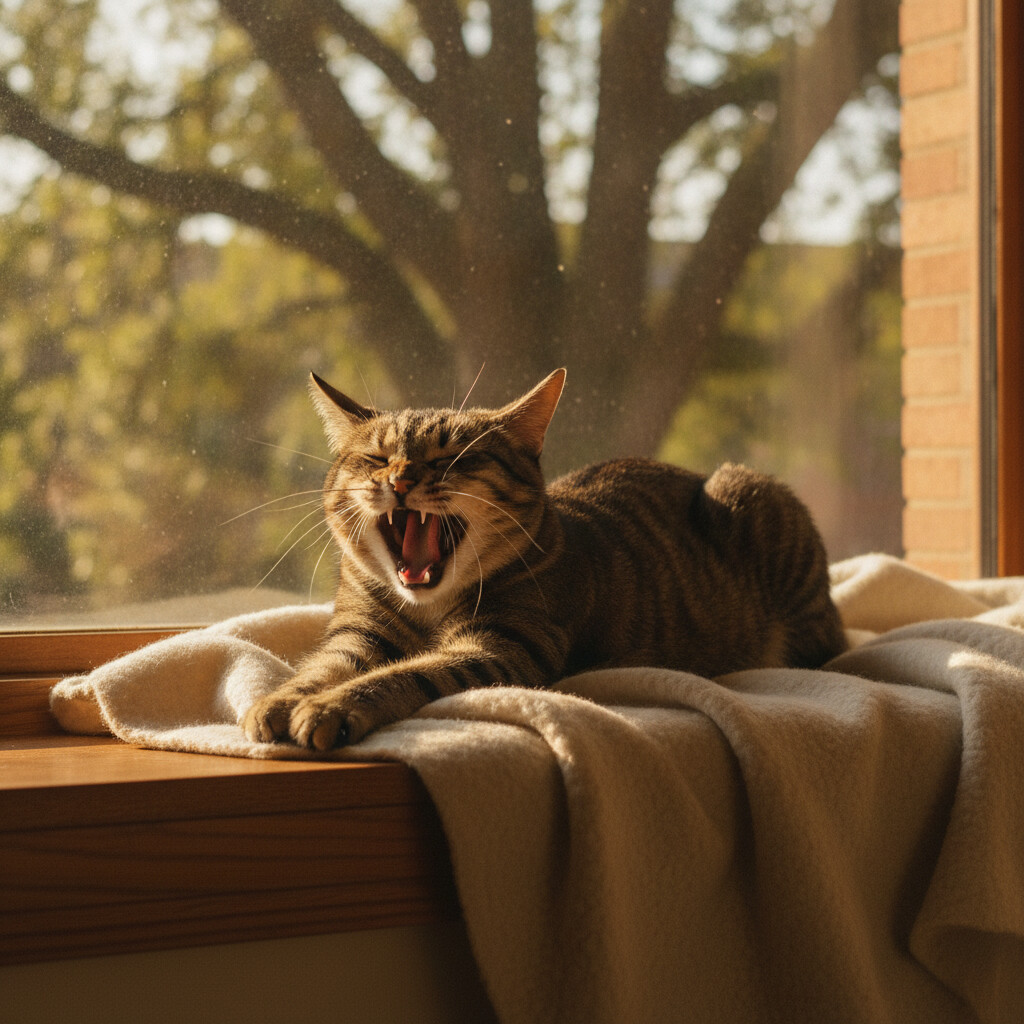
Bad breath in a cat is almost always a mouth problem, and the most common one by far is dental disease. A cat’s breath should smell faintly of whatever they last ate, not sour, rotten or like ammonia. If yours makes you pull back when they yawn in your face, something is usually going on, and a vet can normally pin it down with a quick look inside the mouth.
That’s the short answer. The longer one matters, because a small share of bad-breath cases point to something outside the mouth, like kidney disease or diabetes, and the smell itself can give you a clue.
Is It Normal for Cats to Have Bad Breath?
No. Mild “cat food breath” right after a meal is normal, especially with fish-based food. Persistent foul breath is not, at any age.
The tricky part is that cats hide mouth pain extremely well. Many cats with sore gums and damaged teeth keep eating, often because hunger wins out over discomfort. So “they’re still eating fine” doesn’t rule out a problem. Bad breath is often the first thing an owner notices, long before any obvious change in behavior.
Dental Disease: The Usual Cause
Periodontal disease starts when plaque (a film of bacteria) builds up along the gumline and hardens into tartar. The gums get inflamed (gingivitis), and over time the inflammation can eat into the tissue and bone holding the teeth in place. The bacteria involved produce sulfur compounds, which is where that rotten smell comes from.
It’s extremely common. The American Veterinary Medical Association says most cats show some signs of periodontal disease by the time they’re three years old.
A few other mouth problems cause bad breath too:
- Tooth resorption. The tooth structure breaks down from the inside, often starting at the gumline. Studies have found it in roughly a quarter to two-thirds of adult cats, depending on the population examined, and it’s painful. (We shared one family’s experience in The Cat Who Only Chewed on One Side.)
- Feline chronic gingivostomatitis (FCGS). Severe, widespread inflammation of the gums and the back of the mouth. Cats with it often have very bad breath, drool, and may paw at their face or seem to want food but back away from it.
- Something stuck. A bit of bone, a grass seed, or a piece of string caught around the base of the tongue. String around the tongue is an emergency: never pull it, because it may run down into the gut.
- Oral tumors. Squamous cell carcinoma is the most common mouth cancer in cats. It’s less common than dental disease, but it’s one reason a vet should look at any cat with new bad breath, especially an older cat. Research has linked it to exposure to household tobacco smoke (more on that here).
What Different Smells Can Mean
Your nose isn’t a diagnostic tool, and none of these is a rule. But vets do pay attention to how the breath smells, and so can you:
- Rotten or sour: most often dental disease or an infection in the mouth.
- Ammonia or urine-like: can be a sign of kidney disease. When the kidneys stop filtering waste properly, it builds up in the blood and can cause this smell and sometimes mouth ulcers. Other signs to look for are drinking and peeing more, weight loss, and a reduced appetite. Our guide to kidney disease in cats covers the early signs.
- Sweet or fruity: can point to diabetes that has tipped into ketoacidosis, a dangerous state where the body burns fat for fuel and produces ketones. A cat with sweet-smelling breath who is also vomiting, lethargic or not eating needs a vet the same day. See Feline Diabetes for the warning signs that usually come first.
- Foul with yellow gums, eyes or ears: possible liver disease. Yellowing (jaundice) always needs a vet promptly.
- Fishy: often just the food. If the smell lingers long after meals, get the mouth checked anyway.
How Vets Diagnose and Treat It
A vet will start by looking at the teeth and gums in the consult room. Many cats will tolerate this. What they can’t see while your cat is awake is what’s happening below the gumline, which is where a lot of feline dental disease hides.
That’s why the 2019 American Animal Hospital Association (AAHA) Dental Care Guidelines for Dogs and Cats recommend a full cleaning under general anesthesia, with dental X-rays, when there’s significant disease. Under anesthesia, the vet can clean beneath the gums, probe each tooth, X-ray the roots and remove any teeth that are too damaged to save. Cats usually cope with extractions far better than owners expect, and many eat more happily afterwards because the pain has gone.
If you’re worried about anesthesia, ask about pre-anesthetic blood work and monitoring. It’s a reasonable question, and a good clinic will walk you through it.
If the vet suspects a cause outside the mouth, they’ll usually suggest blood and urine tests to check kidney function, blood sugar and liver values.
One thing to avoid: “anesthesia-free” dental cleaning. It only scrapes the visible tartar off the crown, so the teeth look cleaner while the disease under the gums carries on. AAHA and the American Veterinary Dental College both advise against it.
How to Keep Your Cat’s Breath Fresh
Once the mouth is healthy, prevention is about stopping plaque from building back up.
- Brush, if your cat will let you. Daily brushing with a cat toothpaste is the gold standard, and even a few times a week helps. Never use human toothpaste, which isn’t designed to be swallowed. Start slowly: a dab of toothpaste on your finger, then the brush, over a couple of weeks. Our step-by-step guide to brushing your cat’s teeth walks you through it.
- Pick products with the VOHC seal. The Veterinary Oral Health Council reviews evidence for dental diets, treats, chews and water additives, and only those that meet its standard carry the seal. Without it, a “dental” claim may not mean much. We looked at what the evidence shows in Cat Dental Treats and Water Additives: Do They Work?
- Consider a dental diet. Some prescription and over-the-counter dental kibbles are designed to scrub the tooth as the cat bites through. Ask your vet whether one suits your cat.
- Keep up with check-ups. AAHA recommends an oral exam at least once a year, and more often for cats prone to dental disease.
What doesn’t work: breath sprays or mints that only mask the smell. If the cause is still there, you’re just hiding the warning sign.
When to See a Vet
Book a vet appointment for any cat with bad breath that lasts more than a few days. It’s rarely an emergency, but it’s almost always worth treating.
Go sooner, the same day if you can, if your cat has bad breath along with:
- Drooling, pawing at the mouth, or dropping food
- Not eating, or eating on one side of the mouth
- A swelling on the face or jaw, or bleeding from the mouth
- Sweet or fruity breath with vomiting, weakness or lethargy
- Ammonia-like breath with weight loss, increased thirst or vomiting
- Yellowing of the gums, eyes or skin
- Anything visible stuck in the mouth or around the tongue (don’t try to pull out string)
If you’re not sure your current clinic is a good fit, here’s how to find a good vet.
Has your vet ever found something in your cat’s mouth you’d never have spotted at home?