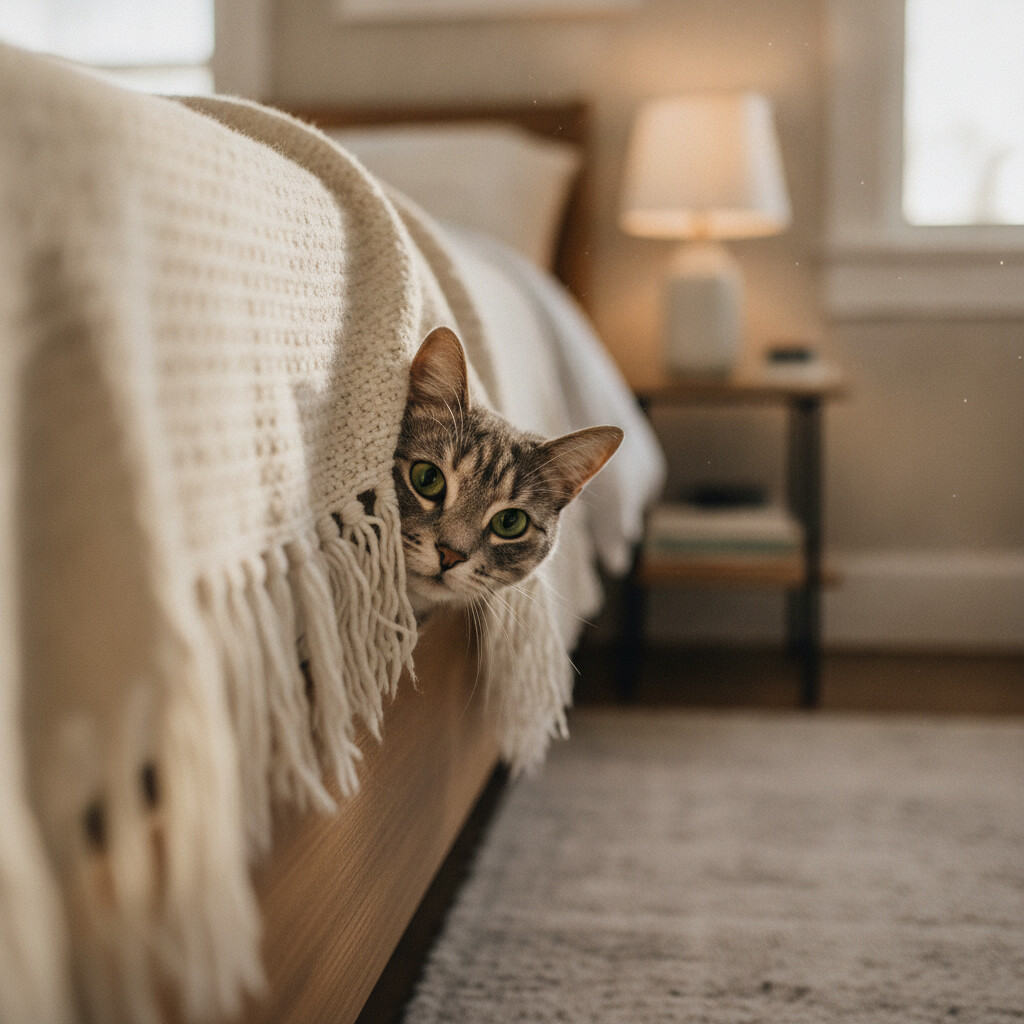
If your older cat has started disappearing under the bed, into the closet or behind the couch for hours at a time, take it seriously. In senior cats, new hiding is most often a sign of pain, illness or confusion, not a personality change. It’s rarely an emergency by itself, but it is a reason to book a vet visit soon.
Here’s how to tell what’s normal, what the common causes are, and what you can do at home in the meantime.
Is it normal for older cats to hide more?
Some change is normal. Senior cats sleep more, and many prefer a quiet, warm, enclosed spot to nap in. A cat who has always loved the back of the linen closet and still comes out for meals, greets you and uses the litter box normally probably isn’t telling you anything new.
What matters is change. Watch for:
- Hiding in places they never used before
- Staying hidden through mealtimes, or only coming out at night
- Hiding when visitors, other pets or noise never bothered them before
- Hiding plus anything else: eating less, drinking more, grooming less, missing the litter box, or moving stiffly
The AAHA/AAFP Senior Care Guidelines (Journal of Feline Medicine and Surgery, 2021) make the point that behavior changes are often the first, and sometimes the only, sign of disease in older cats. Owners tend to put them down to “just getting old.” Vets would rather you didn’t.
Why cats hide when something is wrong
Cats are both predator and prey. A cat who feels unwell, sore or vulnerable has a strong instinct to tuck themselves away somewhere safe rather than show weakness. Research backs this up: a study by Stella, Lord and Buffington (Journal of the American Veterinary Medical Association, 2011) found that hiding and reduced appetite were among the “sickness behaviors” cats showed in response to stress and illness, alongside vomiting and litter box changes.
So hiding is a symptom, not a diagnosis. The useful question is what’s driving it.
The most common causes of hiding in senior cats
1. Pain, especially arthritis
This is the big one. Degenerative joint disease is extremely common in older cats and badly underdiagnosed. In one radiograph study, Hardie and colleagues (JAVMA, 2002) found evidence of joint disease in about 90% of cats over 12. Cats with sore joints often stop jumping, seek low, enclosed spots and avoid being picked up or bumped by other pets.
Other clues: hesitating before jumping, using stairs one at a time, peeing or pooping just outside the box, matted fur on the lower back, and a hunched posture. Our guide to signs of pain in older cats and arthritis in senior cats covers these in more detail.
2. Illness
Many common senior conditions make cats feel lousy and withdrawn:
- Dental disease: a sore mouth makes cats hide and eat less
- Kidney disease: nausea, low energy and dehydration
- Hyperthyroidism: oddly, this usually makes cats restless and hungry, but some hide more as it progresses
- Constipation, urinary problems or any condition causing nausea
You can’t tell these apart from home, which is exactly why a hiding senior cat needs an exam and usually blood and urine tests.
3. Cognitive dysfunction (feline dementia)
Cognitive decline is real in cats. Gunn-Moore and colleagues (Journal of Small Animal Practice, 2007) estimated that around 28% of cats aged 11 to 14 show at least one behavior change linked to it, rising to over 50% of cats aged 15 and older. Confused cats may get “stuck” in corners, hide, wander, yowl at night or seem to forget where the litter box is. It’s a diagnosis of exclusion, so your vet will rule out pain and illness first. More in our article on feline cognitive dysfunction.
4. Failing sight or hearing
A cat who can’t see or hear as well is easier to startle. Retreating to a familiar, enclosed spot makes sense when the world has become less predictable. Sudden blindness in older cats is often linked to high blood pressure, which is treatable if caught early, so don’t wait on this one.
5. Stress and household change
Older cats cope less well with change. A new pet, a new baby, renovations, a move, a change in your schedule or the loss of a companion animal can all send a senior cat under the bed. Stress can be the whole story, but in a cat over 10, rule out the medical causes before assuming it.
What you can do at home
None of these replace a vet visit, but they’ll make your cat more comfortable while you sort out the cause:
- Don’t drag them out. Pulling a sore or frightened cat from a hiding spot makes things worse. Let them come out on their own terms.
- Make the hiding spot work for them. Put a soft, warm bed in or near it. Older cats often hide because the spot is warm and enclosed, so give them a better version.
- Bring resources closer. Food, water and a low-sided litter box within a few steps of where they’re spending time. The AAFP/ISFM Feline Environmental Needs Guidelines (2013) recommend that every cat has easy access to these core resources plus a safe place to retreat to.
- Lower the climb. Ramps or steps to favorite resting places help arthritic cats keep using them.
- Keep a short log. Note when they eat, drink, use the box, and how long they’re hidden. Photos or a short video of how they walk are gold for your vet, because cats rarely show their symptoms in the exam room.
- Keep the house predictable. Same feeding times, quiet spaces, and a little protected time away from boisterous pets or kids.
When to see a vet
Book a vet appointment within a few days if your senior cat is hiding more than usual and it’s been going on for more than a day or two, even if nothing else seems wrong. Most of the causes above are treatable or manageable, and earlier is better. The AAHA/AAFP guidelines recommend check-ups every six months for senior cats for exactly this reason. If you’re not sure what that visit should include, see what a senior cat wellness exam should cover.
Call your vet the same day, or go to an emergency vet, if hiding comes with any of these:
- Not eating for 24 hours or more
- Straining in the litter box or passing little or no urine
- Labored or open-mouth breathing
- Repeated vomiting, or vomiting with lethargy
- Sudden blindness, wobbliness, collapse or a seizure
- Signs of significant pain, such as crying when touched, or refusing to move
Not eating is the one owners most often underestimate. Cats who go without food can develop serious liver problems fairly quickly, and older cats have less reserve.
The bottom line
A senior cat who suddenly starts hiding is usually telling you something hurts or feels wrong. It’s worth a vet visit rather than a wait-and-see, and the cause is often something that can be treated, from sore joints to a bad tooth. In the meantime, make their chosen hiding place comfortable, bring their essentials close and keep notes for your vet.
Where does your older cat like to hide, and has it changed as they’ve aged?