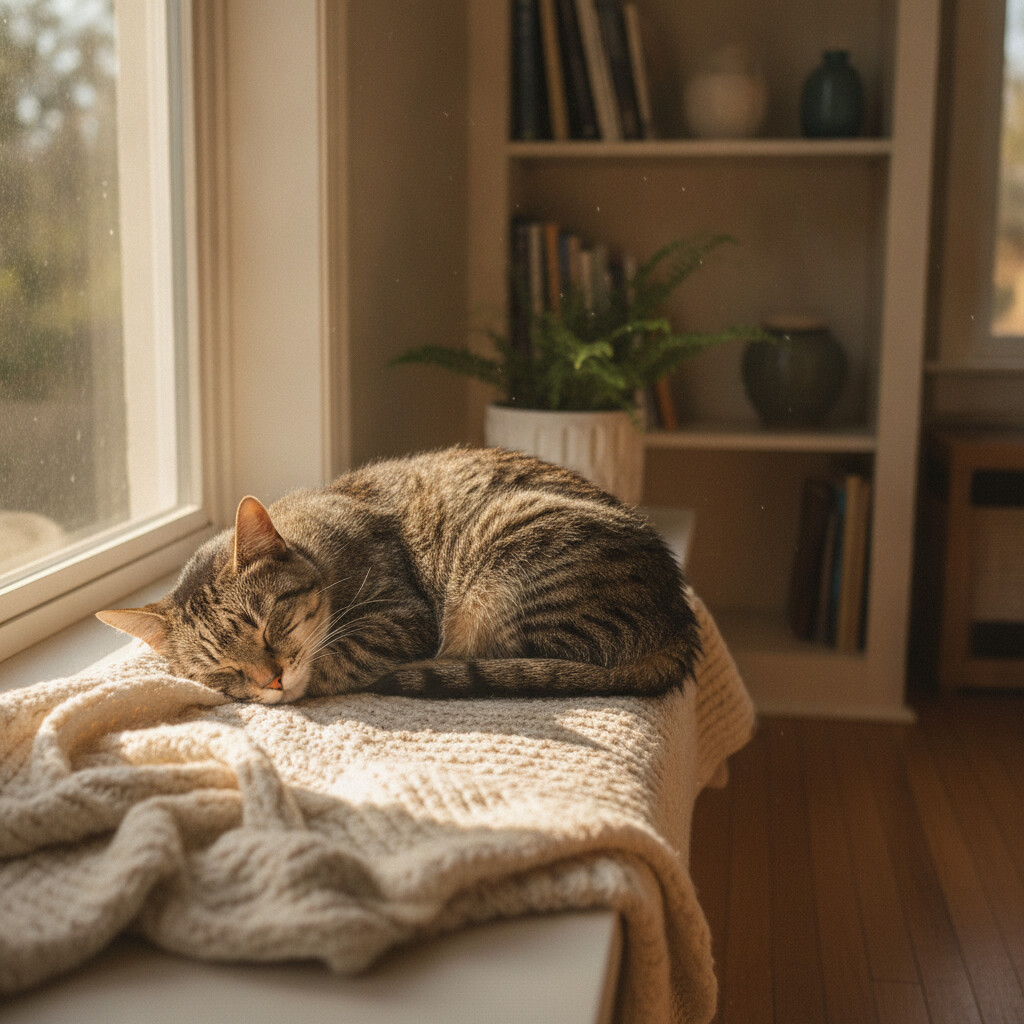
Yes, older cats sleep more — often 16 to 20 hours a day compared to the 12-16 hours typical of a healthy adult cat. That extra sleep is usually normal aging, not a red flag on its own. But there’s a real difference between a senior cat who naps more and one who’s sleeping instead of doing the things they used to do — and that difference is worth paying attention to.
How Much Do Senior Cats Actually Sleep?
Cats sleep more than almost any other common pet to begin with — adult cats average 12 to 16 hours a day even in good health, largely a holdover from their evolutionary design as ambush predators who conserve energy between short bursts of activity. As cats move into their senior years (generally from around age 11 onward), that number tends to climb, with many cats spending 18 hours or more asleep.
Some of this is simple biology: metabolic rate slows with age, joints get stiffer, and the energy cost of being awake and moving around goes up. Less muscle mass and a natural decline in activity level mean more of the day gets spent resting. This pattern shows up consistently in veterinary geriatric medicine literature and is considered a normal part of feline aging, not a disease process by itself.
Why Sleep Increases With Age
A few things drive the shift beyond “just getting older”:
- Reduced mobility. Arthritis is extremely common in senior cats — some studies put radiographic evidence of joint disease in over 60% of cats over age 6 — and a cat who’s uncomfortable jumping or climbing will naturally choose to rest more rather than push through pain.
- Sensory decline. Cats with reduced vision or hearing often become more cautious and less exploratory, which translates into more time spent in one safe, familiar spot.
- Lower basal energy needs. Senior cats generally need fewer calories to maintain their weight, and the flip side of a lower-energy body is a body that wants to spend more time at rest.
- Changes in the sleep-wake cycle itself. Cognitive changes associated with aging can also shift when cats sleep — some senior cats sleep more overall but wake more at night, appearing restless in ways that don’t match a straightforward “more tired” explanation.
When Increased Sleep Signals a Problem
The line to watch for isn’t “sleeping more” — it’s sleeping more and doing less of everything else. A few patterns are worth flagging to your vet rather than filing under “just getting old”:
- Sudden change, not gradual. A cat who goes from active to markedly lethargic over days or a couple of weeks is a different story than a gradual increase over months or years. Sudden lethargy is one of the more reliable early signs of illness in cats — including hyperthyroidism (which can paradoxically cause restlessness early on, then lethargy later), kidney disease, or anemia.
- Loss of interest alongside the sleep. A senior cat who still perks up for meals, greets you, and follows you around before napping again is behaving differently than one who stops engaging altogether — skipping meals, not responding to their name, or seeming disoriented when awake.
- Sleeping in unusual places or positions. Cats in pain often seek out different, sometimes odd, resting spots, or sleep in hunched positions rather than their usual curled-up posture.
- Sleep paired with other changes. Increased thirst, weight loss despite normal appetite, vomiting, or changes in litter box habits alongside more sleep point toward an underlying medical cause rather than simple aging.
Cognitive decline (sometimes called feline cognitive dysfunction) can also present as disrupted sleep patterns — nighttime pacing, vocalizing, or confusion — even while total sleep time goes up. If your senior cat’s nighttime behavior has changed noticeably, it’s worth reading up on the signs of feline cognitive decline separately, since the management approach is different from a straightforward mobility or pain issue.
How to Support Better Rest, Safely
If your vet has ruled out an underlying medical cause, there’s a lot you can do to make a senior cat’s extra sleep more comfortable:
- Provide easy-access resting spots. Orthopedic or heated cat beds placed at floor level (not requiring a jump) reduce the physical cost of settling in, which matters a lot for a cat with arthritis.
- Keep resources close together. Food, water, and litter box within easy reach of favorite sleeping spots reduces how far a stiff or sleepy senior cat has to travel.
- Maintain gentle, low-impact engagement when they’re awake. Short, low-intensity play sessions and consistent affection during waking hours help you both notice changes in energy level and keep your cat mentally engaged without overtaxing them.
- Stick to a predictable routine. Consistent feeding and interaction times help cats with early cognitive changes stay oriented, and routine tends to reduce anxiety-driven restlessness at night.
When to See a Vet
Increased sleep alone, in an otherwise normal-acting senior cat, usually doesn’t need urgent attention — but it’s a good prompt for a wellness check if it’s been a while, since senior cats benefit from more frequent vet visits than younger adults (many vets recommend twice-yearly exams from around age 10-11 onward). Book a visit sooner, rather than waiting, if you notice any of the following alongside the increased sleep:
- A sudden (days-to-weeks) rather than gradual increase in sleep
- Reduced appetite, increased thirst, or weight changes
- Difficulty jumping, climbing stairs, or getting into the litter box
- Disorientation, night waking, or vocalizing that’s new
- Any sleeping position that looks like your cat is guarding a painful area
Blood work and a physical exam can rule out (or catch early) the common culprits — kidney disease, hyperthyroidism, arthritis, and anemia are all things a vet can screen for relatively easily, and all of them are far more manageable caught early than late.
The Practical Takeaway
More sleep is one of the most normal, expected parts of a cat aging into their senior years — it’s not something to panic about on its own. What matters is the shape of the change: gradual and paired with normal engagement when awake is aging; sudden, or paired with disinterest, appetite changes, or mobility struggles, is a reason to get your vet involved. When in doubt, a wellness check costs you very little and rules out a lot.