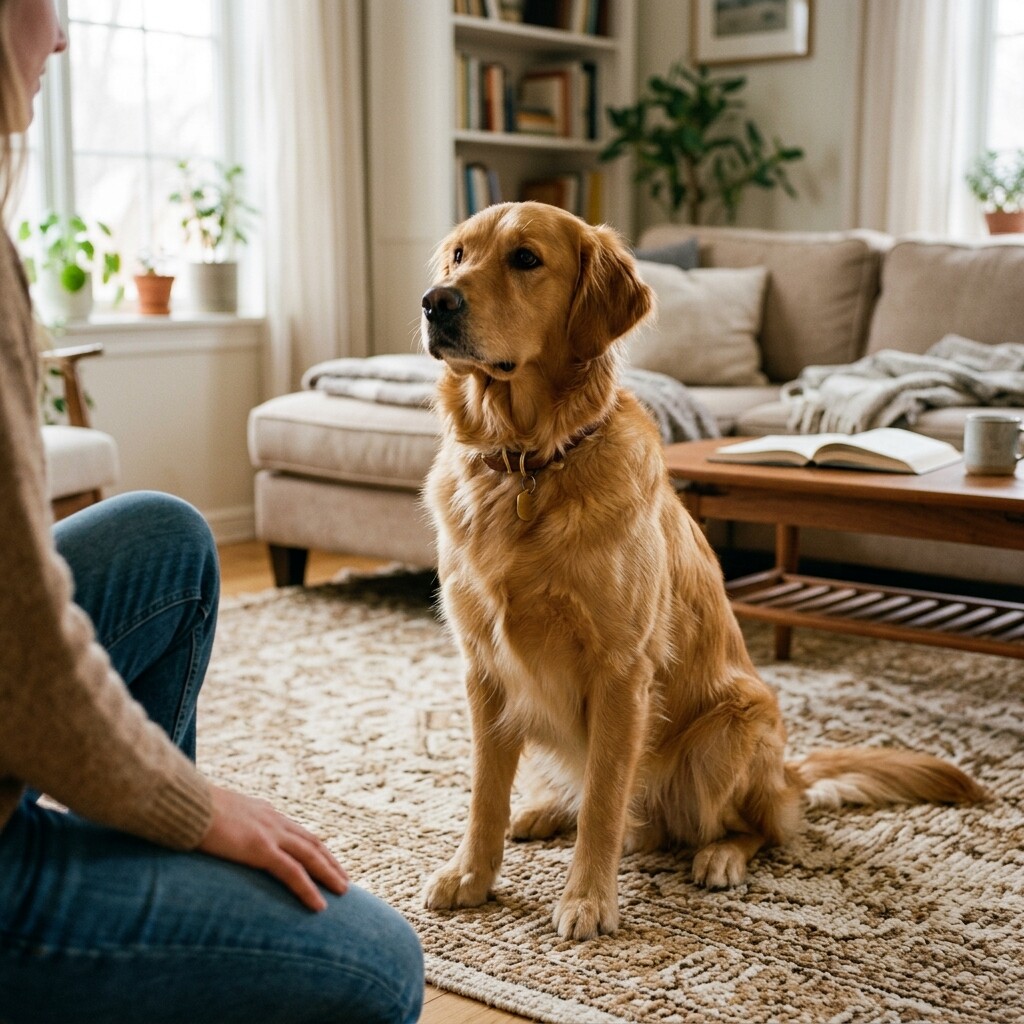
We all know the feeling. You’re sitting on the couch, minding your own business, maybe watching TV or eating a snack, and you feel it. That intense, unblinking gaze burning into the side of your head. You turn around, and there’s your dog, just staring at you.
It can be sweet, a little unsettling, or downright confusing. Why do dogs do this? Are they judging us? Do they want something? Is it a sign of affection, or is there an underlying behavioral issue?
As a long-time pet owner, I’ve spent a lot of time decoding what my dogs are trying to tell me. The truth is, your dog’s stare is a crucial part of how they communicate. They don’t have words, so they rely on body language, vocalizations, and yes, sustained eye contact to get their point across. Let’s dive into the science behind the stare and what your dog actually wants.
1. The “I Want Something” Stare
This is probably the most common reason your dog is staring at you, and it’s usually the easiest to decode. Dogs are incredibly observant. They learn our routines and patterns better than we know them ourselves.
If it’s 4:45 PM and dinner is usually at 5:00 PM, that stare is a gentle (or not-so-gentle) reminder that the food bowl is empty. They might also stare if a toy is stuck under the couch, if they need to go outside for a bathroom break, or if you happen to be holding a piece of cheese.
How to read it: Look at the context. Are they sitting by the door? Is it mealtime? Are you eating? Usually, this stare is accompanied by a slight head tilt, eager ears, and maybe a soft whine or a paw tap.
2. The “I Love You” Stare (The Oxytocin Loop)
Dogs are the only non-primate animals that look people in the eyes to seek connection. When your dog stares softly into your eyes, especially when they are relaxed and comfortable, they are essentially hugging you with their eyes.
Science backs this up. A famous study published in Science magazine showed that when dogs and their owners gaze into each other’s eyes, both experience a significant spike in oxytocin—often called the “love hormone” or “cuddle chemical.” It’s the same hormone that spikes when human mothers look at their babies.
How to read it: The eyes will be soft, slightly squinted, and relaxed. Their body posture will be loose, and they might even slowly blink at you. If you slowly blink back, you’re speaking their language!
3. The “I’m Trying to Understand You” Stare
Dogs are masters at reading human emotions and body language. Sometimes, they stare simply because they are trying to figure out what you are doing, feeling, or what you’re about to do next.
If you’re moving furniture, packing a suitcase, or crying after a hard day, your dog might sit and watch you intently. They are gathering information. Are we going for a car ride? Is my human upset and needs comfort?
How to read it: This stare is often accompanied by the classic, adorable head tilt. Their ears might be perked up or moving back and forth like satellite dishes trying to pick up a signal.
4. The “I’m Anxious or Uncomfortable” Stare
Not all stares are positive. Sometimes, a hard stare can be a sign of tension, fear, or resource guarding. If a dog is protecting a high-value item (like a raw bone or a favorite toy) or feeling cornered, they may fixate on you with a hard, unblinking stare.
This is often a precursor to a growl, snap, or bite. It’s their way of saying, “Back off, I’m uncomfortable.”
How to read it: The body will be stiff and rigid. The eyes will be wide, sometimes showing the whites (often called “whale eye”). The ears may be pinned flat against the head, and the tail will likely be stiff or tucked. If you see this, do not stare back (which can be perceived as a challenge). Calmly avert your eyes and back away to give the dog space.
5. Age-Related Changes: Cognitive Dysfunction
If you have a senior dog (usually over 9 or 10 years old, depending on the breed) and they begin staring blankly at walls, corners, or into space—or if they stare at you but seem confused or lost—it could be a sign of Canine Cognitive Dysfunction (CCD), which is similar to dementia in humans.
Other signs of CCD include getting stuck behind furniture, forgetting house training, disrupting sleep cycles, or pacing at night. If you notice these symptoms, a trip to the vet is in order. While CCD can’t be cured, there are medications, supplements, and dietary changes that can significantly improve your dog’s quality of life.
How to Respond to the Stare
Context is everything. When your dog stares at you, take a quick inventory of the situation:
- What time is it? (Is it mealtime or walk time?)
- What is their body language saying? (Loose and wiggly, or stiff and tense?)
- What are you doing? (Eating, crying, putting on shoes?)
Usually, your dog is just communicating their love, their needs, or their curiosity. Acknowledge them! A soft word, a gentle pet, or taking them outside to the yard can reinforce that beautiful bond you share. And if it’s the “I love you” stare, just sit back, relax, and enjoy the oxytocin boost.
— CatLady6