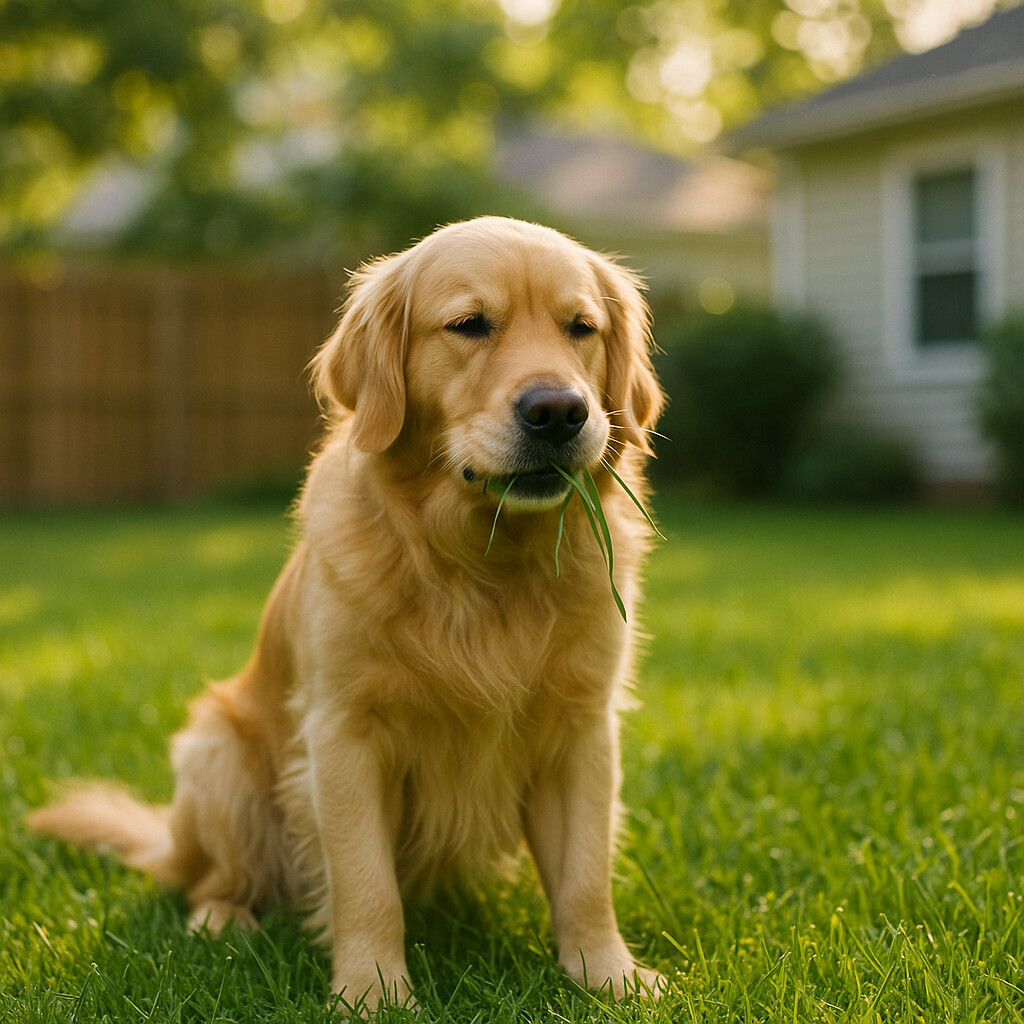
If you’ve ever watched your dog make a beeline for a patch of grass and start chomping like a tiny lawnmower, you’re not alone. Studies estimate that up to 80% of dogs eat grass or other plants at some point. And if you’re like most owners, you’ve probably Googled “is this normal?” at least once.
Short answer: usually yes. But there’s more to it than “dogs are weird.” Here’s what’s actually going on — and the specific situations where a vet visit is smart.
The Science: Why Dogs Actually Eat Grass
Researchers have studied this behavior more than you’d expect. A 2008 study published in Applied Animal Behaviour Science surveyed 1,571 dog owners and found some important patterns:
- 68% of dogs ate grass on a daily or weekly basis
- Only 8% frequently showed signs of illness before eating grass
- Only 22% regularly vomited afterward
That blows up the biggest myth right away — most dogs that eat grass aren’t sick and don’t throw up after.
So what’s actually driving it?
Reason #1: It’s an Instinct (Ancestral Diet)
Wild canids — wolves, coyotes, foxes — eat plant material regularly. Analysis of wolf scat shows grass and other vegetation in 11-47% of samples. Dogs didn’t lose this instinct just because we started feeding them kibble.
This is the most common reason, and it’s completely harmless. Your dog is doing what dogs have done for thousands of years.
Reason #2: They Actually Like the Taste
This one’s simple but often overlooked. Many dogs prefer young, fresh spring grass — it’s tender and apparently tasty. You might notice your dog is pickier about which grass they eat, avoiding dry patches and going straight for the new growth.
If your dog only eats grass seasonally (spring and early summer), taste preference is probably the driver.
Reason #3: Fiber Seeking
Dogs on lower-fiber diets eat grass more often. A widely cited case study published in the Journal of Veterinary Medical Science documented a miniature poodle that ate grass and vomited daily for 7 years. When the owner switched to a high-fiber diet, the grass eating stopped within 3 days and never returned.
Here’s how to check if fiber might be the issue:
- Look at your dog food’s crude fiber percentage — most commercial foods contain 2-5%
- Dogs typically need 2-6% fiber in their diet, but some individuals do better with more
- Signs your dog may need more fiber: eating grass frequently, inconsistent stool quality, scooting
Quick fiber boost options:
- Plain canned pumpkin (not pie filling): 1-4 tablespoons depending on dog size
- Steamed green beans: a handful mixed into meals
- Psyllium husk: 1/2 to 2 teaspoons depending on weight
Reason #4: Boredom or Anxiety
Dogs that spend long periods alone in the yard eat more grass. It becomes an oral fixation — similar to how some dogs chew furniture or lick their paws when understimulated.
Red flags that it’s behavioral:
- Grass eating increases when you’re away or distracted
- Your dog also shows other boredom behaviors (pacing, digging, excessive barking)
- It happens more in dogs with less than 30-60 minutes of daily exercise
The fix here isn’t about the grass — it’s about enrichment. Puzzle feeders, structured walks, training sessions, and interactive play address the root cause.
Reason #5: Stomach Upset (Less Common Than You Think)
Yes, some dogs do eat grass to self-medicate an upset stomach. But research shows this is the minority of cases — roughly 10-20%. These dogs typically:
- Eat grass frantically and rapidly, not casually
- Swallow long blades without chewing (which triggers the gag reflex)
- Show other signs: lip licking, drooling, loss of appetite, restlessness
- Vomit within minutes of eating grass
If this pattern is occasional (once a month or less), it’s generally not concerning. Dogs can have off days just like we do.
When to Actually Call Your Vet
Most grass eating is harmless, but schedule a vet visit if you see:
- Sudden increase in grass eating when your dog never did it before
- Vomiting more than 2-3 times per week after eating grass
- Blood in vomit or stool — this is never normal
- Weight loss or decreased appetite alongside grass eating
- Eating dirt, rocks, or non-food items too (this could be pica, which sometimes indicates nutritional deficiency or GI issues)
- Lethargy or behavior changes combined with grass eating
The Pesticide Problem: A Real Risk Most Articles Skip
Here’s the genuinely important part that gets glossed over. The grass itself rarely hurts your dog. What’s ON the grass can.
The ASPCA’s Animal Poison Control Center receives over 232,000 calls per year, and lawn chemicals are a significant category. Common dangers:
- Herbicides (2,4-D, glyphosate): Most lawn “weed and feed” products contain these. They’re toxic to dogs for 24-72 hours after application
- Fertilizers: Can cause GI upset; organic fertilizers containing bone or blood meal are especially attractive to dogs and can cause serious blockages
- Insecticides: Particularly grub killers containing carbaryl or trichlorfon
Practical steps:
- Know what your lawn care company applies and when. Ask for the product data sheet
- Keep dogs off treated lawns for at least 48 hours (or until the next rain + dry cycle)
- At parks and public spaces, avoid perfectly manicured grass — it’s almost certainly treated. Stick to wilder, unmowed areas
- If your dog eats treated grass and shows drooling, tremors, diarrhea, or lethargy, call the ASPCA Animal Poison Control Center: (888) 426-4435 ($95 consultation fee applies)
The Bottom Line
Your dog eating grass is almost certainly normal. The science supports it as instinctive behavior that’s been part of canine life for millennia. Try a fiber boost if it’s excessive, increase exercise if it seems behavioral, and keep them away from chemically treated lawns.
The one thing worth doing today: check the crude fiber content on your dog food bag. If it’s below 3% and your dog eats grass regularly, a simple pumpkin supplement might be all you need.
— CatLady6 (yes, I love dogs too  )
)